
Six Geese-a-Laying Might be a bit Much
In spite of my obsession with birds, my true love never gave me a partridge in a pear tree or, for that matter, any of the other five birds mentioned in that old English Christmas carol. Even if you’re not a birder, don’t you find it interesting that half of the gifts immortalized in that old song are birds? With one exception, the other stuff is a bit strange, more like what you might expect at Lady Gaga’s birthday party: guests dancing and leaping, noisy musicians and milkmaids. But have you ever wondered about those birds in the song? Probably not. I have, though, and I’m here to share.
The Twelve Days of Christmas originated in Europe, and was published in England 231 years ago, making it older than most of my friends. Surprisingly, the birds of the song are real, though mostly European. Considering that Europeans have a dismal record of slaughtering and eating birds, it’s even more surprising that none of these are extinct.
Did They Really Mean a ‘Pear Tree’?
The only partridges we normally see in the U.S. Are the Chukar and the Gray Partridge, both non-native game birds that were introduced from Europe. However, they are related to several familiar birds, including grouse, ptarmigans, pheasants, prairie chickens and wild turkeys. Until fairly recently, our Gambel’s Quail were also part of this large family. The bird in the song probably is the Gray Partridge. Curiously, the French word for partridge is perdrix, pronounced ‘per dree’, suggesting that the pear tree of the song might be a typo. If the original version had been, ‘A partridge, une perdrix’ , it could accidentally have been transcribed as ‘A partridge in a pear tree.’
The European Turtle Dove looks a lot like our Mourning Dove, although unlike our dove it migrates to southern Africa each winter. Sometimes I wish ours would. Also unlike our dove, the Turtle Dove population has dropped by nearly two-thirds, in part due to the pathetic practice of shooting migratory birds for fun. On a lighter note, “Three French Hens” would have been a welcomed gift, since French chickens (Faverolles) are gentle, good pets, lay lots of eggs and make a good meal. Well, maybe not the family pet.
I always thought it was “Four calling birds”, but in researching this article, I discovered it’s “ Four colly birds”. Live and learn. It turns out that a colly bird is really a blackbird, specifically the Common Blackbird, a European bird that is actually a thrush like our American Robin, unrelated to our blackbirds. It also turns out that this bird is somewhat of a celebrity. It was considered sacred in classical Greek folklore, and it’s the subject of ‘Sing a Song of Sixpence.’ In that song, two dozen blackbirds were baked in a pie, a dainty dish to set before the king. In medieval times, they actually put live birds under a pie crust just before serving, which explains how the birds were able to sing when the pie was opened. The Common Blackbird is even the national bird of Sweden. I wonder if that had anything to do with the pie.
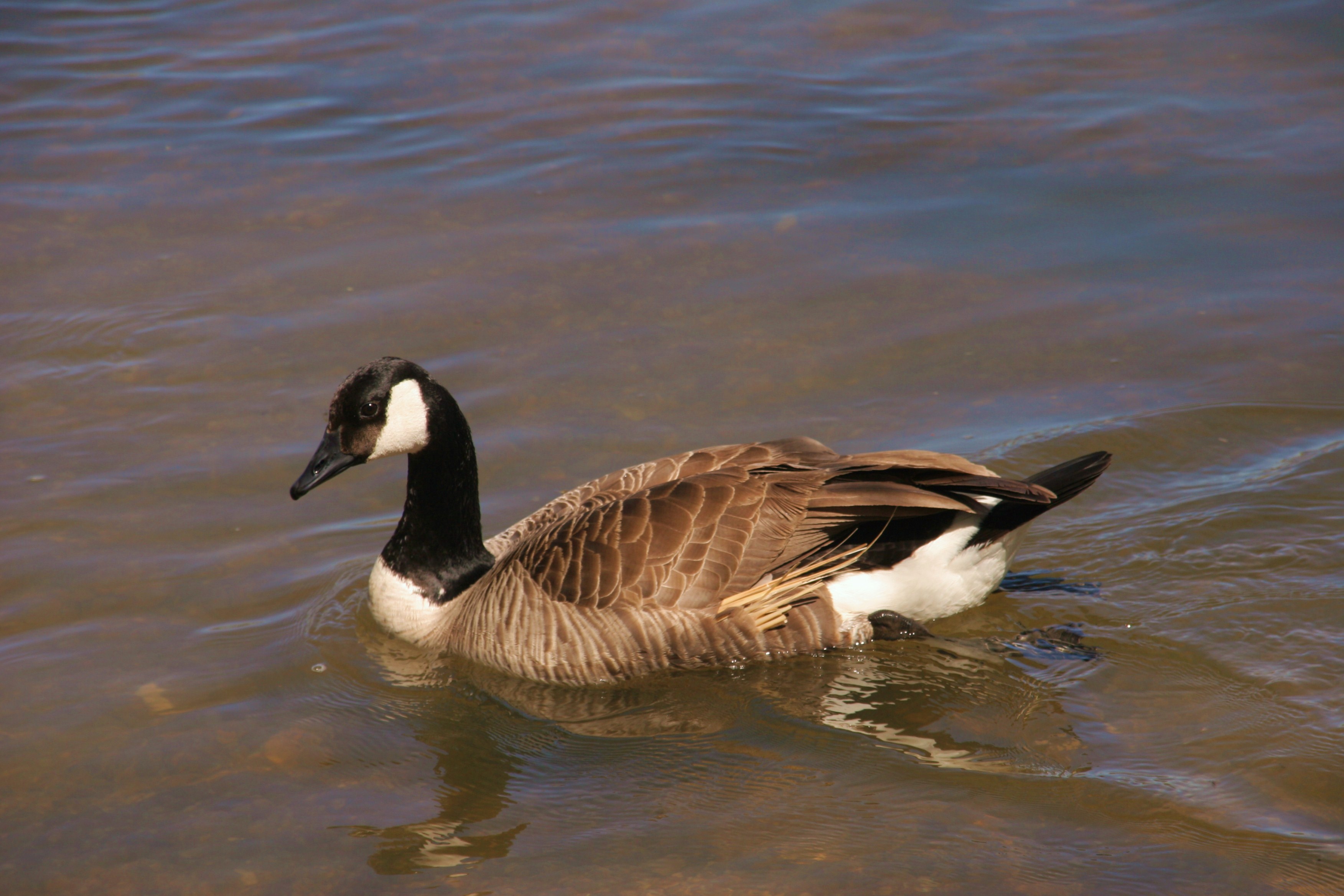
The final two birds of the song are action figures. Maybe ‘six geese-a-laying’ and ‘seven swans-a-swimming’ was a way to transition from perching birds to leaping lords. In any event, these are more familiar birds. We once lived on a river in Oregon, and didn’t have to travel far to see Tundra Swans in the winter. Our Canada Geese fit the song well, laying each spring and raising dozens of goslings in our backyard. In SaddleBrooke, you get a backyard full of quail. Sort of like geese, they lay lots of eggs, raise dozens of chicks and run around eating your flowers. On the other hand, Canada Geese stand three feet tall, have a wingspan of five feet and perpetually pump out fertilizer. Be thankful you’re in Arizona.
(Originally published in the Saddlebag Notes Newspaper, SaddleBrooke, Arizona, December, 2011. Text and photograph copyright Bob Bowers, all rights reserved.)
 birdingthebrookeandbeyond