Thanksgiving and a Tale of Two Turkeys

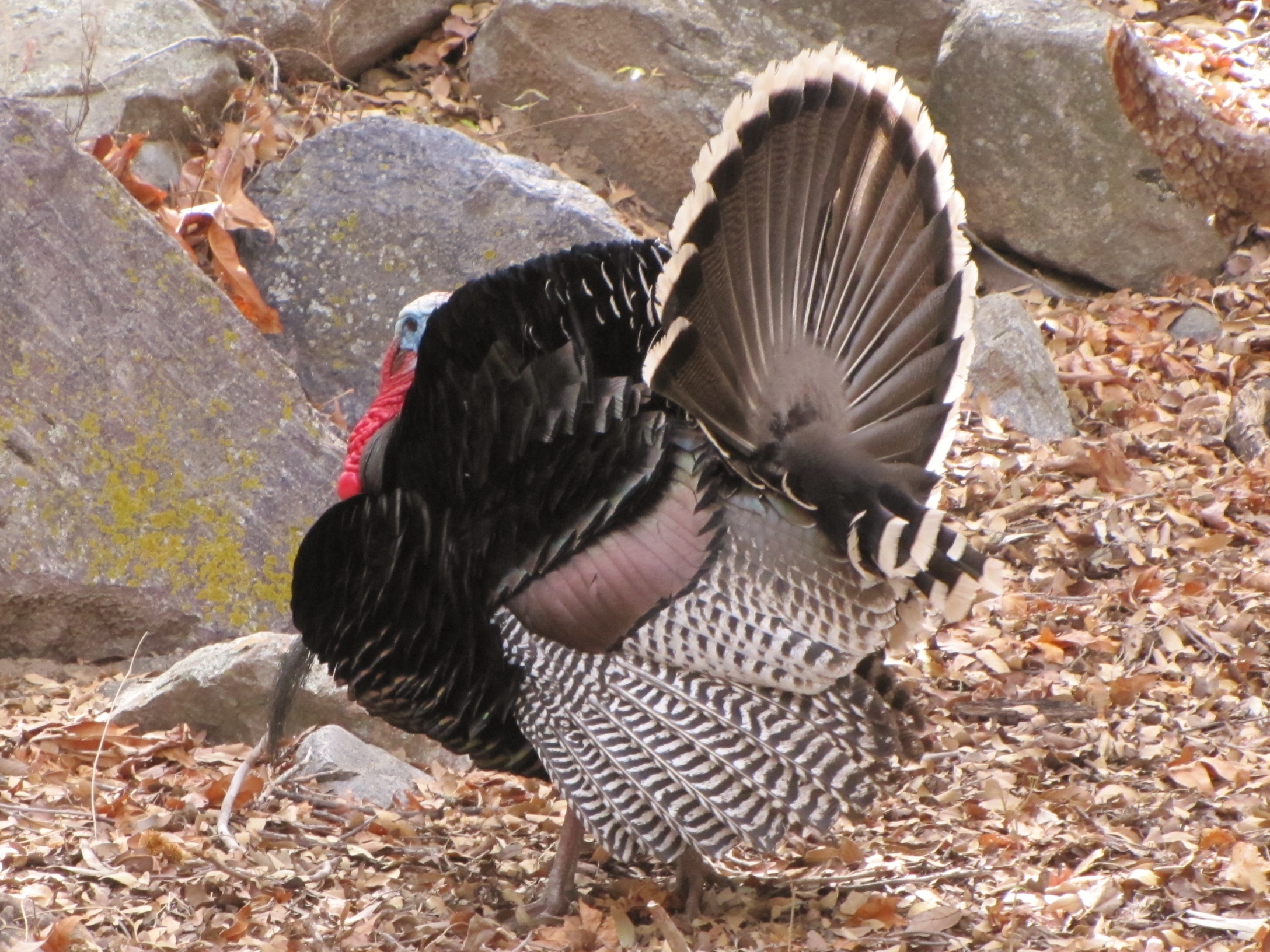
Displaying Wild Turkey, Madera Canyon, Arizona (photo Bob Bowers)

Displaying Wild Turkey, Madera Canyon, Arizona (photo Bob Bowers)

When November rolls around, thoughts turn to Thanksgiving, being thankful and, inevitably, turkeys.  Whether turkeys think about our holiday has yet to be proven, and except for the annually-pardoned White House bird, domestic turkeys have no reason to be grateful.  On the other hand, most of their wild cousins have plenty of reasons to be thankful.  Give or take, about 7 million reasons.

Worldwide, there are two species of turkeys:  the Wild Turkey (Meleagris gallopavo) and the Ocellated Turkey (Meleagris ocellata).  The species we are most familiar with is the Wild Turkey, a resident of all 50 states, Canada and Mexico, while the Ocellated Turkey’s range is limited to some 50,000 square miles of the Yucatan Peninsula.
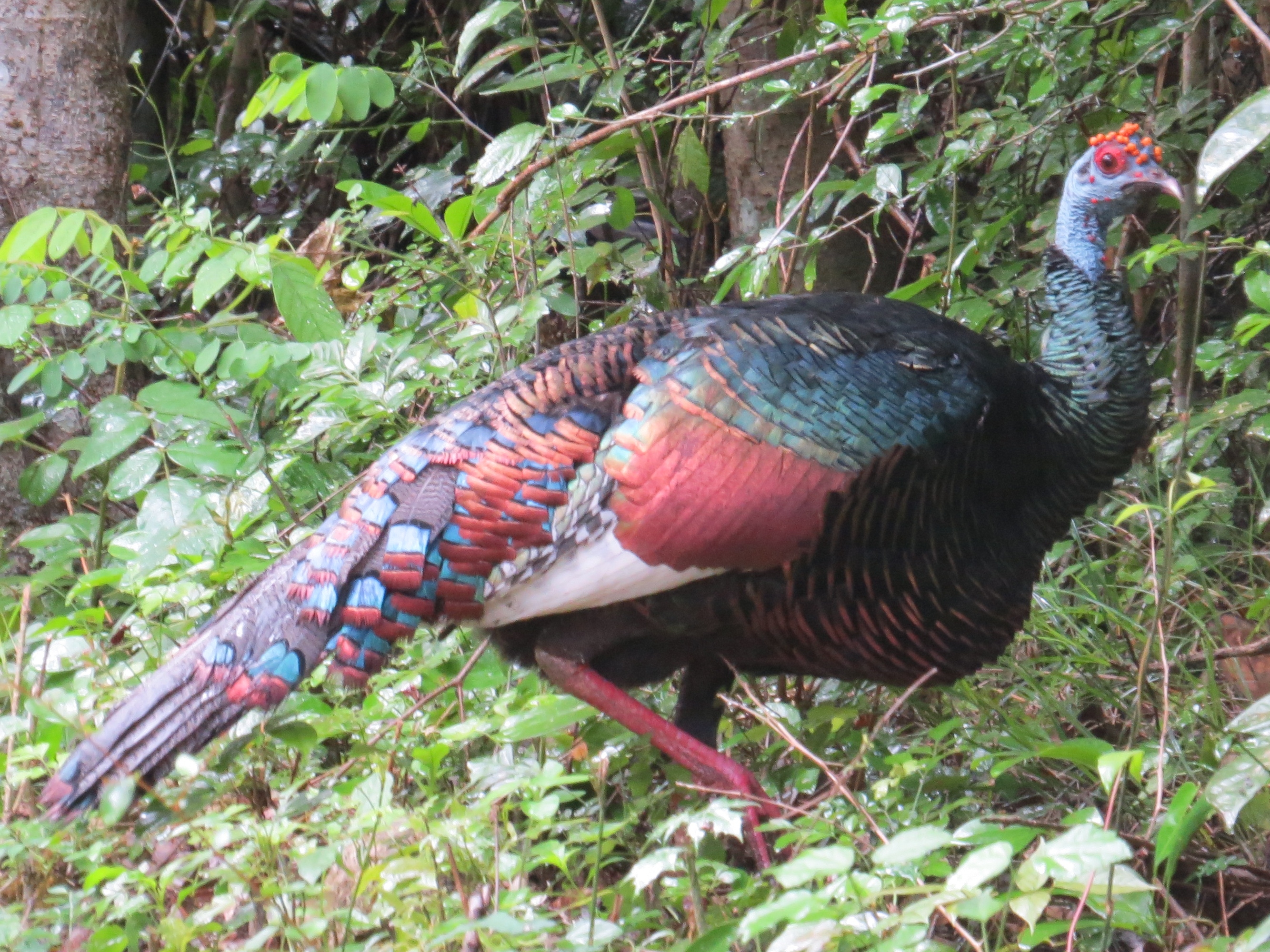
Technicolored Ocellated Turkey, Calakmul, Mexico (photo Prudy Bowers)

Technicolored Ocellated Turkey, Calakmul, Mexico (photo Prudy Bowers)

About the same size as Wild Turkeys (up to four feet in length), the Ocellated species is the trimmer of the two.  The males run about 11 pounds (females about 7) compared with 16 and 9 pounds for their cousins.  In ‘A Guide to the Birds of Mexico and Northern Central America’, Steve Howell’s description of the Ocellated suggests a Halloween witch:  ‘horn nail, naked head and upper neck, blue and orange warts and an inflatable forehead wattle hanging over a black bill.’  But then he describes the iridescent plumage and you realize this is one beautiful bird.
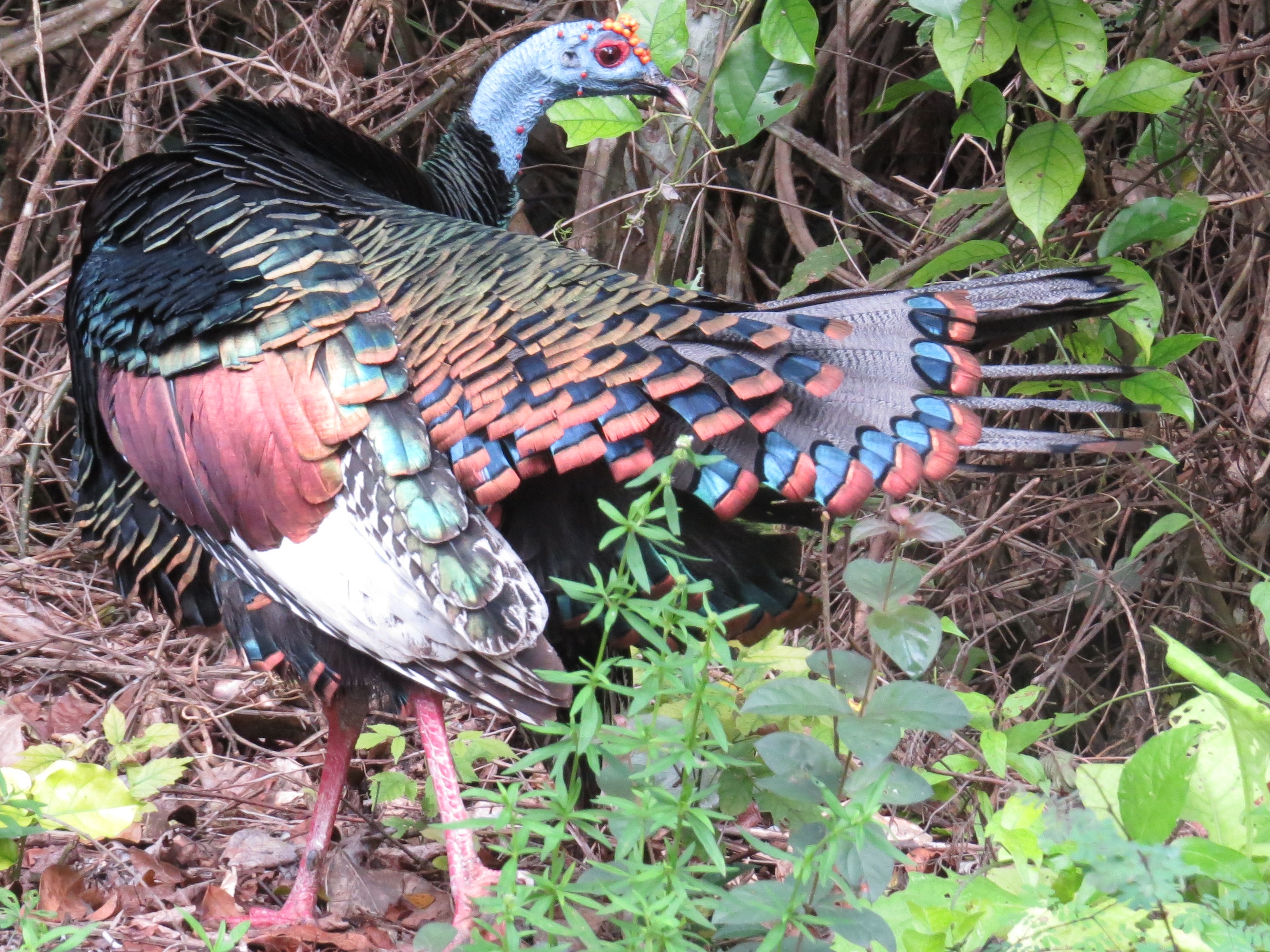
Yucatan's Endemic Ocellated Turkey (photo Prudy Bowers)

Yucatan’s Endemic Ocellated Turkey (photo Prudy Bowers)

In his short write up of the Ocellated Turkey, Howell uses 16 descriptive colors: black, blue, orange, reddish pink, metallic blue-black, blue-green, golden metallic green, burnished copper, dark brown, white, vermiculated grey, violet-blue, flesh, orange-red, metallic sheen and grey-brown.  I probably missed a couple.  Our Wild Turkeys are colorful, too, but they’re blown away by the Ocellated.  Unfortunately, this sister species to our Wild Turkey is losing ground, figuratively and literally.  Precise population numbers are unknown, but habitat loss and subsistence hunting have led to an estimated 50% reduction during the last century, perhaps leaving as few as 20,000 breeding adult birds, and it is now considered threatened by Mexico.  Fortunately, we got to enjoy these spectacular birds in January, spotting a couple in the jungle near the Mayan ruins at Calakmul, 22 miles north of Guatemala.

Bearded male Wild Turkey, Madera Canyon (photo Bob Bowers)

Bearded male Wild Turkey, Madera Canyon (photo Bob Bowers)

The Wild Turkey suffered a crisis of its own, due to unregulated hunting.  Over-hunting nearly led to extirpation of American turkeys by the 1930s, prompting a desperate attempt by state wildlife agencies to save the bird.  First attempts to rescue the turkey consisted of releasing pen-raised birds, but the near-domesticated turkeys couldn’t survive in the wild. This failure was finally reversed 20 years later by capturing wild turkeys in one area for release in other, non-populated locations.  Ironically, the biggest boost to the Wild Turkey’s recovery came in 1973, with the founding of the National Wild Turkey Foundation, established primarily to protect the future of turkey hunting. The NWTF is a nonprofit conservation and hunting organization, and its efforts, together with that of other state and conservation organizations has proven enormously successful. The number of Wild Turkeys that had recovered to about 1 million birds by 1973 is now estimated by the NWTF at more than 7 million. On Thanksgiving, the Wild Turkey does in fact have reasons to be thankful.

In Arizona, we have two of the six sub-species of Wild Turkey, merriami (Merriam’s) and Mexicana (Gould’s).  Gould’s were a table favorite of miners, and by the time Arizona regulated hunting in 1929, they were non-existent north of Mexico.  An active capture and release program is slowly restoring our population of this species, which now numbers about a thousand birds.

Although hunting in Arizona is permitted for both native species, it is strongly restricted and tightly controlled. During two limited seasons in spring and fall, permits for a single bearded male turkey annually are available only by lottery. In addition to being lucky, you need a fat wallet.  License and tag fees are ‘just’ $75, but then you need a finely patterned, camouflaged shotgun, ‘quite expensive’ ammunition, and, to maximize success, a guide ($2,100 for a 3-day Tucson-based expert).  Makes a free-range grocery store bird look like a bargain.

(This article originally appeared in the November, 2014 issue of the Saddlebag Notes newspaper, Tucson, Arizona.)


Posted in Birding the Americas | Tagged , , , | Leave a comment

Ravens and Crows and Ravens, Oh My!

Common Raven (photo copyright David Hofmann)

Common Raven (photo copyright David Hofmann)

Like a lot of other folks, you might think Edgar Allen Poe when someone mentions ‘raven’, and in fact many western poets, authors and cultures have associated the raven with danger and death. But not all is midnight dreary with the oft maligned raven, which has also symbolized wisdom.  Northwest Native Americans revere ravens as creators of just about everything, including the earth and moon, the sun and other stars.  However, at the same time they also recognize ravens as tricksters and cheaters.  It’s unlikely that any other bird has been so involved with mystery, myth and misinformation, in spite of more than 1,400 research reports in scientific literature.

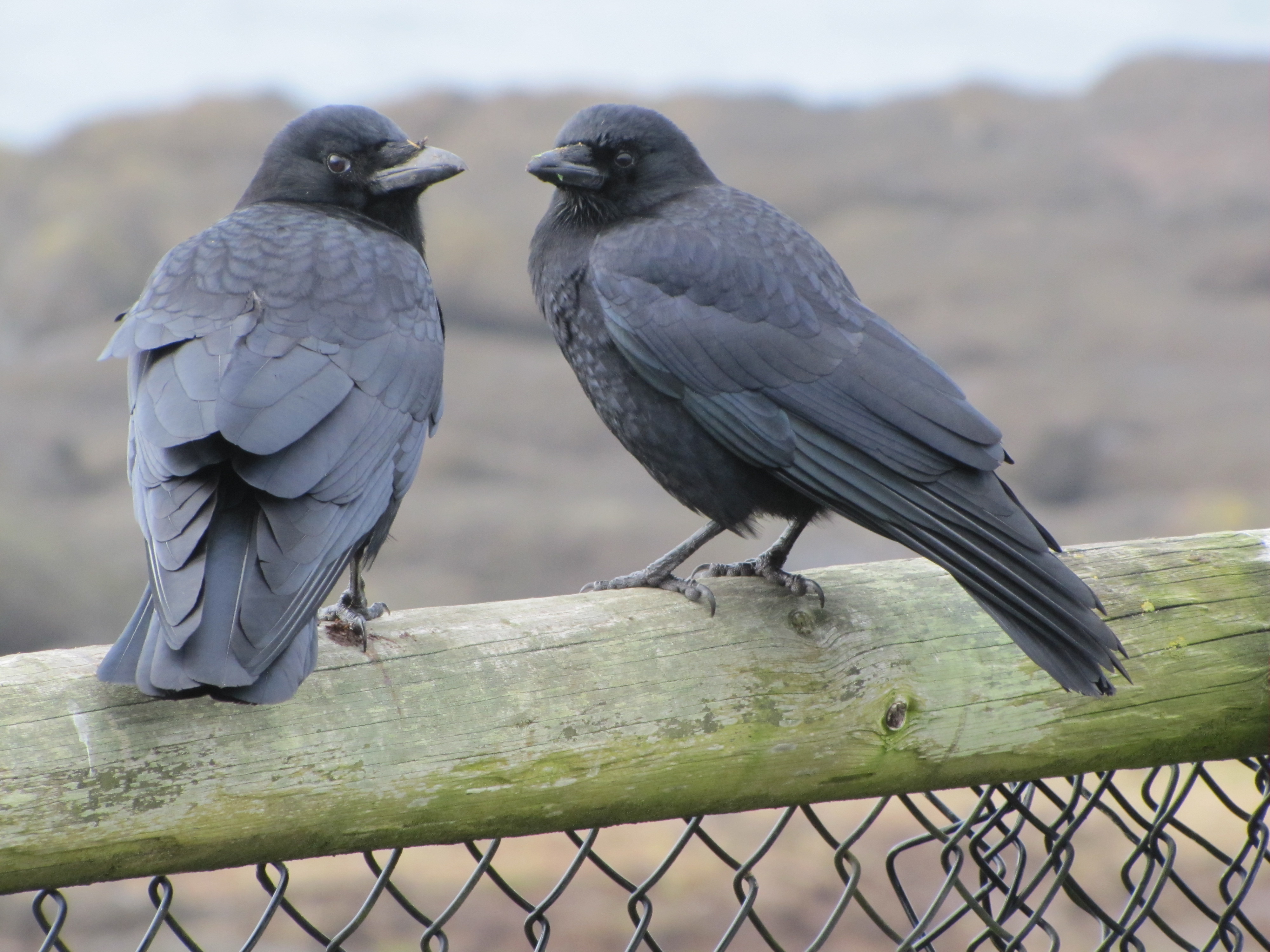
American Crows in Oregon (photo Bob Bowers)

American Crows in Oregon (photo Bob Bowers)

Ravens are one of the most widespread naturally occurring birds in the world, and are found in nearly every land habitat except rain forests of the tropics. In southeastern Arizona, we’re fortunate to have both species of North American ravens, the Common and the Chihuahuan.  Where they overlap (as around SaddleBrooke), the two species are often confused and are difficult to tell apart.  American Crows are also hard to differentiate from ravens, but at least we’re spared that confusion in southeastern Arizona, since Arizona crows are limited to the north and central mountains.  If you are from an area east of Colorado, you’re more likely to be familiar with crows than ravens, except for the far northern parts of the Midwest, Maine and the Appalachians.  Where you do find them together, such as in Colorado, note that crows are smaller (by six inches in length, a foot in wingspan) and have a short rounded or square tail compared with the raven’s wedge-shaped tail.  Crows are also well-known for their ‘caw-caw’ call, which differentiates them from the hoarse croak of a raven.

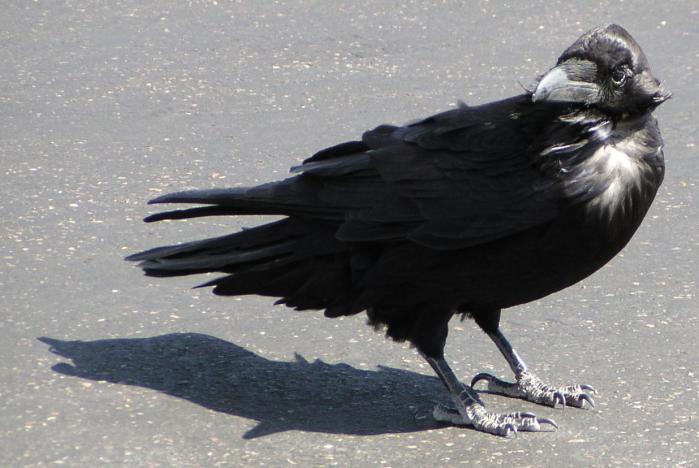
Chihuahuan Raven (photo copyright Akkana Peck)

Chihuahuan Raven (photo copyright Akkana Peck)

Telling a Common Raven from his Chihuahuan cousin is much more problematic. The desert grassland dwelling Chihuahuan is smaller (by four inches), but unless they are side-by-side, this distinction is difficult.  There are identifiable differences in vocalization, but there is also overlap.  Probably the most-cited diagnostic difference lies in the base of the neck feathers, which are gray on Common Ravens and white on Chihuahuan.  Note that this is found in the base of neck feathers, which remain hidden unless the bird is neck-preening or standing in a neck feather exposing wind.

Both species are opportunistic and omnivorous feeders, with a diet that includes almost everything: insects, rodents, reptiles, eggs, small birds and mammals, seeds, fruit, road-kill and garbage.  Fortunately this includes scorpions, but unfortunately it also includes several threatened and endangered species, such as the desert tortoise, California Condor, Marbled Murrelet and Least Tern.  Ravens are often considered an agricultural pest, as well, for their fondness for newborn lamb and calf eyes, which might loom larger than their appetite for rats.  Talk about midnight dreary!  Like it or not, however, they are likely to remain with us forever.  They adapt well to human encroachment and the loss of wild habitat, and survive equally well in high mountain tundra, prairies, deserts, sea coasts, Arctic ice floes and even Chicago, which might be a stretch for some of us.  Poe might better have quoted the raven as ‘Evermore.’

(This article originally appeared in the October, 2014 issue of the Saddlebag Notes newspaper, Tucson, Arizona.)
Posted in Birding Arizona | Tagged , , , , | 2 Comments

Smallest North American Bird, the Calliope Hummingbird

North America's smallest bird, the Calliope Hummingbird (photo Bob Bowers)

North America’s smallest bird, the Calliope Hummingbird (photo Bob Bowers)

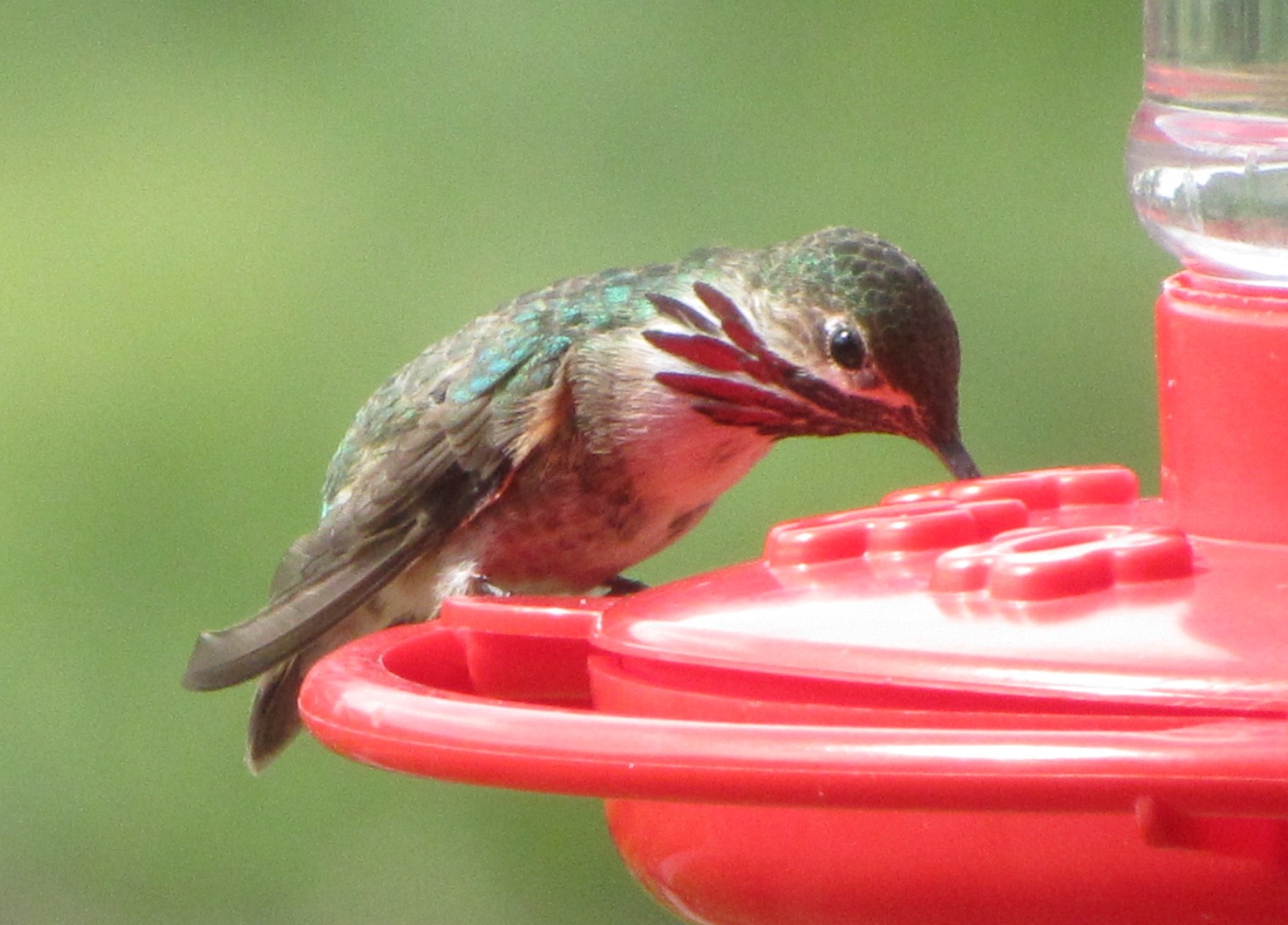
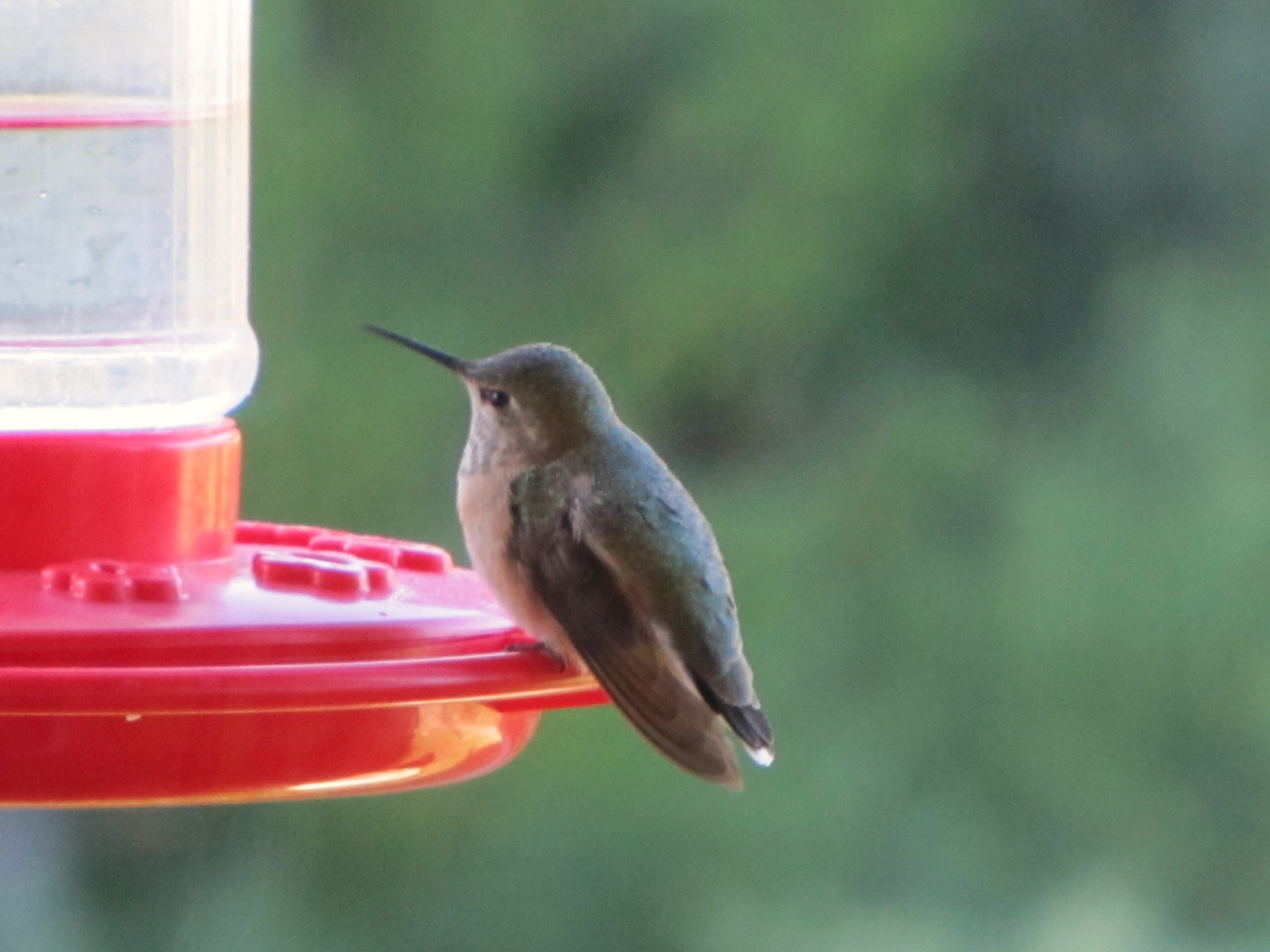
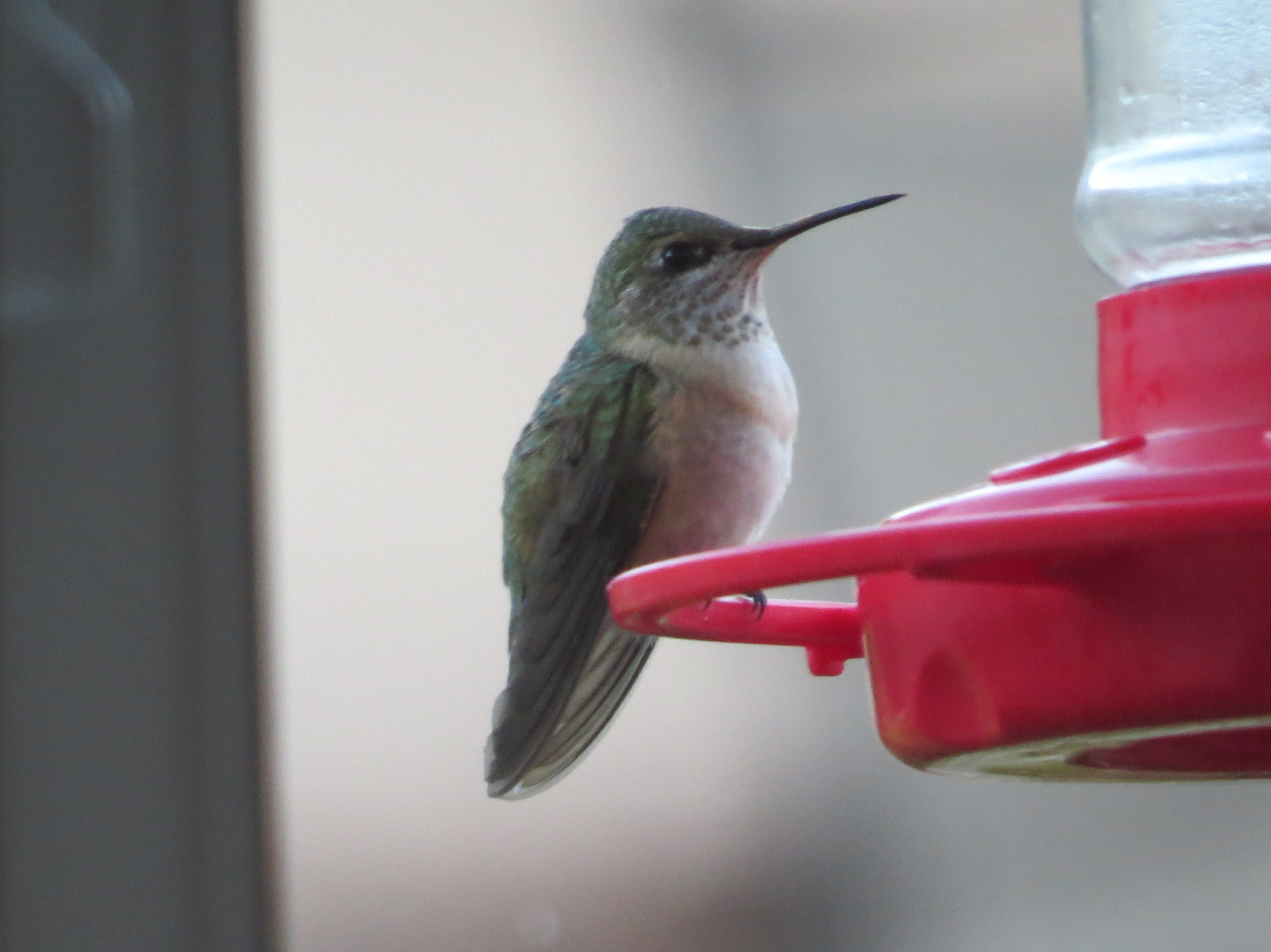
Many of us might guess (correctly) that the California Condor is North America’s largest wild bird, but few of us know that our smallest bird is the Calliope Hummingbird. California Condors are pretty hard to ignore.  Once nearly extinct, and still struggling, condors get a lot of publicity.  And they’re big.  Compared with Golden Eagles, they weigh twice as much and have an extra two and a half feet of wingspan.  At the other end of the spectrum is a mere wisp, a bird barely three inches in length and weighing little more than a penny, the Calliope Hummingbird.  Most people think of loud steam-driven organ-like instruments and carousels when they hear ‘calliope’, but the diminutive hummer was actually named after the Greek Muse for epic poetry and eloquence.  This choice is better than a big noisy machine, but still far from perfect.  ‘Epic’ doesn’t fit well with a bird that is picked on relentlessly by other hummingbirds, and ‘eloquent’ is a stretch for a mostly silent creature, but ‘poetic’ is getting close.

Female Calliope Hummingbird, Keystone, Colorado (Photo Bob Bowers)

Female Calliope Hummingbird, Keystone, Colorado (Photo Bob Bowers)

Male Calliopes are dramatically poetic and unmistakable, with a uniquely striped and stunning magenta gorget. Females and immature birds are harder to identify, but look for noticeably short-tailed, short-billed tiny birds with wings longer than tails.  These birds also are at the bottom of the hummingbird pecking order, and are regularly driven away from feeders by more aggressive hummers.

The Calliope Hummingbird is a western mountain breeder, nesting in California north to British Columbia and Alberta, and east into Montana, Wyoming and Utah. Wintering in Mexico, the Calliope’s migration path strays east to Colorado, New Mexico and Texas, and this is one of three hummers we enjoy in the high country of Colorado during its southbound migration in July and August.  We hang several feeders on our condo’s deck in Keystone at 9,300 feet, and during late summer Rufous and Broad-tailed Hummingbirds are as thick as bees as they gain weight for their journey on to Mexico.  Calliopes are far fewer in number, but generate much more excitement when they do show up.  There is something magical about penny-weight birds that have trouble reaching the holes in a hummingbird feeder from the perch.

Rare Immature Male Calliope, Pinal County Arizona, November, 2013 (Photo Bob Bowers)

Rare Immature Male Calliope, Pinal County Arizona, November, 2013 (Photo Bob Bowers)

Calliopes can also be found during migration in the mountains of Arizona, with less common sightings at lower elevations as they fly south. Last November we were surprised by a young male Calliope at a feeder near our bedroom window in SaddleBrooke.  This is only one of five Calliopes reported on eBird in Pinal County since 1989.  All four of the other sightings were at Boyce Thompson Arboretum and none of them as late as November.  Our bird probably was as lost as he was late, but we’re hoping he’ll show up again this year.  Birds are a funny, often unpredictable lot.  Who knows, maybe this year we’ll get a condor.

(This article originally appeared in the September, 2014 issue of the Saddlebag Notes newspaper, Tucson, Arizona.)
Posted in Birding the Americas | Tagged , | Leave a comment

Orioles in Arizona

Male Scott's Oriole

Male Scott’s Oriole, Cochise Stronghold, Arizona (photo Bob Bowers)

Probably our most striking set of summertime visitors are members of the genus Icterus, the new world orioles.  Orioles are part of the family Icteridae, a group that includes seemingly unrelated birds like grackles, blackbirds, bobolinks, cowbirds and meadowlarks.  Though widely diverse, all icterids are notable for one or more uncommon characteristics including elaborate behavior, complex nest-building, unusual vocalization and gregariousness.

Streak-backed Oriole, Alamos, Mexico  (photo Bob Bowers)

Streak-backed Oriole, Alamos, Mexico (photo Bob Bowers)

Of these traits, orioles are known for colorful, contrasting plumage, vocalization and unique nest construction.  Of nine U.S. orioles, Arizona counts three of the five common species as summer nesters (Hooded, Bullock’s and Scott’s), the other two common birds (Baltimore and Orchard) and one of the four uncommon species (Streak-backed) as fairly-regularly reported rarities.  Not surprisingly, Arizona ranks high in state-documented oriole species, one more reason birders find their way to our state.

Woven Baltimore Oriole nest, West Virginia (photo Bob Bowers)

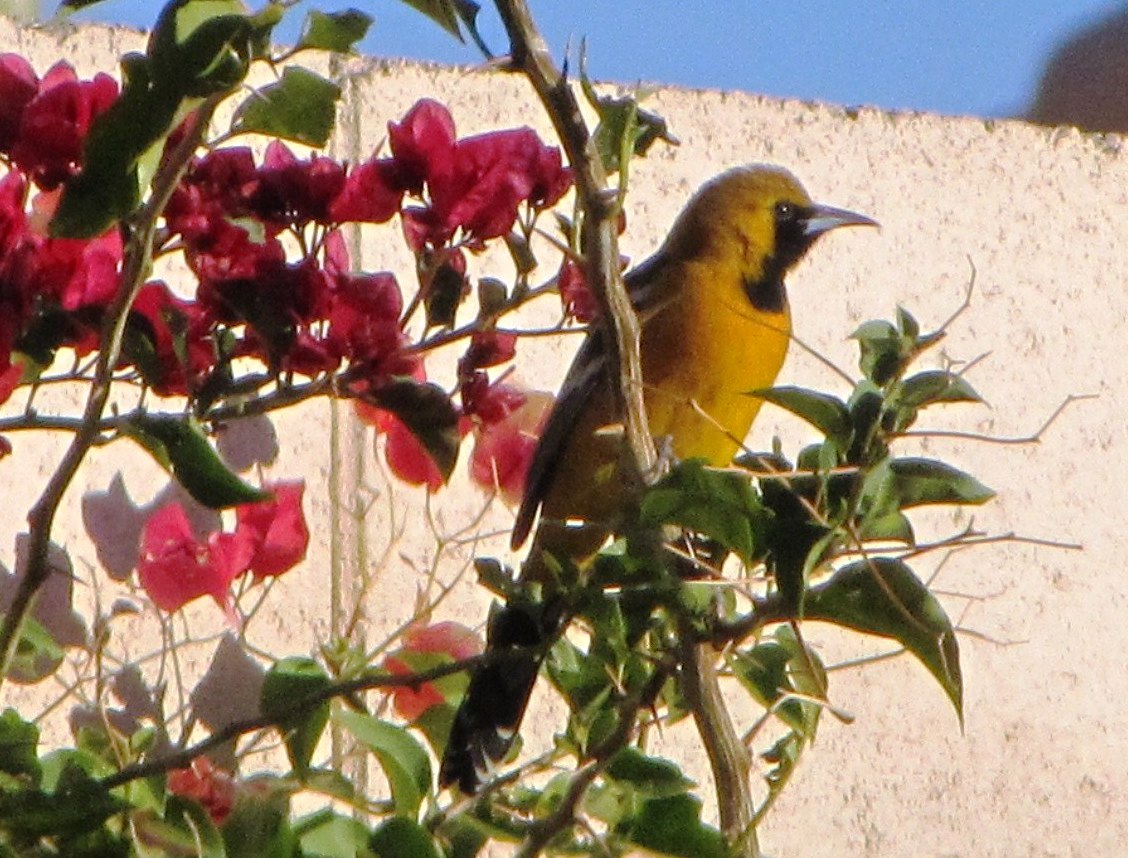
The name ‘oriole’ is onomatopoeic, dating back to 1250, when the similarly-looking (but unrelated) old world Golden Oriole was named for his melodious song.  Our male orioles have striking plumage of black, yellow, orange and white, and even the duller females (sorry, ladies) are beautifully colored in muted yellow, green and olive.  Orioles are slender, with long tails and sharp bills.  Although primarily insectivorous, orioles have a sweet tooth, so to speak, and will strip flowers to get to nectar, and they love fresh orange halves as well as grape jelly.  They also are regulars at hummingbird feeders, capable of drinking sugar water from the narrowest of feeder holes.  Orioles weave beautifully elaborate pendulous nests from plant fibers.  Scott’s Orioles nest in relatively low yucca plants, using dead yucca leaf fiber, while the Hooded Oriole (SaddleBrooke’s most common oriole) prefers palm trees, stripping thin fibers from palm leaves and weaving them into the underside of other palm leaves.  These precarious, hanging sack-like nests are designed to protect eggs and nestlings from climbing predators, and are the reason we should postpone palm tree pruning until Labor Day, when our orioles begin returning to their wintering grounds in Mexico.  Our nesting orioles arrive in March or April, raise one or two broods typically, and then fly home to Mexico or Central America in September.

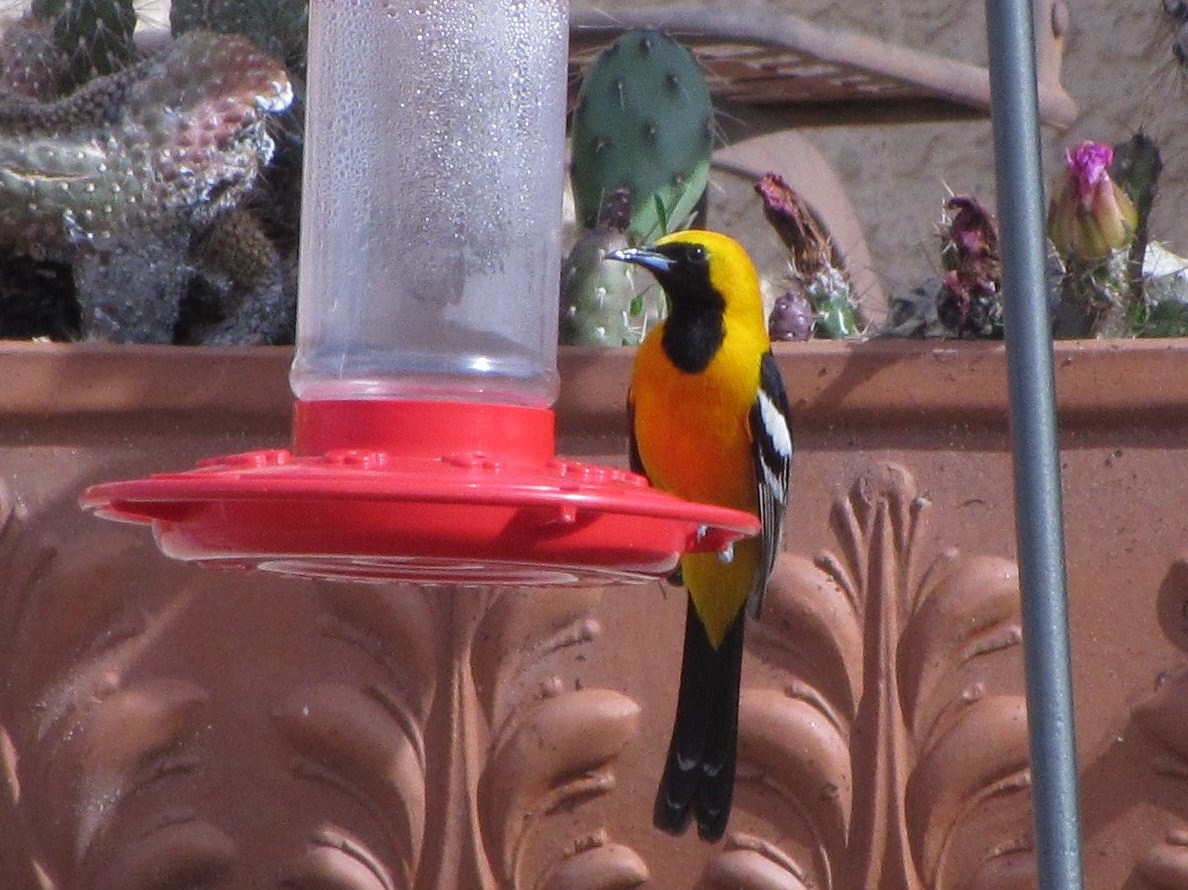
Male Hooded Oriole at hummingbird feeder  (photo Bob Bowers)

Male Hooded Oriole at hummingbird feeder (photo Bob Bowers)

These broods sometimes include an intruder.  Bronzed Cowbirds, a very different-looking Icterid family member, are parasitic with a particular affinity to Hooded Orioles.  Cowbirds don’t bother building nests, they simply wait for a host bird to leave for lunch, then swing by the nest long enough to drop an egg of their own, which is incubated by the host bird along with her own eggs.  The stranger typically is fed and fledged by the hosts, who have tolerated these intrusions for millennia.

Gray Head, male Hooded Oriole who wintered over 2010-2011 (photo Bob Bowers)

On occasion, a rare oriole will miss the September bus out of town.  This happened to us in the fall of 2010.  A male Hooded Oriole showed up at our hummingbird feeders in mid-September, after our nesting birds had left the state.  We watched this same bird hang out in our yard through October, November, December and the following severely cold January and February, even though his roosting spot in an oleander lost all its leaves and we were thawing frozen sugar water regularly.  We called him Gray Head due to his darker than normal crown, and continued to be amazed at his stubborn refusal to head south.  This was a time of escalating cartel violence in Mexico, so maybe he just thought he was safer in Arizona.

(This article originally appeared in the August, 2014 issue of the Saddlebag Notes newspaper, Tucson, Arizona.)
Posted in Birding Arizona | Tagged | Leave a comment

Birding the East Coast in Summer

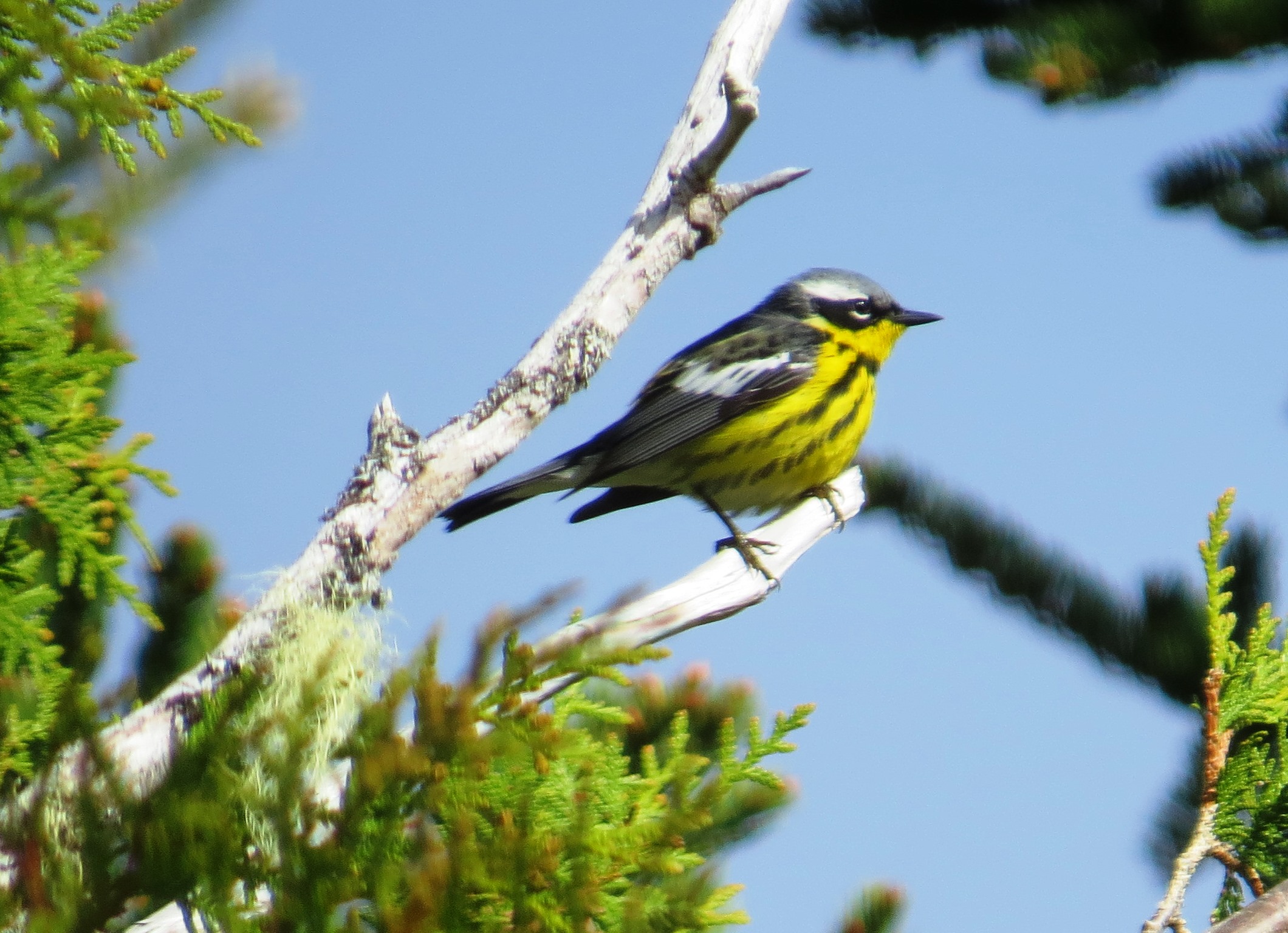
The stunning male Magnolia Warbler (photo Bob Bowers)

The stunning male Magnolia Warbler (photo Bob Bowers)

If you are an Arizona grandparent with grandkids graduating in Virginia and Connecticut in the summer, you go.  If you are a birder, you take your binoculars.  We just returned from such a trip, visiting family, celebrating graduations and touring the nation’s capital.  It always amazes me to see the diversity of birdlife in different parts of the country.  You don’t have to travel to Mexico, Africa or Australia to find strange birds.  If your travels take you out of state this summer and you’re a birder, don’t forget your binoculars.

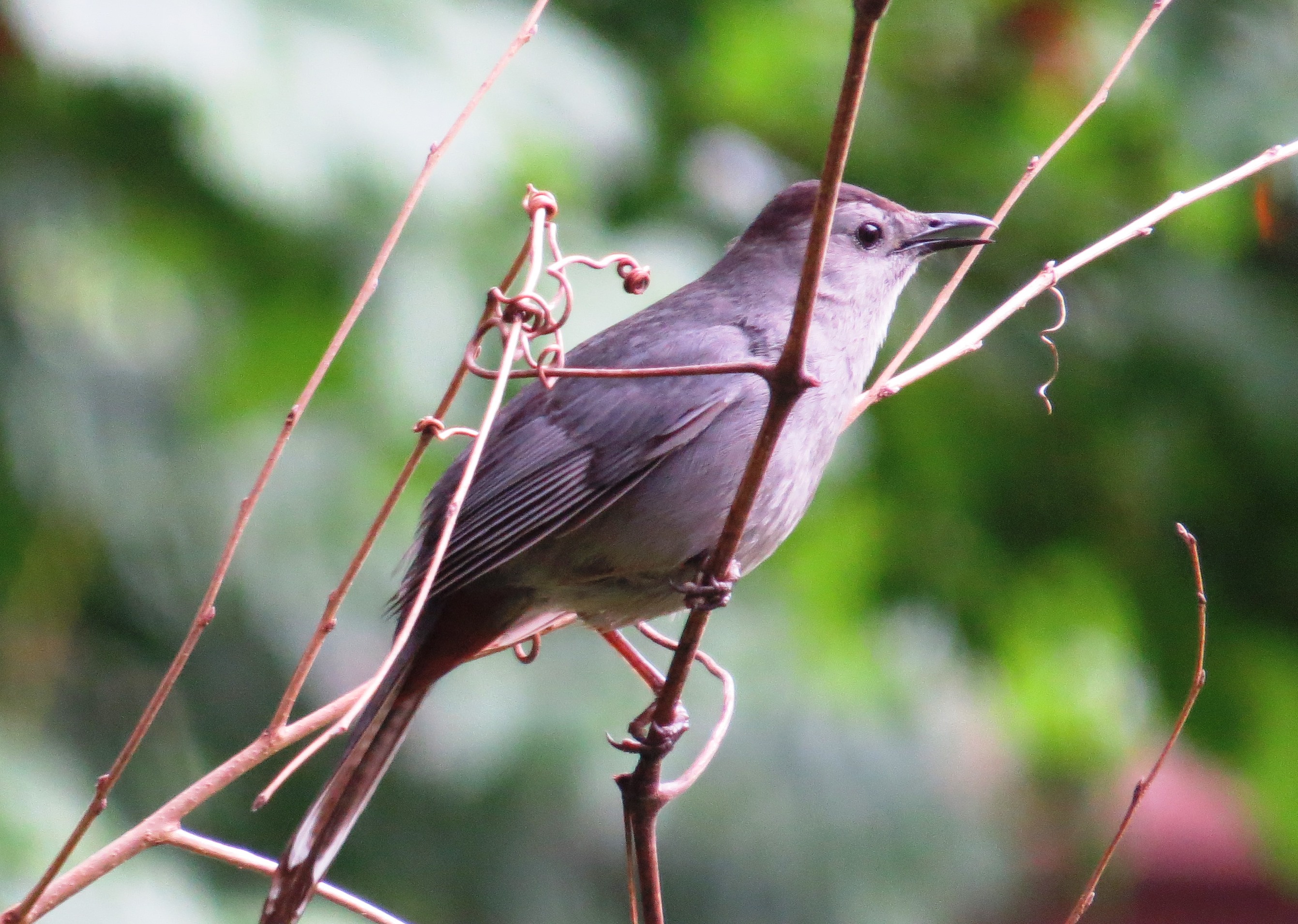
A mimic like mockingbirds, the Gray Catbird is common back east (photo Bob Bowers)

A mimic like mockingbirds, the Gray Catbird is common back east (photo Bob Bowers)

Of course, we missed some ‘yard’ birds you don’t find back east, like Verdins, Cactus Wrens and Vermilion Flycatchers.  Some others are found both places, like mockingbirds and cardinals, although you might have trouble recognizing an eastern cardinal’s song.  Maybe it’s that New York accent.  The real treat, though, are the birds you just don’t see in Arizona, like Carolina Chickadees, Gray Catbirds and a plethora of colorful spring warblers, like Black-throated Green, Black-throated Blue, Bay-breasted, Chestnut-sided and Magnolia.  Occasionally, one of these will wander or be blown off-course into Arizona, like a Magnolia Warbler that was reported at the Desert Botanical Garden in Phoenix in May.  This is a stunningly beautiful bird, but I don’t think I would drive to Phoenix and elbow my way through a crowd for a glimpse, at least not when a graduating grandkid on the east coast gave me an opportunity to see dozens.

Atlantic Puffin in breeding plumage, Machias Seal Island (photo Prudy Bowers)

Atlantic Puffin in breeding plumage, Machias Seal Island (photo Prudy Bowers)

Our two graduations were separated by a couple of weeks, just enough time to visit Acadia National Park and attend the Down East Birding Festival.  Not sure why it’s called ‘down’ east, since this part of Maine is so far up east, an accidental turn put us in Canada.  Campobello Island, Acadia National Park and Bar Harbor are remarkably beautiful and worth a visit, regardless of graduations.  Bar Harbor, by the way, is pronounced ‘Bah Hahbah’, maybe another reason eastern cardinals get confused.  The Down East Birding Festival is a low-key, under-attended gathering that is a fun way to add a lot of birds to your western-based life list.  One of the highlight field trips they offer is a boat ride out to Machias Seal Island, under protection of the Canadian Coast Guard.  With proper weather and a little luck, you get permission to land and spend an hour in an enclosed blind on this small rocky islet.  Atlantic Puffins, Arctic Terns and Razorbills nest here, and they pose so close to the blind you don’t need binoculars or telephoto lenses.

Spruce Grouse in Moosehorn Refuge, Maine (photo Prudy Bowers)

Spruce Grouse in Moosehorn Refuge, Maine (photo Prudy Bowers)

The Down East Festival also provides professionally guided field trips into Moosehorn National Wildlife Refuge, a mixed woodland and wetland habitat with thick stands of spruce.  Loop roads cross some of the 8,000 acres of the Edmund’s division, an area managed specifically for the American Woodcock.  In addition to woodcocks and lots of warblers, this is a great place to find Spruce Grouse, Boreal Chickadees, Whip-poor-wills and Blue-headed Vireos.

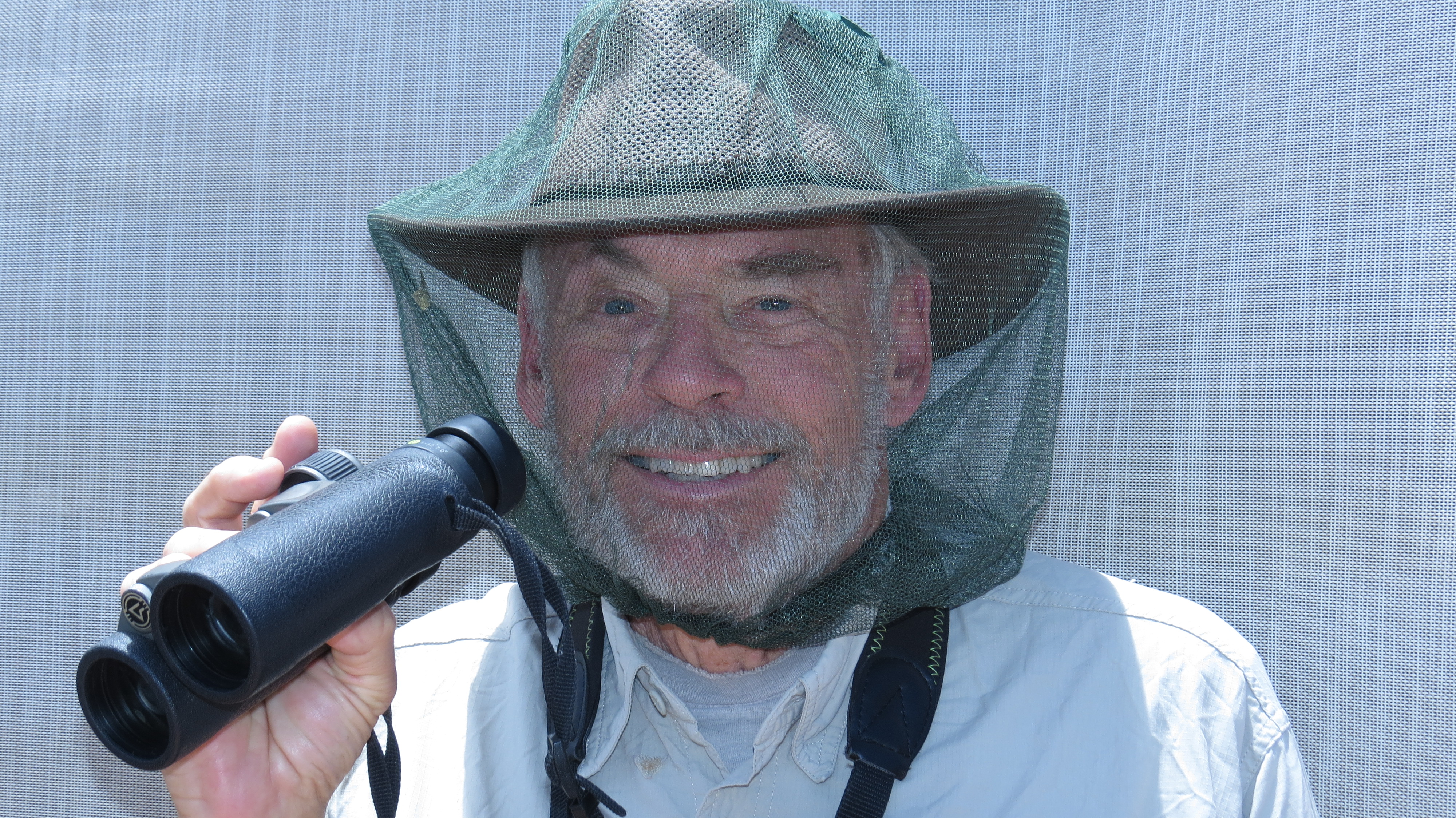
The author, birding in black fly country (photo Prudy Bowers)

The author, birding in black fly country (photo Prudy Bowers)

I used to wonder why warblers, vireos and Ruby-throated Hummingbirds would leave their bug-rich Mexican habitat to fly hundreds of miles north to nest in the spring.  Now I know.  I’ve been to bug-rich Mexico, but it doesn’t hold a candle to bug-richer Maine, home of the black fly.  Black flies might be worse than mosquitoes, which, by the way, are also present.  At least the males, which appear first, don’t bite like the females, but when you are picking hundreds of tiny black flies out of your facial orifices, it doesn’t seem to matter much.  Fortunately, you can buy a bug net to cover your face and head, and, surprisingly, you can even use your binoculars while wearing it.  It’s worth it to get a good look at a Magnolia Warbler.

(This article originally appeared in the July, 2014 issue of the Saddlebag Notes newspaper, Tucson, Arizona.)
Posted in Uncategorized | Tagged , , , | Leave a comment

Are Playback Apps Good or Bad for Birding?

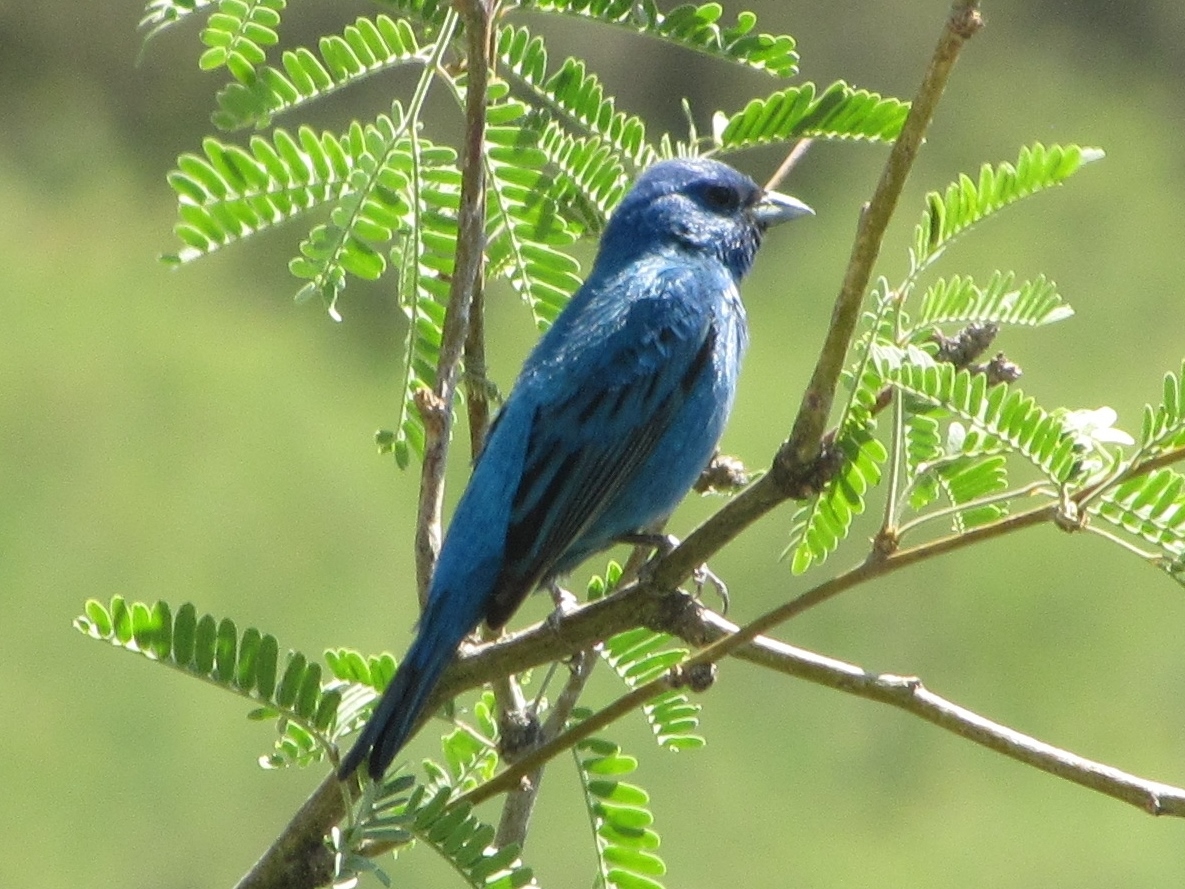
Playback helped find this rare Indigo Bunting near Peppersauce Canyon (photo Bob Bowers)

Playback helped find this rare Indigo Bunting near Peppersauce Canyon (photo Bob Bowers)

I would guess there are few people around unfamiliar with apps, but if you’re one of them, here’s a quick explanation:  Apps, short for ‘mobile application software’, are clever little programs you can download (often for free) onto your iPhone, Droid or other mobile device, giving you the ability to play games, connect socially, stay current with news and weather, plot your caloric intake, map a route, find the cheapest nearby gas station and a million other things.  Literally.  Apple now offers more than a million apps with thousands of new ones added monthly, and more than 60 billion have been downloaded.

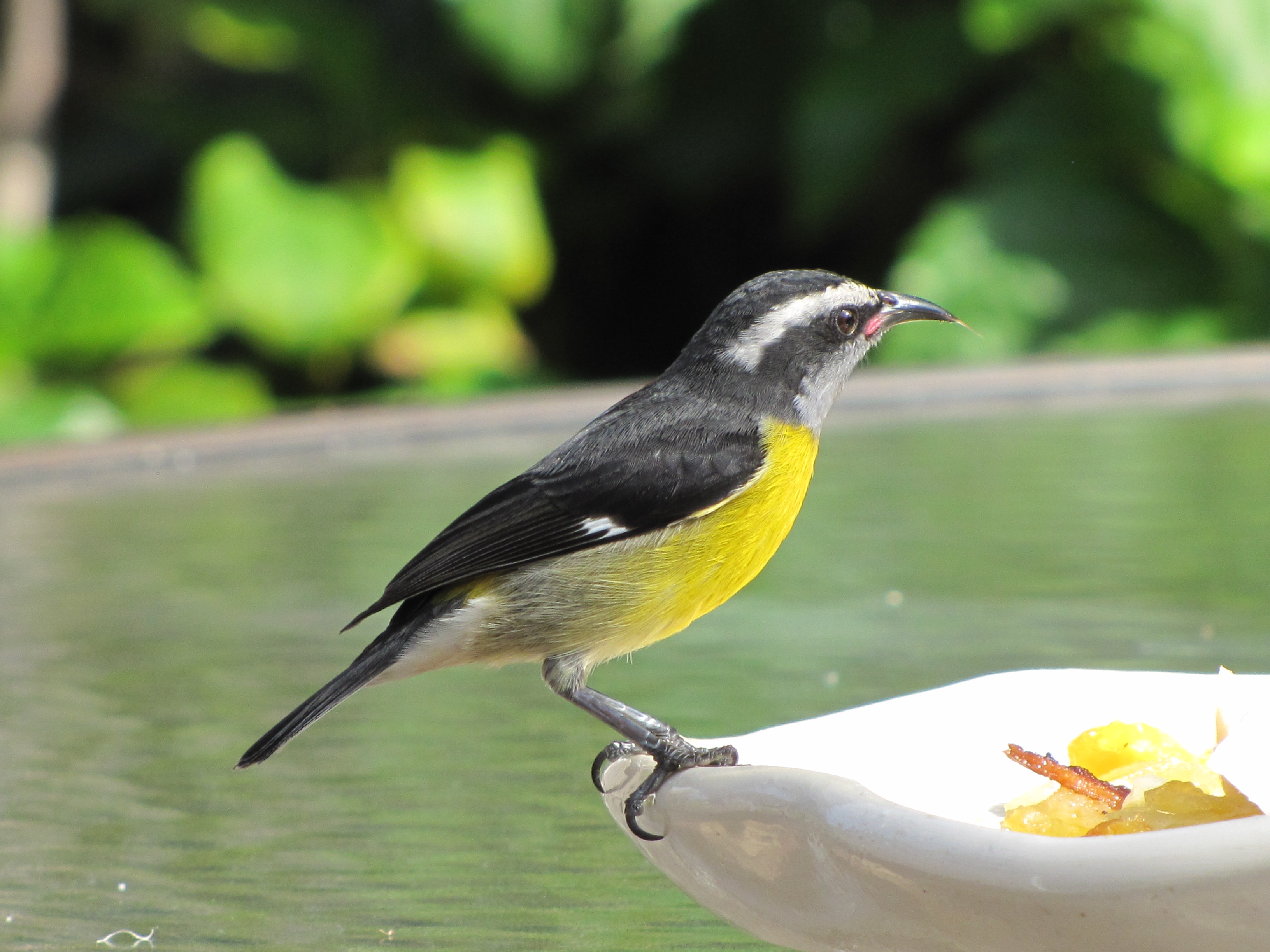
You don't need playback to get a good look at a Bananaquit (photo Bob Bowers)

You don’t need playback to get a good look at a Bananaquit (photo Bob Bowers)

There are apps for just about everything, and birding is no exception.  You can download a Sibley birding app, for example, that puts most of the 3-pound, 545-page ‘Sibley Guide to Birds’ in your pocket, including thousands of colored illustrations and range maps for all birds found north of Mexico.  The app lets you organize this wealth of information taxonomically or alphabetically by either first or last name, and gives you comparitive side-by-side drawings of similar birds.  The app’s most dramatic feature, however, is its ‘playback’.  Playback allows the user to play the calls and songs of more than 900 birds.  This powerful tool is significantly valuable to field ornithologists, guides and anyone wanting to learn more about birds.  Using playback to learn songs has helped me identify hidden birds, and in leading field trips I have used playback to find elusive birds for birders who have never seen them.  In Mexico this January we found a beautiful kingbird perched in the open.  Easily seen, we still couldn’t identify him with certainty.  We knew it was either a Tropical or a Couch’s Kingbird, but they are identical except for their song, and this bird wasn’t singing.  I played a short snippet of the Couch’s song and the bird answered back with the same, giving us a positive ID (and a new ‘life bird’).  In spite of these benefits, however, playback is controversial and has no shortage of critics.

Birds establish territories for feeding, attracting mates and nesting, and males patrol these territories, singing to draw a mate or to keep competitors at bay.  Playback leads the bird to think another male is challenging his territory, and he’ll fly to the sound to defend his territory, giving the birder an opportunity to see a bird he might otherwise miss.

Using playback when a predator is near could prove fatal (photo Bob Bowers)

Using playback when a predator is near could prove fatal (photo Bob Bowers)

Detractors argue that field use of playback can be harmful to birds by luring them into the open, exposing them or their nestlings to predators, by disturbing the status and relationship of males to females and by distracting and stressing birds unnecessarily.  Critics also cite the impact on other birders, who can be misled and annoyed by artificial song recordings while they are listening for real songs to track birds.  While the annoyance factor is inarguable (think of cell phone use in a restaurant or theater), actual harm to birds has not been proven.  Harm theories seem logical, but there are counter arguments that are equally credible.   Supporters argue the use of playback is actually less disruptive to birds, saying that drawing a bird into view from a distance is better than physically invading the habitat.  They also point out that playback targets a single species, with little or no impact on other birds, and that successful playback will minimize the time (and disruption) of birders in the habitat.  Even a birder sitting quietly for a prolonged time in a bird’s habitat can have negative impact.

Playback proved this bird was a Couch's Kingbird, not his lookalike, the Tropical Kingbird (photo Bob Bowers)

Playback proved this bird was a Couch’s Kingbird, not his lookalike, the Tropical Kingbird (photo Bob Bowers)

Birding by any means is generally invasive and disruptive to birds.  Tramping through habitat, pointing binoculars, scopes and long-lensed cameras at feeding, foraging and nesting birds can impact them, and there is little difference between birders using playback and those who pish or mimic bird calls and songs.  Consequently, lacking scientific findings to the contrary, playback seems a useful and acceptable tool.  Nevertheless, the field use of such a powerful device should be moderate and responsible.  Playback should not be used when other birders are present without their permission or where prohibited.  In a birding group, the leader decides whether or not to use playback, and if you are alone, the decision obviously is yours.  There should be a reason to use it (if birds are obvious or otherwise identifiable, it’s unnecessary), and if you choose to use playback it should be limited to a targeted bird.  Use calls rather than songs first, and play short snippets with longer intervals of silence.  Birding is a lot like fishing.  If you get no response within a few minutes, move on.  Above all else, don’t overdo it.  I suspect that birds can get just as annoyed at excessive playback as we can with cell phones in restaurants.

(This article originally appeared in the May, 2014 issue of the Saddlebag Notes newspaper, Tucson, Arizona.)
Posted in Uncategorized | Tagged | Leave a comment

Birding Mexico’s Yucatan Peninsula

Turquoise-browed Motmot, Valladolid, Mexico (photo Prudy Bowers)

Turquoise-browed Motmot, Valladolid, Mexico (photo Prudy Bowers)

Development of Cancun as a tourist destination was begun in January, 1970, when there were just three residents.  The last census in 2010 reported 628,306 residents.  Today, Cancun is Mexico’s primary tourist destination with more than three million visitors each year, and if you are one of those, you’ll swear that none of them leave the city.  Actually, relatively few of them do, and those that do roam seldom go further than Tulum, a couple of hours along the coast to the south, or a similar distance to the west, to the Mayan ruins at Chichen Itza.  For the most part our past visits to the Yucatan Peninsula have been similar.  We’ve snorkeled the beaches of Cancun, dived the reefs at Cozumel and Akumal and toured the ruins at Tulum and Chichen Itza.   These trips all took place before I became obsessed with birding, however, and there are a lot of birds in the Yucatan.  In January we decided to make up for this oversight by flying to Cancun, renting a car and driving 2,000 miles through the three states of the peninsula, Quintana Roo, Campeche and Yucatan, as well as two adjacent states, Chiapas and Tabasco.  We did all this in something less than a month, and it turned out to be a trip worth sharing.

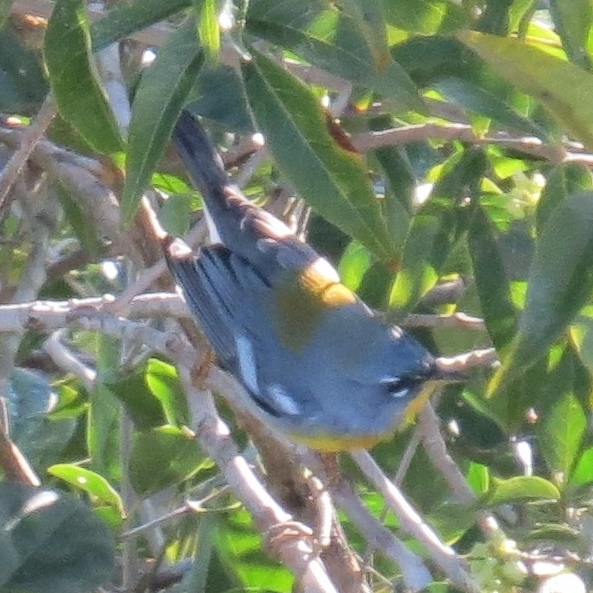
Migratory Northern Parula at O ka'an Resort, Piste, Mexico (photo Bob Bowers)

Migratory Northern Parula at O ka’an Resort, Piste, Mexico (photo Bob Bowers)

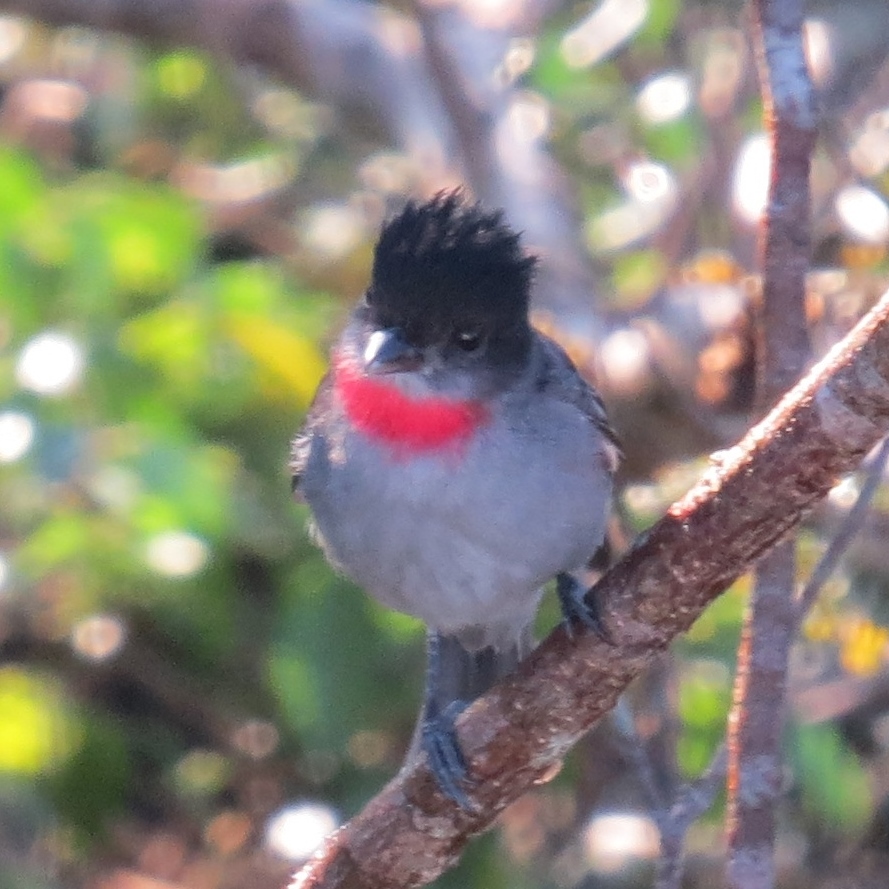
Birding Mexico in January is particularly productive, since many North American birds fly south for the winter, augmenting the impressive number of Mexican residents.  This can be a bit challenging for an Arizonan, though, since most of these migrants are from the eastern U.S. and rarely, if ever, seen in the west.  When your vireo experience is pretty much limited to Bell’s, Plumbeous, Warbling and Hutton’s, you’re not prepared for White-eyed and Yellow-throated Vireos, which might as well be Yucatan endemics for a westerner.  Once you realize how many eastern U.S. migrants are around, though, you can relax and enjoy the opportunity to see birds that otherwise require a long trip east and some luck.  The last time we birded the eastern U.S. I failed repeatedly to find a Hooded Warbler, for example, but in the Yucatan in January they were so common they almost became ordinary.  At O Kaan, near Chichen Itza, Black-throated Green Warblers were as thick as House Finches here, and we discovered a flock of 200 Eastern Meadowlarks near Palenque.  Other eastern U.S. migrants included Painted Bunting, American Redstart, Rose-breasted Grosbeak, Northern Parula, Gray Catbird, Baltimore Oriole and Yellow-throated Warbler.  The American Bird Conservancy estimates one and one-half billion birds of 200 species migrate through the Yucatan Peninsula each year, so this is clearly a good place for winter birding.

Rose-throated Becard, O ka'an Resort (photo Prudy Bowers)

Rose-throated Becard, O ka’an Resort (photo Prudy Bowers)

The icing on the cake for American birders, however, is the abundance of Mexican residents, birds you rarely, if ever, find in the U.S., east or west.  These are often breath-taking colorful or otherwise spectacular birds with names to match, like Turquoise-browed Motmot, Melodious Blackbird, Red-throated Ant-tanager, Violaceous Trogon, Golden-fronted Woodpecker, Masked Tityra, Rose-throated Becard and Rufous-browed Peppershrike.  The peninsula is also home to eleven endemic birds found nowhere else, including Yucatan Jay, Orange Oriole and Ocellated Turkey.

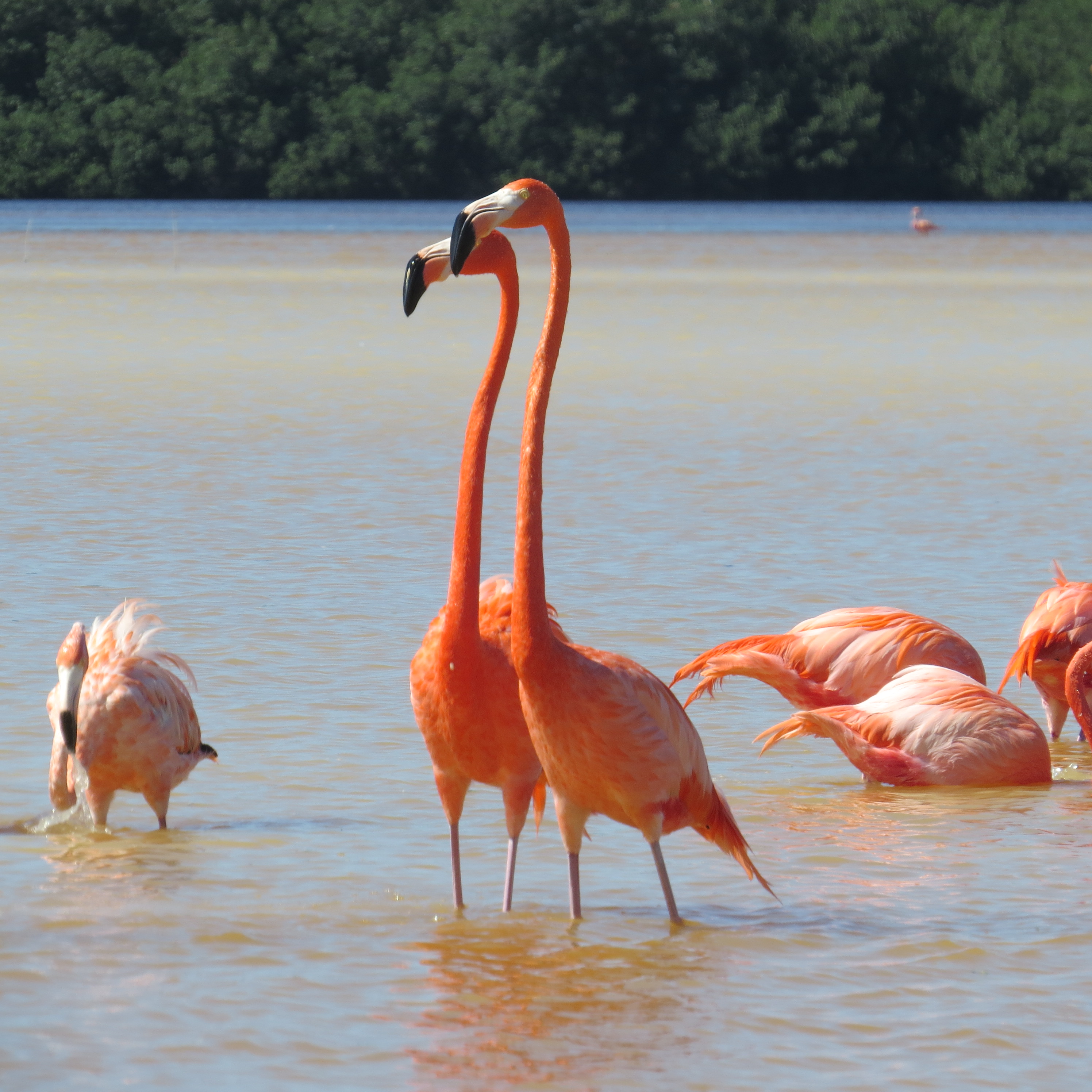
American Flamingos, Celestun, Mexico (photo Bob Bowers)

American Flamingos, Celestun, Mexico (photo Bob Bowers)

We planned our itinerary to include as many Mayan archeological sites as possible, reason enough to visit the Yucatan, and these partially open areas in the jungle were easy places to find birds.  Our favorites included Kohunlich, Calakmul, Palenque, Yaxchilan, Becan, Edzna and the Oka’an resort near Chichen Itza.  And don’t overlook Celestun, a small fishing village on the Gulf of Mexico just 60 miles from Merida.  Celestun is home to a 146,000-acre Biosphere Reserve, where more than 300 species of birds can be found, including thousands of wintering American Flamingos.  An inexpensive boat tour will put you up close and personal with these beautiful neon-pink birds, as well as take you into mangrove channels where 5-inch Pigmy Kingfishers hang out.  Our boat put us next to a feeding flock of 600 flamingos, and we could see nine other similarly-sized flocks.  Adding in other groups of flamingos that couldn’t be seen at the same time gave us an estimated winter gathering of 10,000 birds.  Celestun is Mayan for ‘painted stone’.  We never found a painted stone, but ten thousand neon-painted flamingos was a great consolation prize.

(This article originally appeared in the April, 2014 issue of the Saddlebag Notes newspaper, Tucson, Arizona.)

Posted in Birding Mexico | Tagged , , , , , | Leave a comment

The Sweet Sound of Springtime Birdsong

(note the following was published after the severe desert winter of 2010/2011)


The Curve-billed Thrasher's spring song is chaotic and unending (Photo Bob Bowers)

The Curve-billed Thrasher’s spring song is chaotic and unending (Photo Bob Bowers)

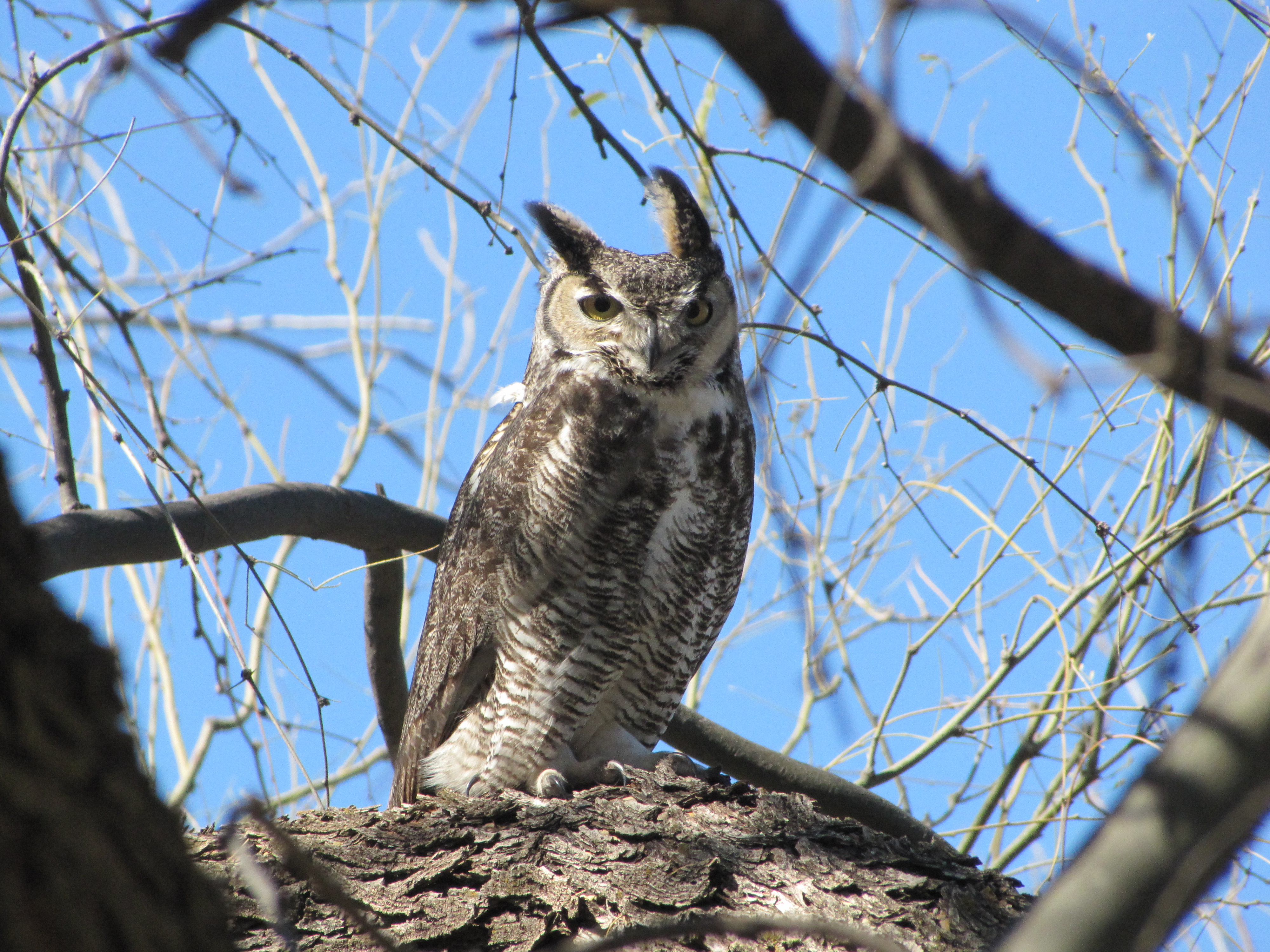
After the cheerless chill of an especially harsh winter, and the depressing sight of moribund palms and citrus, it’s nice to hear our birds singing again.  We may not enjoy the rich aroma of orange blossoms this April, but at least we can count on birdsong.  Living where we do, we enjoy a significant and widely-ranging variety of bird calls and songs, from the mechanical rattle of Cactus Wrens to the operatic repertoire of Northern Mockingbirds and Curve-billed Thrashers.  As I write this on a balmy Saturday afternoon, two of these three compete in the background, while Mourning Doves and a palm tree-nesting pair of Great Horned Owls trade whoos and hoots.

The hoot-hoot of the Great Horned Owl adds a spooky note to spring (Photo Bob Bowers)

The hoot-hoot of the Great Horned Owl adds a spooky note to spring (Photo Bob Bowers)

Although some birds, like the Northern Cardinal, sing together, male and female, year-round, most of our birdsong comes from the males, and usually only from late winter into spring and summer, when mates are sought and territories marked.  Calls, rather than songs, dominate most bird vocalizations the rest of the time.  Differentiating between calls and songs is not always easy, but in general, songs are melodious, while calls are short, to-the-point communications, like chips, chatters and whistles.  The Curve-billed Thrasher provides a good example, with his unmistakable and sharp whistle call, and his springtime rambling, unending song.

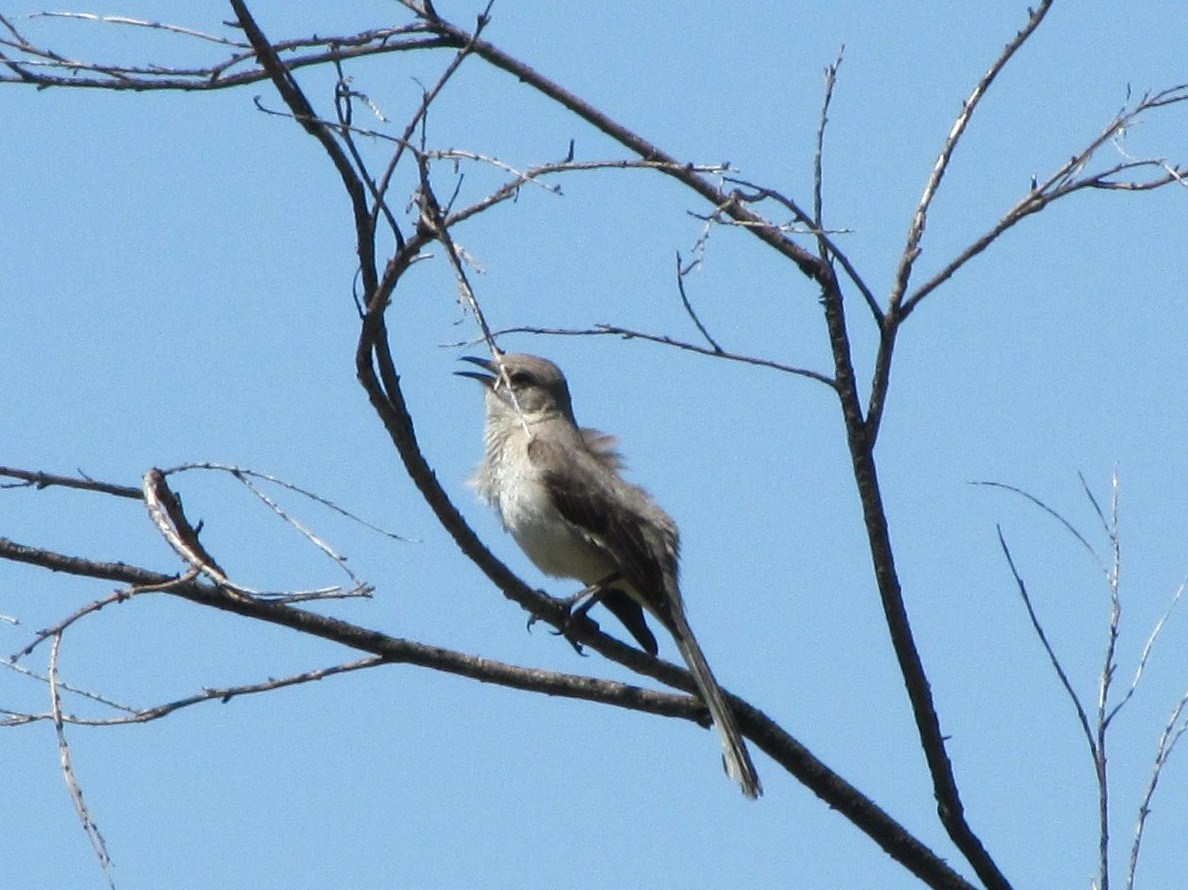
A Northern Mockingbird's song can be identified by its repetitive short phrases (Photo Bob Bowers)

A Northern Mockingbird’s song can be identified by its repetitive short phrases (Photo Bob Bowers)

Young birds mostly learn to sing from adult males, and mimids, like the Northern Mockingbird and Curve-billed Thrasher acquire songs from any bird they happen to hear.  For our resident mockingbirds and thrashers, this means their songs reflect those of other residents and passing migrants.  Migratory mimids, such as eastern Brown Thrashers and Gray Catbirds, build much larger and unusual song repertoires.  A New Jersey catbird, for example, was heard imitating a Central American flycatcher, and the Brown Thrasher’s repertoire exceeds 2,000 songs.  You can distinguish our mockingbirds from our thrashers, even though superficially they may sound the same.  The mockingbird’s songs are more stereotyped, and careful listening will reveal a pattern of repetitive phrases, while the Curve-billed Thrasher’s song is more chaotic and innovative with less repetition.  Thrashers can seem to sing incessantly, sometimes continuing a complex song for more than 10 minutes.  Unmated males, perhaps for obvious reasons, are particularly vocal.

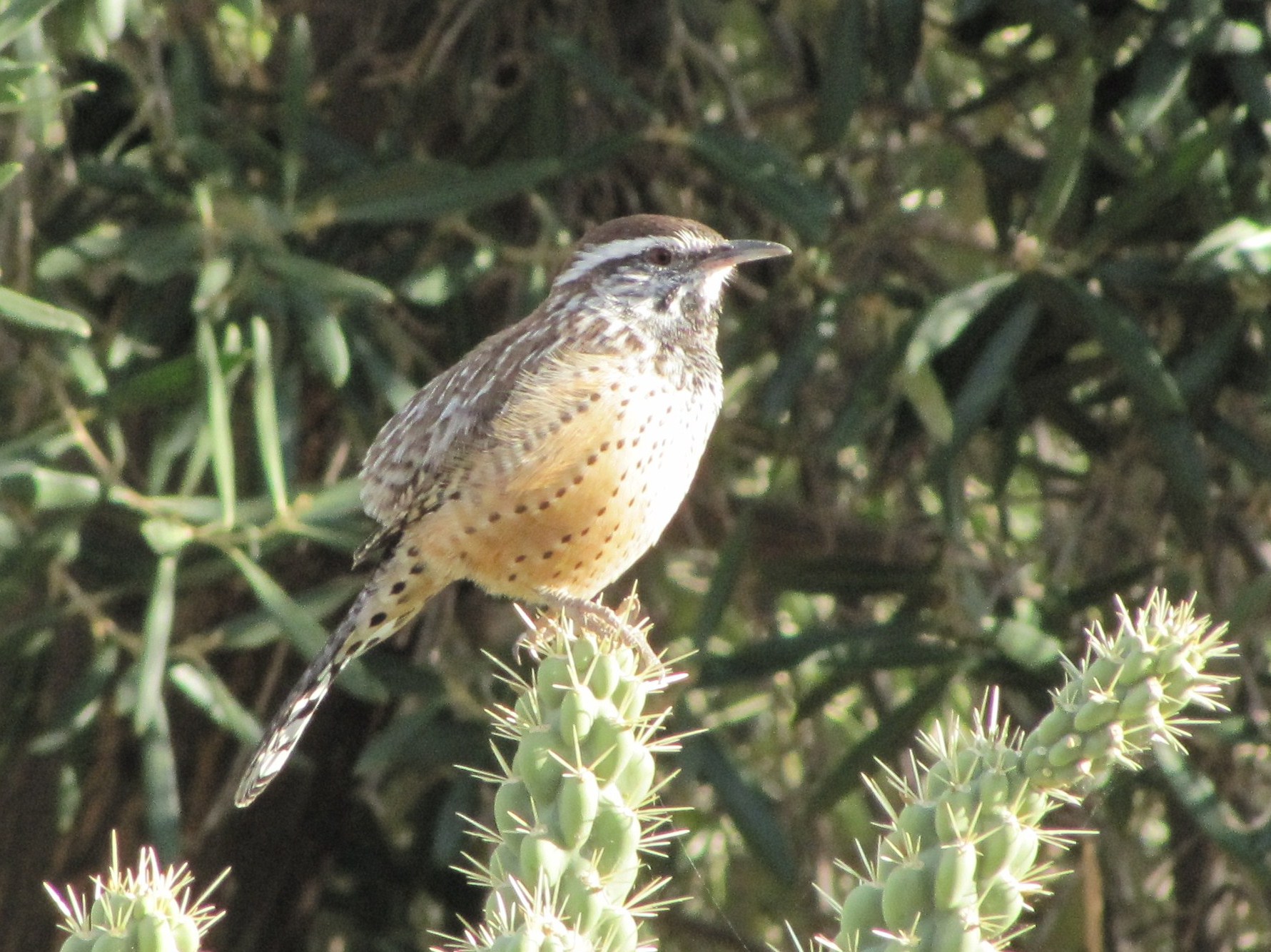
The Cactus Wren's song is more like a cranking engine than an operatic aria (Photo Bob Bowers)

The Cactus Wren’s song is more like a cranking engine than an operatic aria (Photo Bob Bowers)

One of the pleasures of birding is learning to recognize birds by their calls and songs.  Not always easy, especially for those of us with diminished hearing, but especially rewarding when you identify a bird by ear, and then have the bird appear to confirm your guess.  Some of our birds are pretty easy to learn this way, such as the Cactus Wren mentioned above, and Gambel’s Quail, with its insistent pup waaay pup call.  Once you’ve heard the Greater Roadrunner’s spooky, hollow clatter it’s hard to forget, as is the chatter of a Hooded Oriole.  Song can vary by location, too.  If you moved here from back east, you may not recognize our cardinal’s song immediately, even though the species is the same.  Describing birdsong phonetically is an art in itself, akin to a sommelier describing wine.  One of my favorites is the quite accurate description of a Rufous-winged Sparrow’s song as sweet, clear notes that accelerate, suggesting the sound a ping pong ball makes under a lowering paddle.  If you have a chance to go birding near Mazatlan, Mexico, you’ll find many birds easily identified by their unusual calls.  For example, the Golden-cheeked Woodpecker’s weeechu weeechu sounds like a child’s squeeze toy, and the Yellow-winged Cacique does a perfect imitation of a tricycle bell’s ching ka-ching ka-ching.

Our Great-tailed Grackles are vocal all year, though it would be a stretch to call their vocalization singing.  The Sibley Guide to Birds describes our grackle’s ‘song’ as a series of loud, rather unpleasant noises:  rattles, sliding tinny whistles, rustling sounds like thrashing branches or a flushing toilet.  Not exactly a springtime serenade, but it does get your attention.

(This article originally appeared in the April, 2011 issue of the Saddlebag Notes newspaper, Tucson, Arizona, following a particularly harsh and freezing winter.)

Posted in Birding Arizona | Tagged , , , | Leave a comment

SaddleBrooke’s Spring Switch in Lineup of Birds

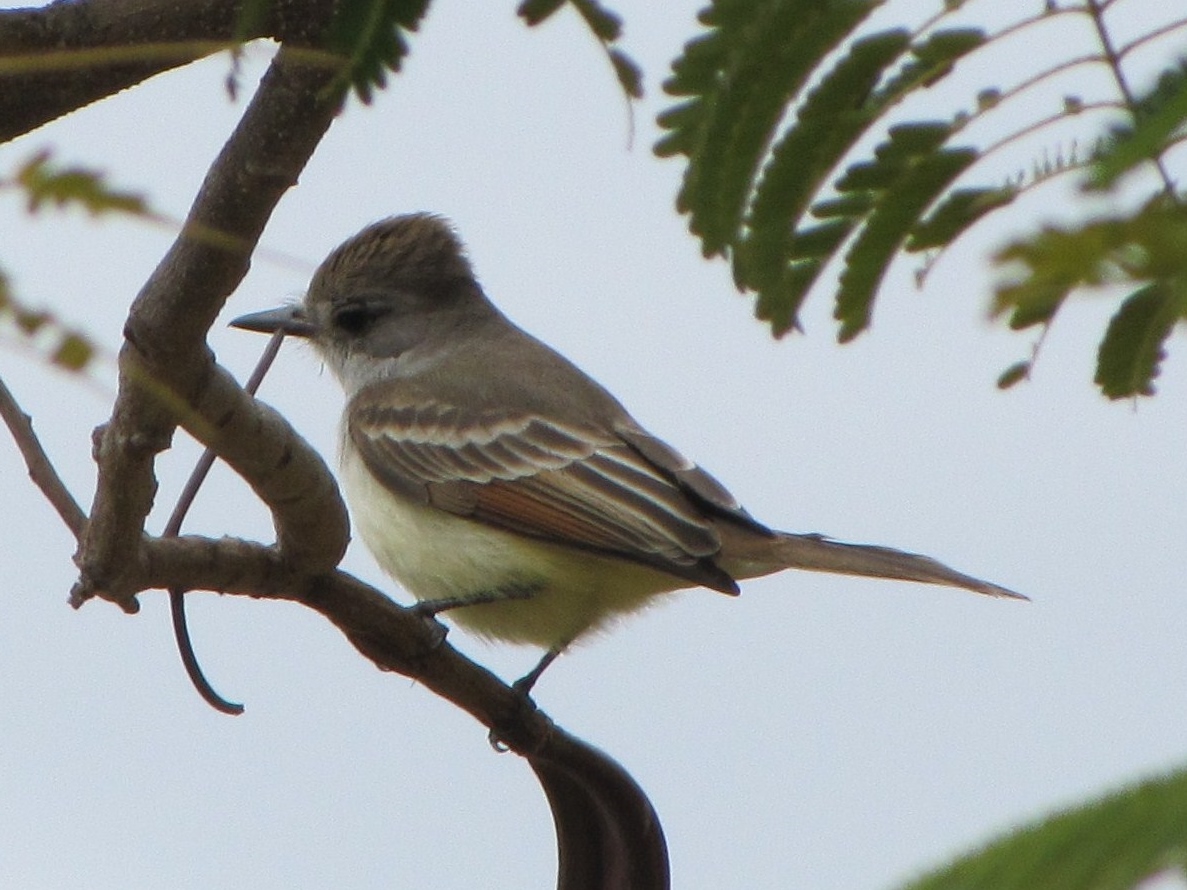
Ash-throated Flycatchers arrive with spring bugs (Photo Bob Bowers)

Ash-throated Flycatchers arrive with spring bugs (Photo Bob Bowers)

Baseball spring training tests player skill, compatibility, interaction and adaptability, ultimately producing a lineup that hopefully succeeds until fall.  Similarly, Mother Nature has been managing the spring lineup of birds for eons, long before Abner Doubleday (or whoever) dreamed up our national pastime.  Those fly-by-night migrants that arrived as summer ended to winter over, like White-crowned Sparrows, Red-naped Sapsuckers and Ruby-crowned Kinglets have been scratched and will shortly rejoin the minor leagues up north.  In their place, heavy hitters like Hooded Orioles, Black-headed Grosbeaks and Turkey Vultures move in, build homes and start raising families.  The big guns are joined by finesse players such as Lucy’s Warbler, Bell’s Vireo and Broad-tailed hummers, all of whom will steal your heart if not second base.

Beating other birders to the punch by reporting the FOS (first-of-season) Hooded Oriole or Ash-throated Flycatcher, is as much a game as baseball, and daily reports on the Arizona-New Mexico list-serve will soon be flooded with FOS accounts.  Unlike baseball, however, anyone can play this game.  To best your friends at this backyard sport, follow the guidelines below.

When March arrives, Hooded Orioles begin to show (Photo Bob Bowers)

When March arrives, Hooded Orioles begin to show (Photo Bob Bowers)

If you post your sightings on a calendar, use last year’s to give you a rough idea when to start looking for any given bird.  If you don’t post sightings to a calendar, you should start or you’re not likely to be a contender.  Our birds aren’t as predictable as Capistrano’s swallows, though, so you need to start looking early and stick with it.  In 2012, our first Hooded Oriole, a female, showed up on March 16, followed by the first male on March 18.  Last year, on the other hand, our first Hooded Oriole was a male, who didn’t make an appearance until April 6, followed by the first female on April 8.  Of the three orioles that return to Arizona in the spring, only the Hooded actually breed in SaddleBrooke, and you can usually find them in or near a palm tree, their favorite nesting spot.  Once you have spotted Hooded Orioles, start looking for Bronzed Cowbirds (the male is pitch-black with a bright red eye).  Bronzed Cowbirds are parasitic with a special attraction to Hooded Orioles.  Rather than build their own nests, incubate eggs and raise their young, all species of cowbirds sneak their eggs into other bird nests and let the confused hosts incubate and raise the foreign intruders.  When Hooded Orioles start nesting, you should soon see Bronzed Cowbirds.

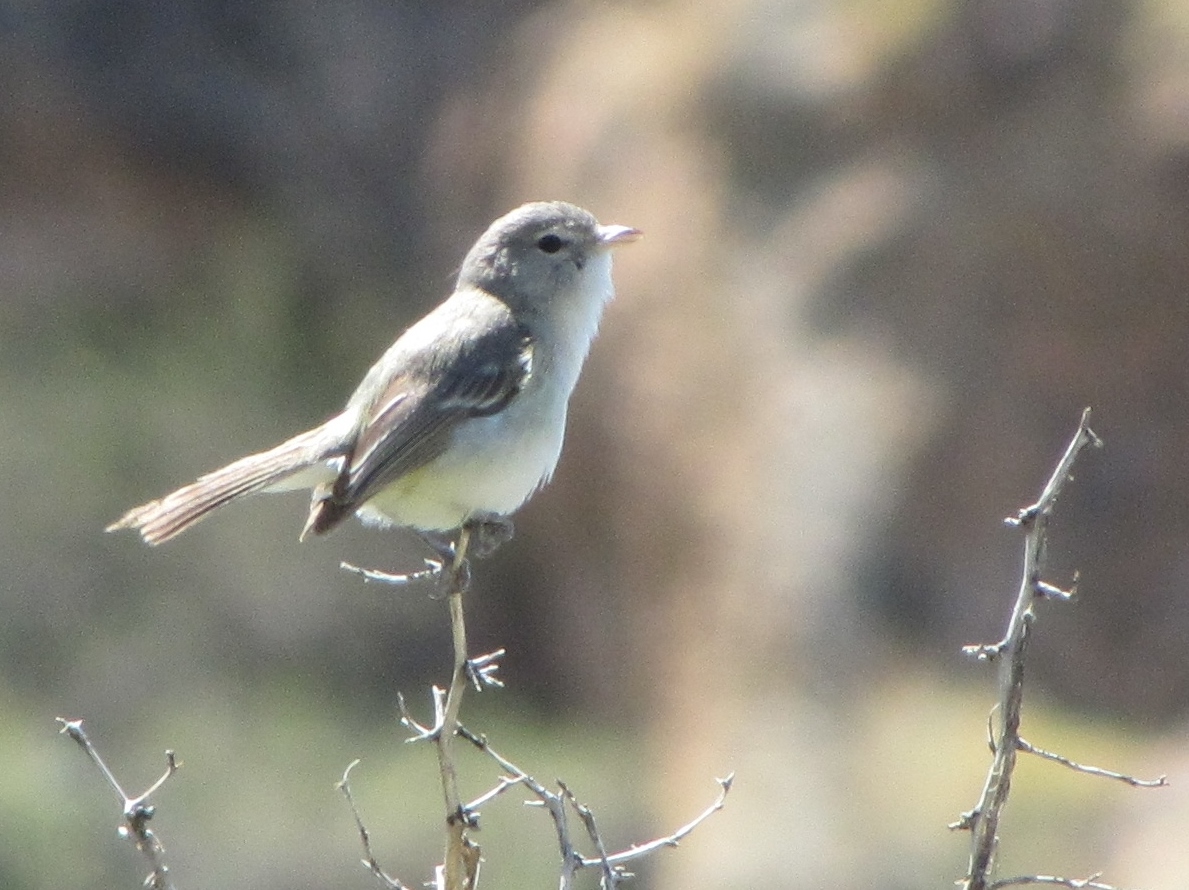
Bell's Vireo will sing all summer (Photo Bob Bowers)

Bell’s Vireo will sing all summer (Photo Bob Bowers)

It’s relatively easy to be the first on your block to spot our first-of-season Turkey Vulture.  Just stand outside all day looking at the sky, although you might want to take a break now and then if you’re married or have any close friends.  Better than using last year’s calendar or staring at the sky to learn when some species of bird might appear, however, is a book published by the Tucson Audubon Society, Finding Birds in Southeast Arizona.  This frequently updated book not only directs you to the most likely sites for finding local birds, it includes a complete set of charts that summarize historical records for the presence and abundance of those species.  Checking Hooded Oriole, for example, shows the bird’s presence as casual (less than rare) until mid-March, uncommon from mid-March to the first of April, common from then until mid-September and uncommon again until mid-October, when its status returns to casual.  In other words, just like your favorite ballplayer.

(This article originally appeared in the March, 2014 issue of the Saddlebag Notes newspaper, Tucson, Arizona.)

Posted in Birding Arizona | Tagged , , , , | Leave a comment

Free Guided Bird Walks in Southeast Arizona


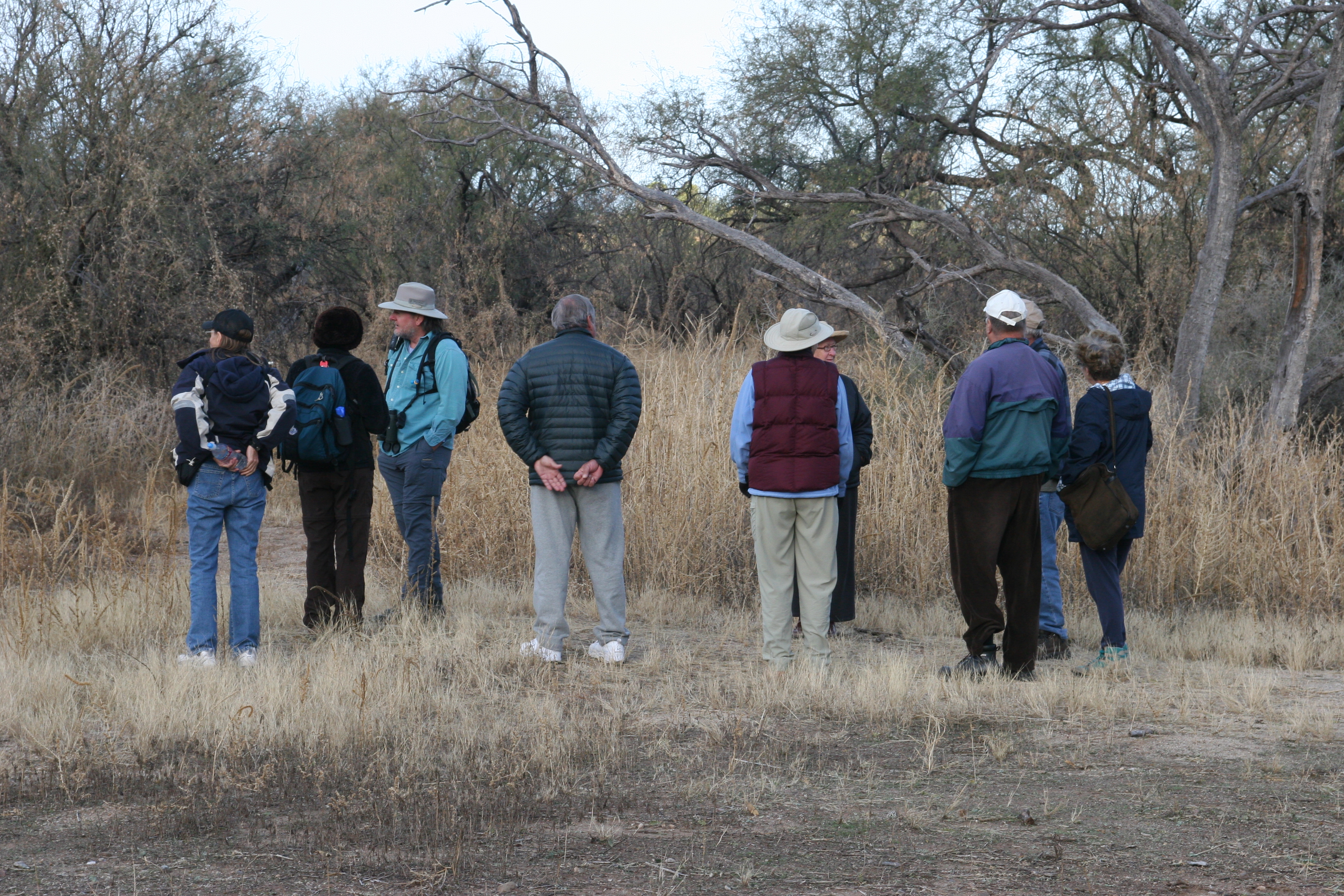
A Free Guided Bird Walk in Catalina State Park (photo Bob Bowers)

A Free Guided Bird Walk in Catalina State Park (photo Bob Bowers)

An article in the August 5, 2011 issue of USA Today, titled Bird-watching is Big Business in Arizona, named our part of the state as one of the “two or three best places in the United States to look for birds.”  The article, quoting a 2006 Fish & Wildlife survey, pointed out that 1.3 million visitors came to Arizona that year to bird-watch, spending 838 million dollars in the process.  If you enjoy birds and live in southeast Arizona, you picked the right place.  This much interest in birding leads to an infrastructure found in few other places.  The Tucson Audubon Society is one of the best-organized and administered Audubon affiliates in the country, the Arizona Field Ornithologists are headquartered in Phoenix and the Arizona/New Mexico online list-serve at the U of A posts daily bird reports from more than a thousand subscribers.  Even the California-based Western Field Ornithologists conducted their 2011 annual meeting in Sierra Vista.

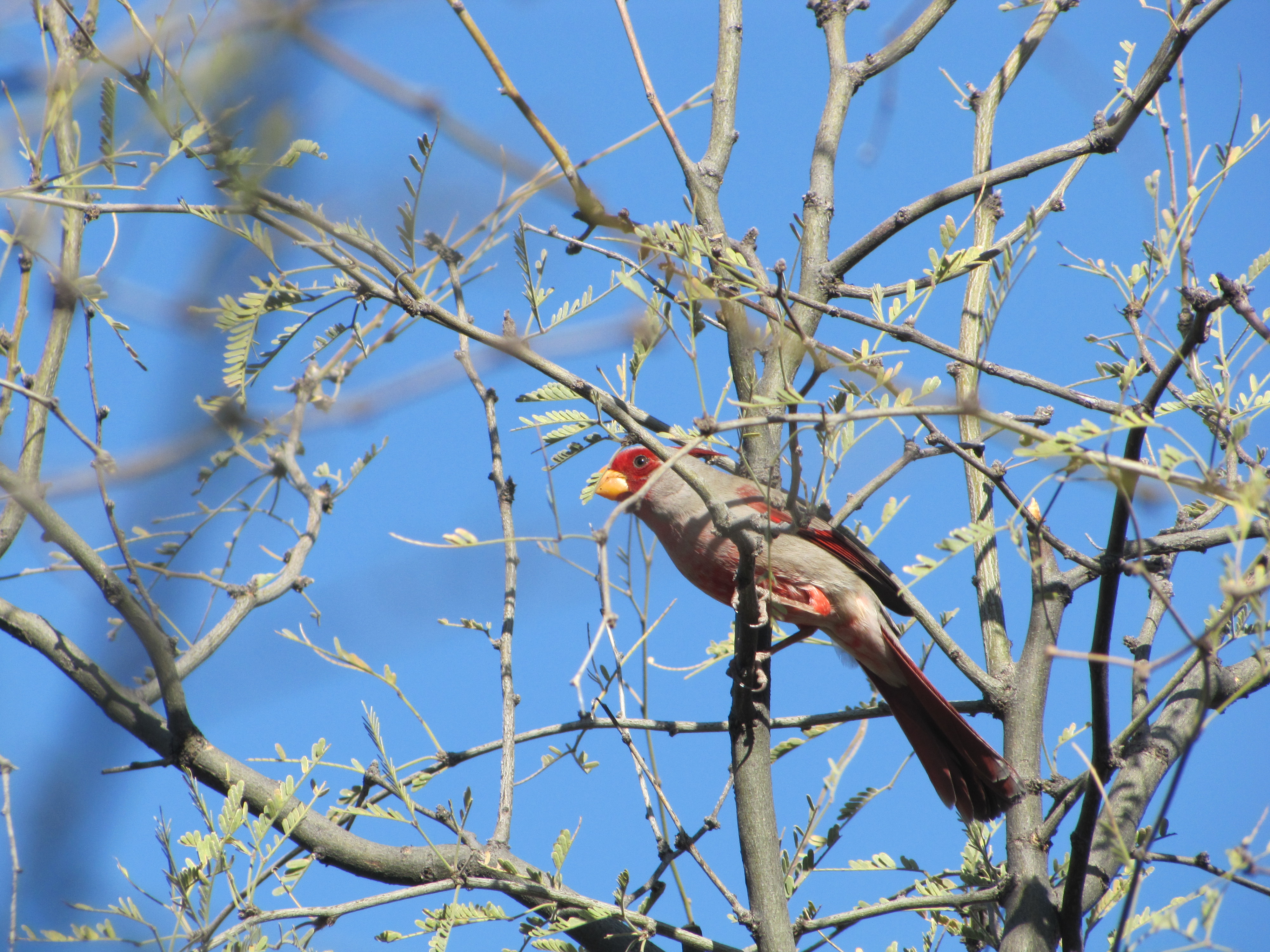
A Male Pyrrhuloxia with Bright Red Face and Yellow Bill (photo Bob Bowers)

A Male Pyrrhuloxia with Bright Red Face and Yellow Bill (photo Bob Bowers)

Birding festivals are held across the state from Yuma to Verde Valley to Sierra Vista, and include the popular Wings over Wilcox and the Southwest Wings Birding Festival.  2011 also marked the inaugural Tucson Bird & Wildlife Festival.  Where birding festivals, birds, and birders congregate, one might expect to find plenty of birding guides.  One would be right.  We have a disproportionately rich roster of guides in southeastern Arizona, leading trips to popular state destinations as well as into Mexico and beyond.  Many of these guides are excellent, and know when and where to find the state’s finest birds.  Their fees are fair, and there are many advantages to the personalized trips and smaller groups they offer.  On the other hand, shelling out one or two hundred dollars for a day’s outing may not fit your budget.  If that’s the case, you should know there are some excellent alternatives.


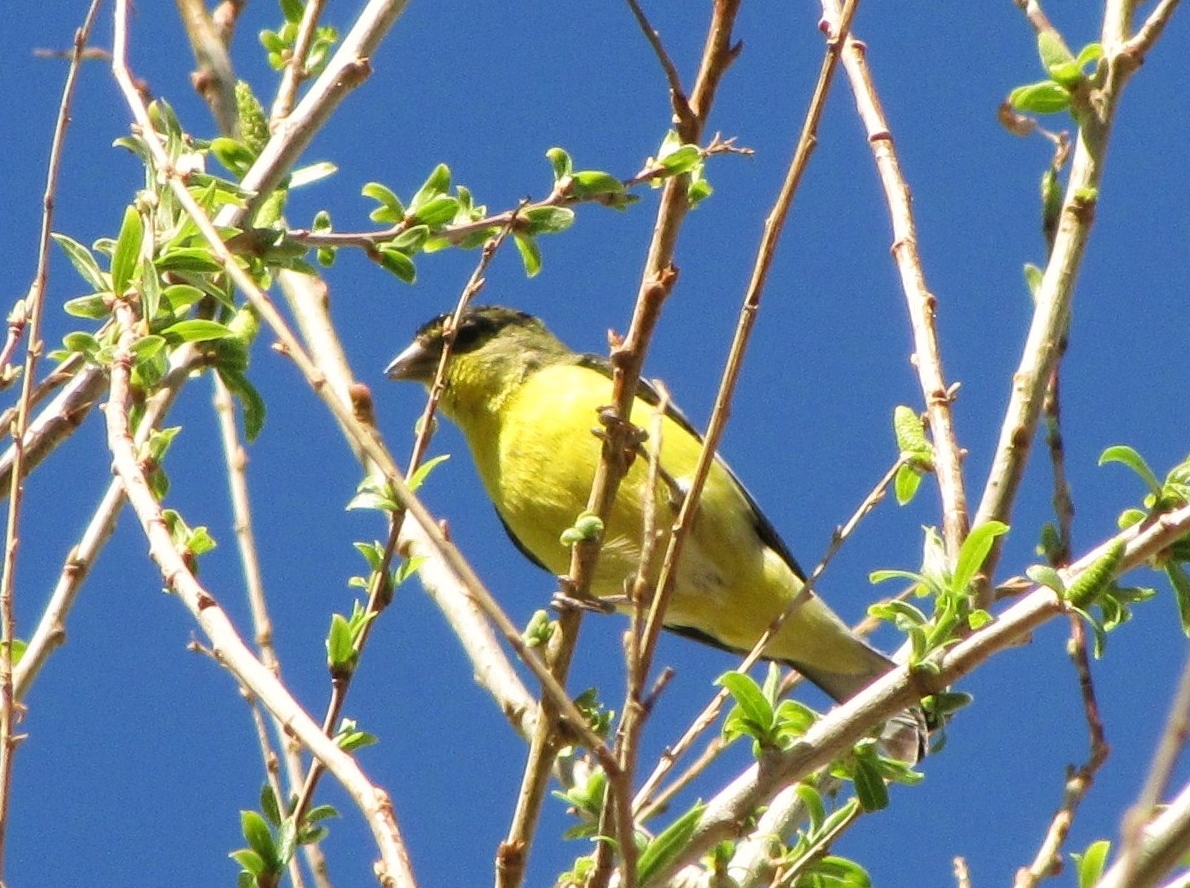
SE Arizona's ubiquitous Lesser Goldfinch (photo Bob Bowers)

SE Arizona’s ubiquitous Lesser Goldfinch (photo Bob Bowers)

Some of the best local birding areas schedule regular free bird walks.  Catalina State Park is the closest one to SaddleBrooke, and, with 200 birds on their checklist one of the most productive any time of the year.  Dennis Wright, an outstanding professional guide, led weekly Friday morning walks in the park for years, but, unfortunately, Dennis moved to Oregon.  In his place, the park currently draws walk leaders from seasonal campers and other local guides.  Free walks have been scheduled up to three times weekly from October through March, and you can call (520) 628-5798 for more information.

Agua Caliente Park, near the entrance to the Mt. Lemmon scenic highway on the northeast side of Tucson, is a much longer drive from SaddleBrooke, but well worth it.  Free guided walks, especially for beginners, are held on Thursdays, and the free park’s oasis setting, with palm trees and water are an ideal picnic spot.  Meeting times and more information are available at (520) 615-7855.  This park is noted for several rare bird visits, including the Plain-capped Starthroat, a Mexican hummingbird.

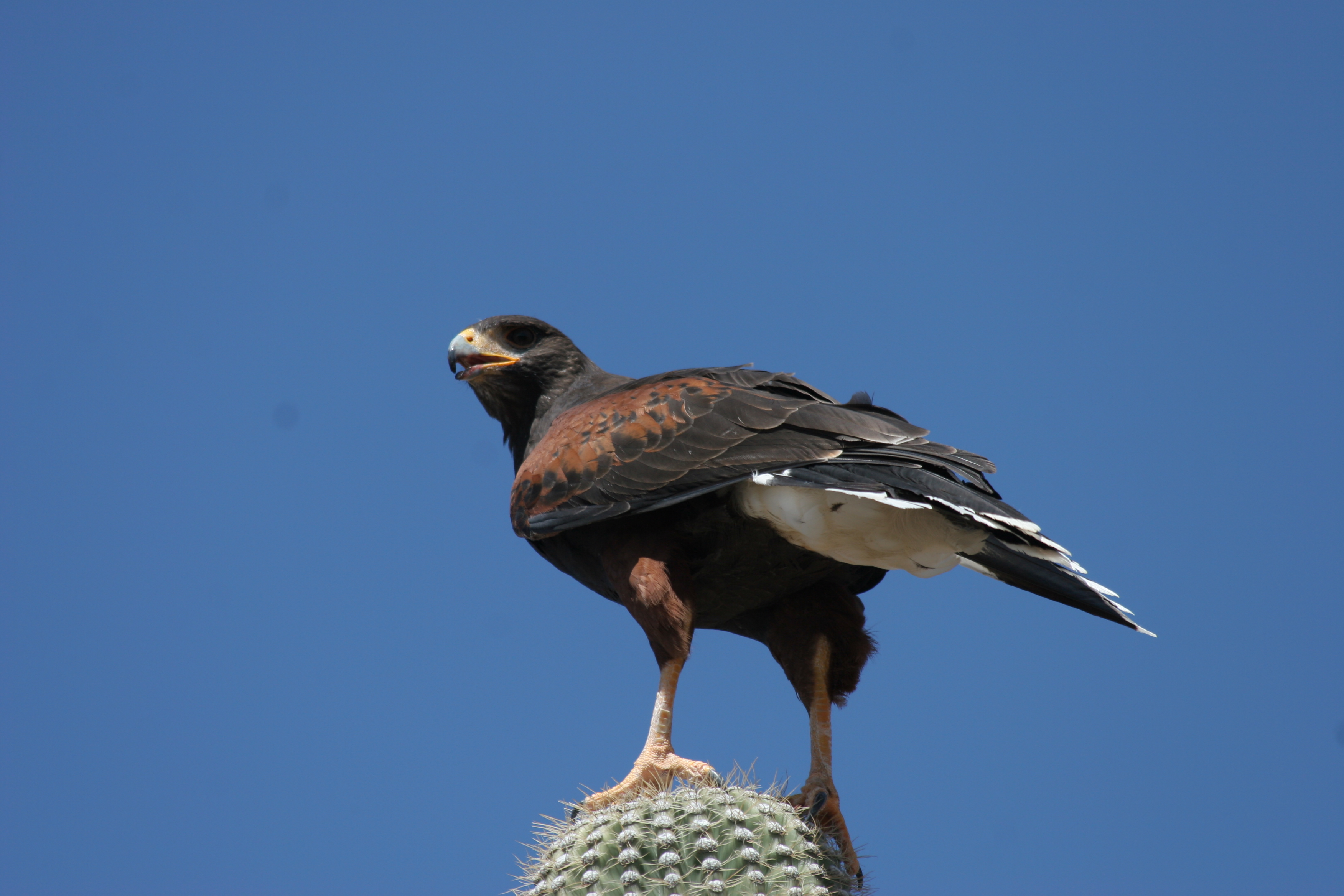
A Harris's Hawk at the Arizona-Sonora Desert Museum (photo Bob Bowers)

A Harris’s Hawk at the Arizona-Sonora Desert Museum (photo Bob Bowers)

The Arizona-Sonora Desert Museum is home to a variety of birds, and conducts daily bird walks at 7:30 AM, May through September and at 8:30 AM the rest of the year.  The walks are free with paid admission to the museum.  Saturday 8:00 AM bird walks also are free at Arivaca Cienega (Buenos Aires National Wildlife Refuge) from November through April.  Closer to SaddleBrooke, Tohono Chul Park holds free bird walks (with paid admission) at 8:30 AM Monday, Wednesday and Saturday from October through May.  Other area bird walks with informational phone numbers include:  Honeybee Canyon (520 615-7855), Sabino Canyon (520 749-8700) and Saguaro National Park (520 733-5158).

Available year-round, Tucson Audubon field trips are led by expert birders and are free.  Although you don’t have to be a member to participate, there are many advantages to joining.  Sample destinations include Madera Canyon, Patagonia, Las Cienegas, St. David Monastery and Peppersauce Canyon.  Some of these trips require advance registration and some limit the number of participants.  For detailed information, check field trips at www.tucsonaudubon.org.

(This article originally appeared in the September, 2011 issue of the Saddlebag Notes newspaper, Tucson, Arizona.)

Posted in Birding Arizona | Tagged , , , | Leave a comment