Arizona’s African Valentine, the Rosy-faced Lovebird


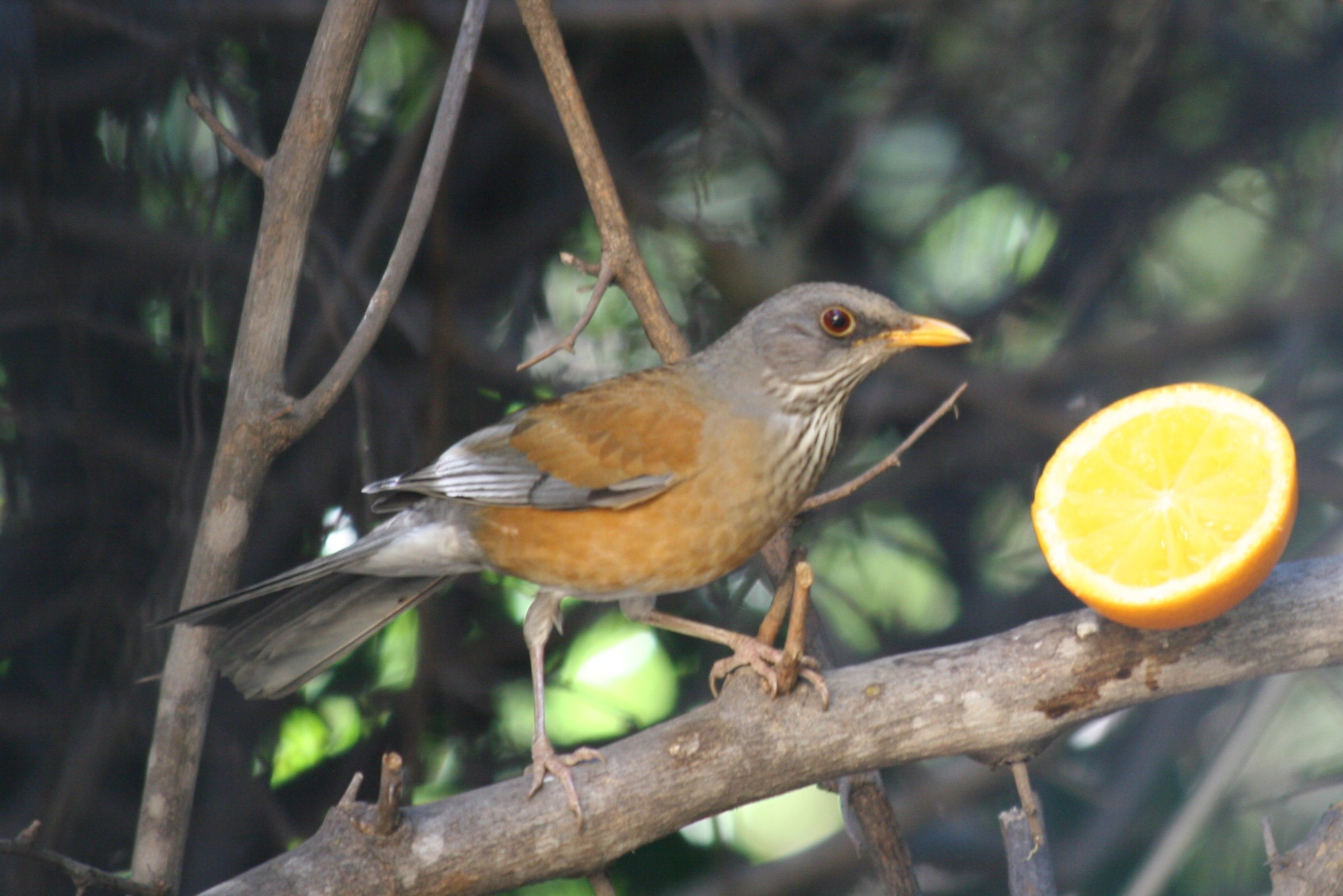
A curious Rosy-faced Lovebird at Gilbert Water Ranch, Arizona (photo Bob Bowers)

A curious Rosy-faced Lovebird at Gilbert Water Ranch, Arizona (photo Bob Bowers)

If you keep a life-list of North American bird species, one of the more exotic additions to your list can be found an hour from here on the outskirts of Phoenix.  The Riparian Preserve at the Water Ranch in Gilbert, Arizona, is a 110-acre water treatment facility that draws shorebirds and other species like a magnet.  This is where a Siberian Baikal Teal showed up one December, and where you can also find a bird native to southwest Africa, the Rosy-faced Lovebird (Agapornis roseicollis).  A favorite of bird pet owners, enough Rosy-faced Lovebirds have escaped their cages and have been released intentionally to establish reproductive colonies in several Arizona locations.  Although most exotic birds are unable to survive in North America, the mild Arizona climate suits the lovebirds just fine, and their population continues to expand.  The American Ornithological Union, the organization responsible for recognizing North American species officially, determined a year ago that the Rosy-faced Lovebird, also known as the Peach-faced Lovebird, had established a viable population in Arizona that wasn’t likely to be reversed.  Consequently, a life-lister in southeastern Arizona has an opportunity to score a bird found in few other places.

Lovebirds foraging on the ground at Gilbert Water Ranch, Arizona (photo Bob Bowers)

Lovebirds foraging on the ground at Gilbert Water Ranch, Arizona (photo Bob Bowers)

To get to the Riparian Preserve, commonly known as the Gilbert Water Ranch, take Highway 77, Oracle Road, from Tucson north to Oracle Junction, and Highway 79 from the junction to and through Florence to Apache Junction, then west on Highway 60 to North Higley Road in Gilbert.  The Water Ranch is at 2757 East Guadalupe Road, on the south side of the road between North Higley Road and South Greenfield Road.  Free parking and admission, picnic tables and restrooms are featured, and multiple trails wind around the water impoundments.  Rosy-faced Lovebirds aren’t guaranteed, naturally, but often can be found near the water, both foraging in trees as well as on the ground, sometimes in small flocks of as many as a dozen birds.  Check the photographs accompanying this article to see what you are looking for, although you’re not likely to mistake this bird for anything else in the park.  While you’re there, also look for visiting shorebirds like Black-necked Stilts, Great Blue Herons and American Avocets.  Warblers are commonly found here, as well.
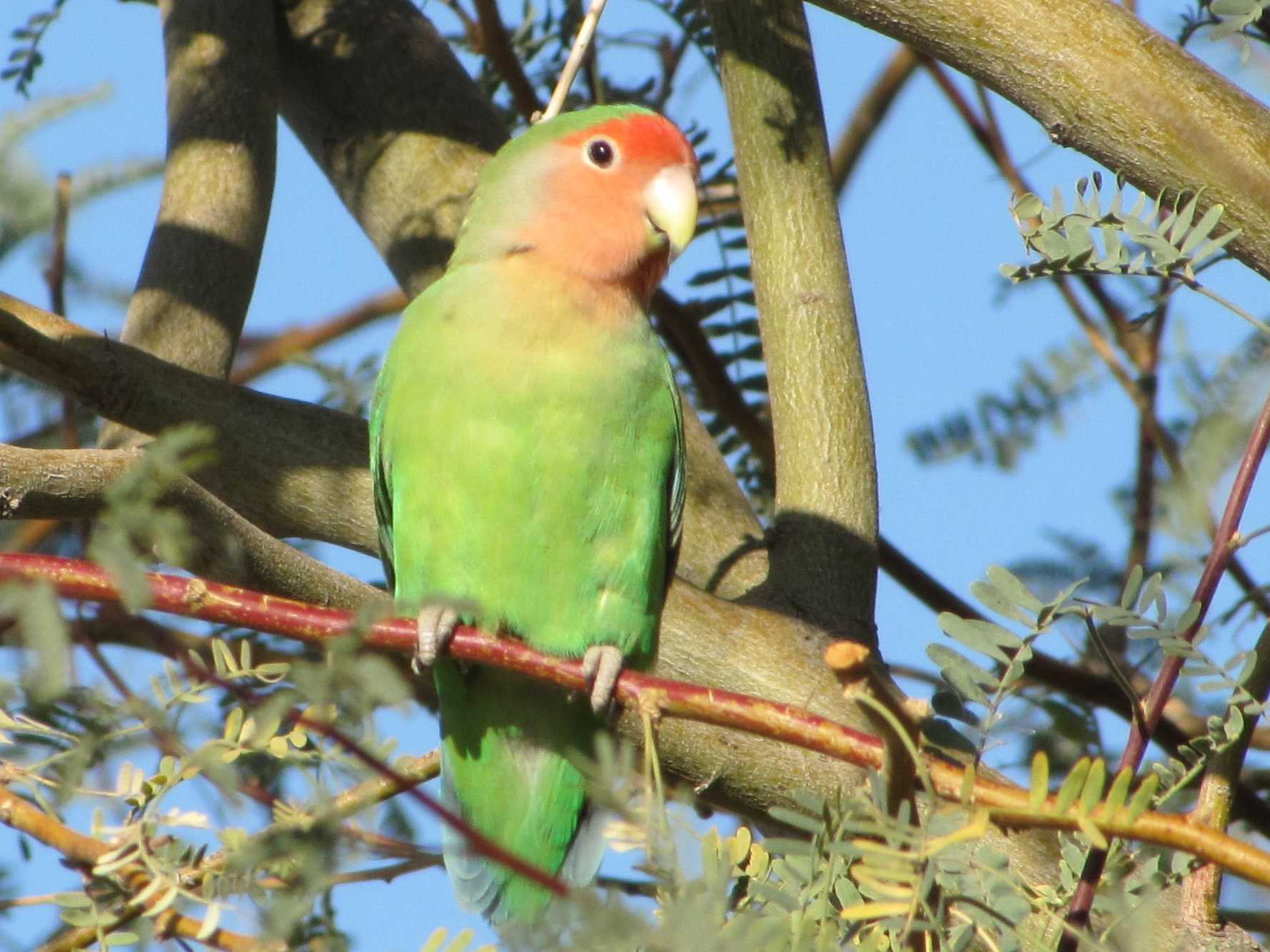
Also known as the Peach-faced Lovebird and recognized by the AOU for life-listers (Photo Bob Bowers)

Also known as the Peach-faced Lovebird and recognized by the AOU for life-listers (Photo Bob Bowers)

Rosy-faced Lovebirds are a member of the parrot family, just seven inches in length, the same size as our White-crowned Sparrow.  The lovebird’s coloration is striking, with green plumage, a rosy-peach face and a bright blue rump.  In captivity, the bird is affectionate, playful, intelligent and easy to care for.  They make popular pets, are widely available and inexpensive, which no doubt has contributed to the large number that have made it back into the wild.  They sleep side-by-side, with their faces turned toward their mate, giving rise to the name ‘lovebird’.  Could there be a better bird for February and Valentine’s Day?

(This article originally appeared in the February, 2014 issue of the Saddlebag Notes newspaper, Tucson, Arizona.)
Posted in Birding Arizona | Tagged , , , , | Leave a comment

Our Little Bird with the Big, Strange Name


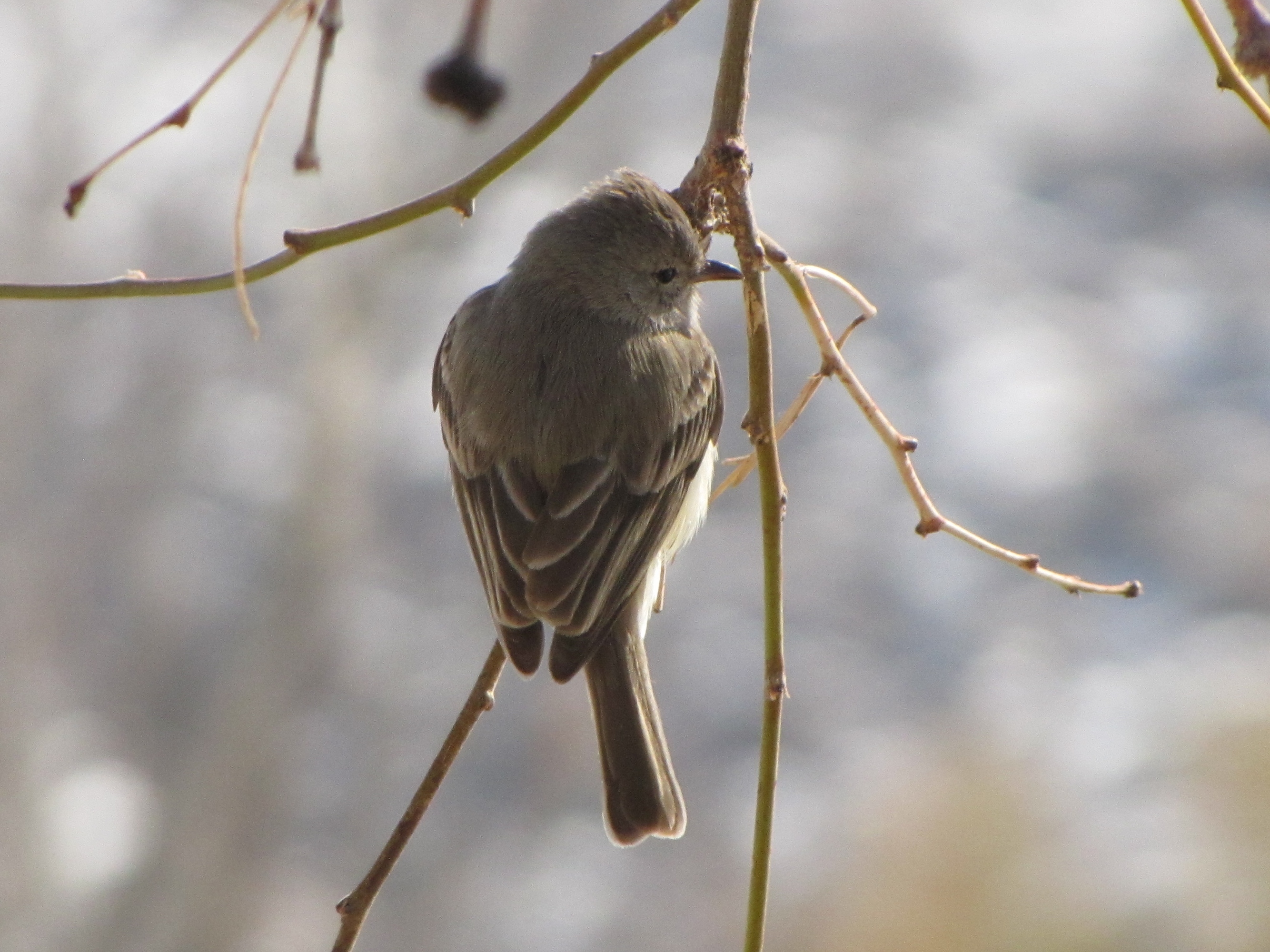
Hummingbird-sized Northern Beardless-Tyrranulet (photo Bob Bowers)

Hummingbird-sized Northern Beardless-Tyrranulet (photo Bob Bowers)

So far, we have documented 146 species of birds in SaddleBrooke.  One of the most secretive and interesting of these is a lightweight not much larger than a hummingbird, but with more syllables in his name than any of our other 145 species.  This is the Northern Beardless-Tyrannulet, a name that is as unusual and strange as it is long.  In case you are wondering, there is a Southern Beardless-Tyrannulet, as well, but you’ll have to go to Costa Rica to find him.  If you are a birder, the Northern Beardless-Tyrannulet is just one more reason to live in southeastern Arizona.  Common from Mexico to Costa Rica, in the U.S. this tyrannulet is found only in the most southern part of Texas, southwestern New Mexico and southeastern Arizona.  A member of the large tyrant flycatcher family, which includes such familiar birds as the Ash-throated Flycatcher, Vermilion Flycatcher and Say’s Phoebe, the Northern Beardless-Tyrannulet looks and behaves much more like a Verdin, Ruby-crowned Kinglet or Bell’s Vireo.

Much easier to see in a leafless tree (Photo Bob Bowers)

Much easier to see in a leafless tree (Photo Bob Bowers)

Our other tyrant flycatchers hunt insects from exposed perches, like tree limbs (Ash-throated Flycatcher), power lines (Western Kingbird) or posts (Vermilion Flycatcher), but not the tyrannulet, which is one reason he is so seldom seen.  Instead, the Northern Beardless-Tyrannulet feeds inside bushes and trees, hopping and foraging along branches, gleaning insects acrobatically in the fashion of kinglets, vireos and Verdins.  Easily mistaken for these other gleaners, the tyrannulet is often overlooked or missed altogether by birders.  In addition to his secretive behavior, the tyrannulet is not a common bird around here, making it even harder to find him.  Tyrannulets nest in southeastern Arizona, including parts of Pinal County, and observations have been recorded in every month of the year, suggesting that some of the population do not return to Mexico in the winter.  Most do, however, returning to Arizona in March and then departing again by September.

This Northern Beardless- Tyrranulet is on the Santa Cruz River in Mexico (photo Bob Bowers)

This Northern Beardless-
Tyrranulet is on the Santa Cruz River in Mexico (photo Bob Bowers)

The most likely nearby place to find a tyrannulet is Catalina State Park, but we have also seen them in SaddleBrooke.  During a frosty morning walk along a golf cart path this past February, we had seen a few Verdins and a Ruby-crowned Kinglet foraging in the leafless mesquites.  As we neared Ridgeview, we saw another small bird hopping around a bare-branched mesquite ahead.  We assumed this was another kinglet or Verdin, but as we drew nearer we could see that the tiny bird had a flycatcher-like crest, no yellow head (like a Verdin) and no eye ring (like a kinglet).  This was our first discovery of a Northern Beardless-Tyrannulet in SaddleBrooke, and we forgot the cold as we enjoyed this little bird’s acrobatic hunting just ten feet away.  Unfortunately, I had forgotten the camera.  We assumed this was a passing bit of luck, but 12 days later we repeated the walk and found the tyrannulet in the same tree.  This time, I brought the camera, and photos in this article were taken that day.

But, you may be asking, what about that ‘beardless’ part of the name?  Almost all tyrant flycatchers have stiff bristles around their bills, which is as close to a ‘beard’ as you’re going to find in a bird.  Our tyrannulet has none of these, and consequently is called ‘beardless’.  Since the other tyrant flycatchers catch insects in flight, rather than picking them off branches, at one time it was believed that these rictal bristles existed to help channel insects into the flying birds’ mouths.  However, laboratory experiments that taped down or clipped off the bristles found that the birds were unimpaired in catching insects.  Hopefully, the genius that came up with that experiment suffered a similar ordeal.  Another rictal bristle theory is that they somehow protect flycatcher eyes from high-speed aerial collisions with insects.  Fortunately, as far as I know, this has not yet been tested.

(This article originally appeared in the January, 2014 issue of the Saddlebag Notes newspaper, Tucson, Arizona.)

Posted in Birding Arizona | Tagged , | 2 Comments

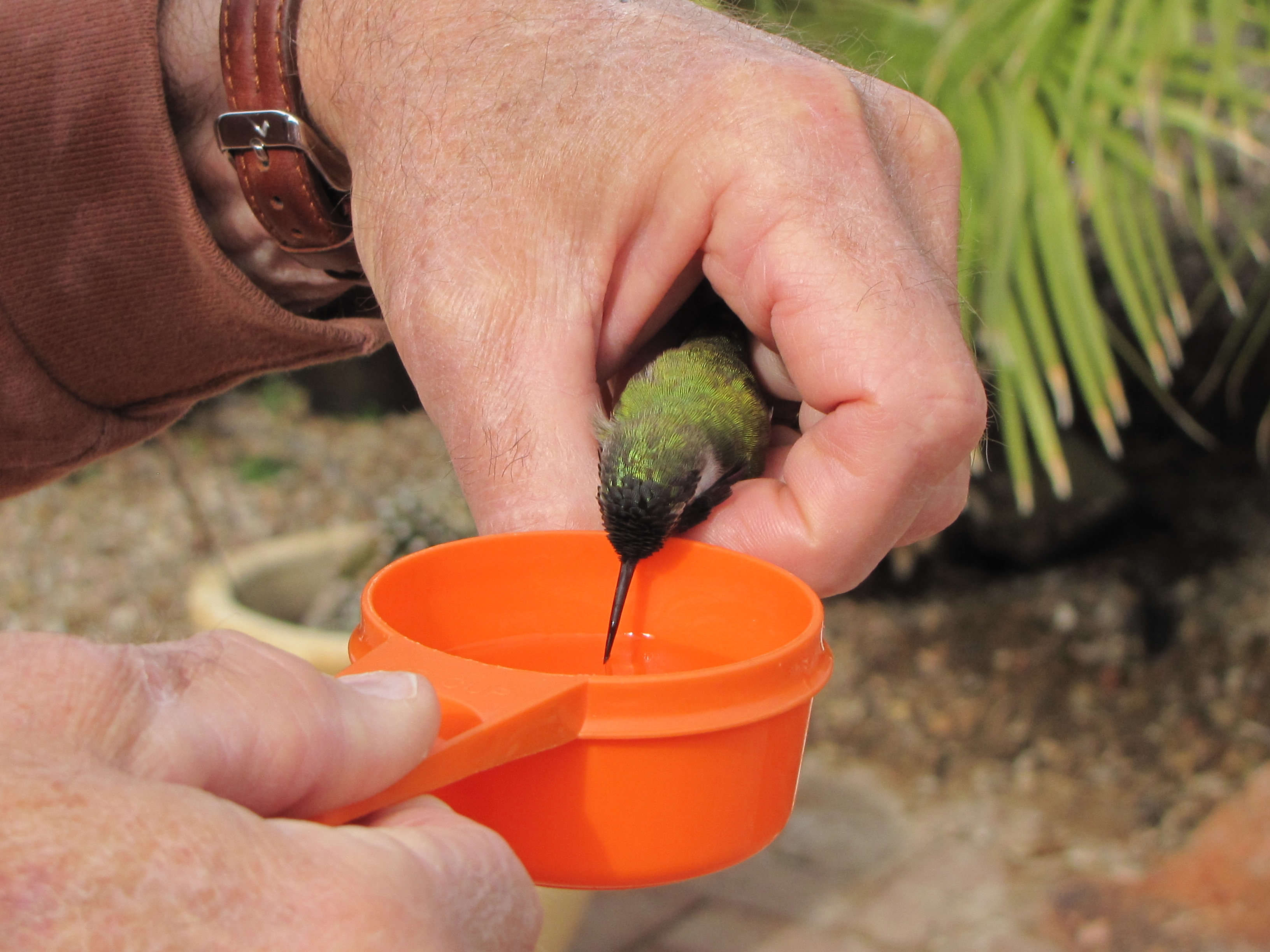
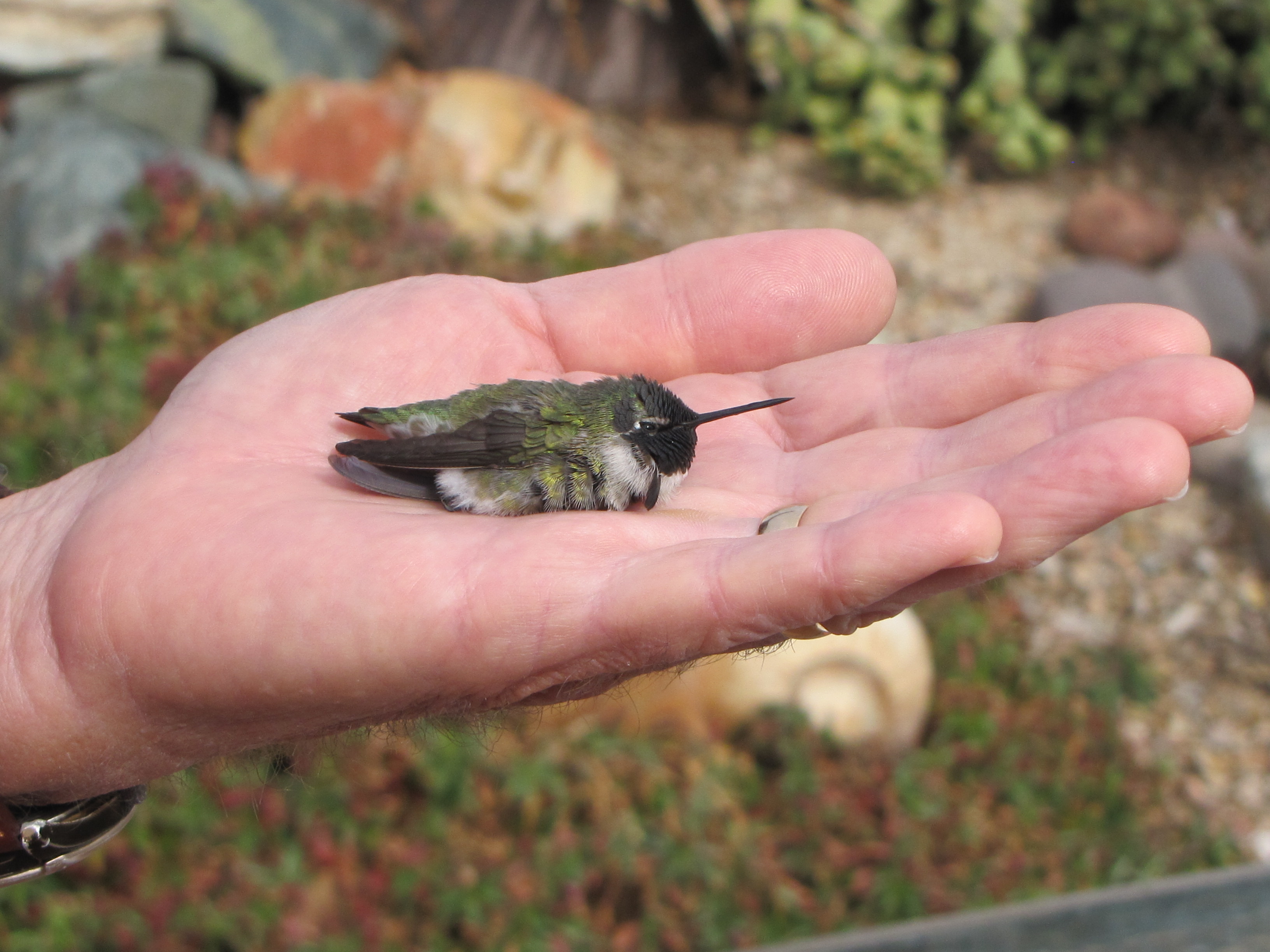
Lazarus, the Comeback Costa’s

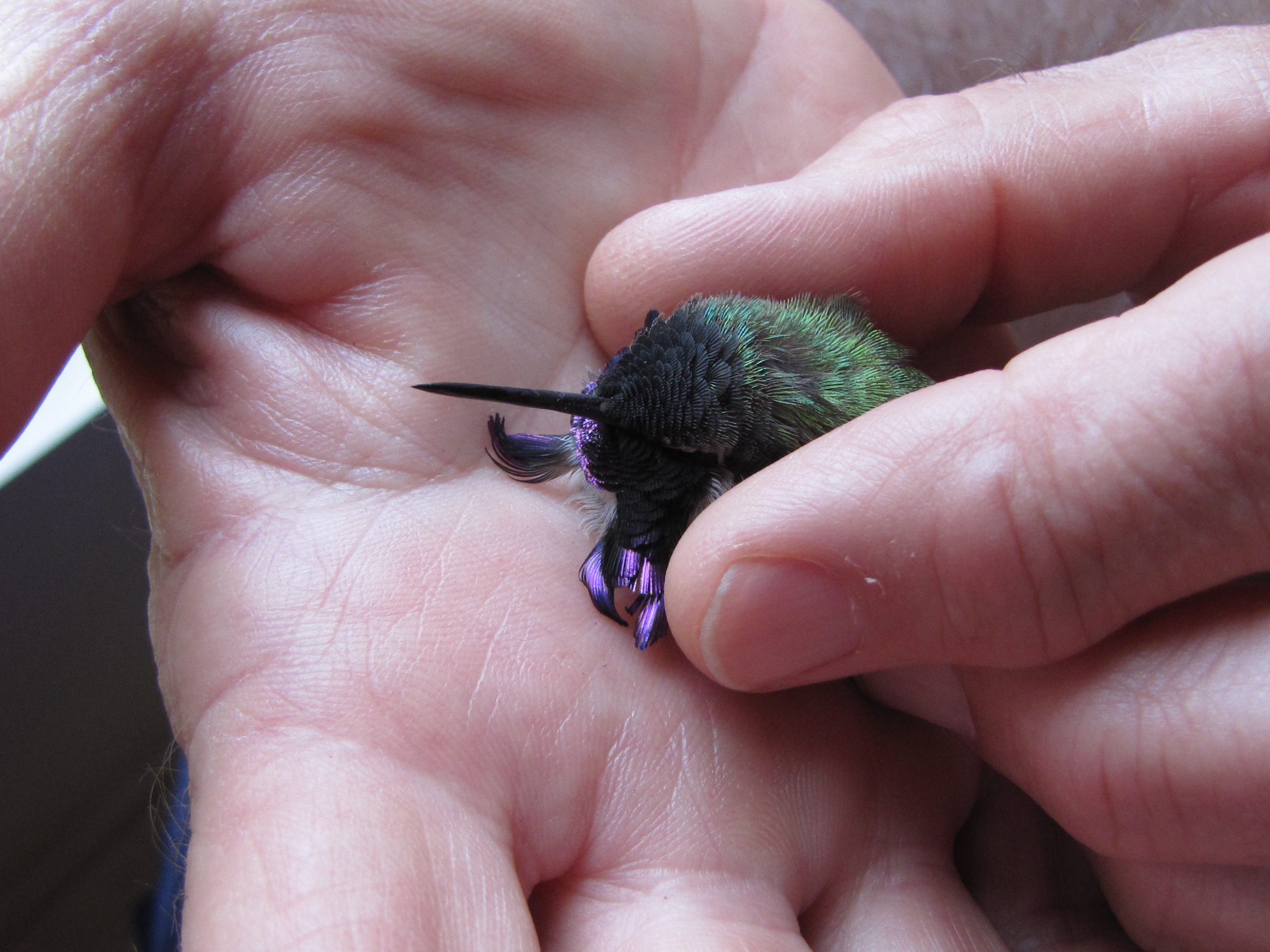
A lifeless Costa's Hummingbird begins to revive (photo Prudy Bowers)

A lifeless Costa’s Hummingbird begins to revive (photo Prudy Bowers)

Monday, December 27, 2010 was a chilly 46 degrees as Good Morning America ended its first segment.  Our daily routine includes the news, coffee and bird watching from bed.  Gray Head, the Hooded Oriole that refuses to migrate, made his predictable morning stop at his favorite hummingbird feeder, and the usual number of Costa’s and Anna’s Hummingbirds were battling over the other eight feeders.  As we left the bedroom, though, a glance through the sliding glass door revealed a sad sight:  an adult male Costa’s, obviously dead on the slate beneath a patio feeder.

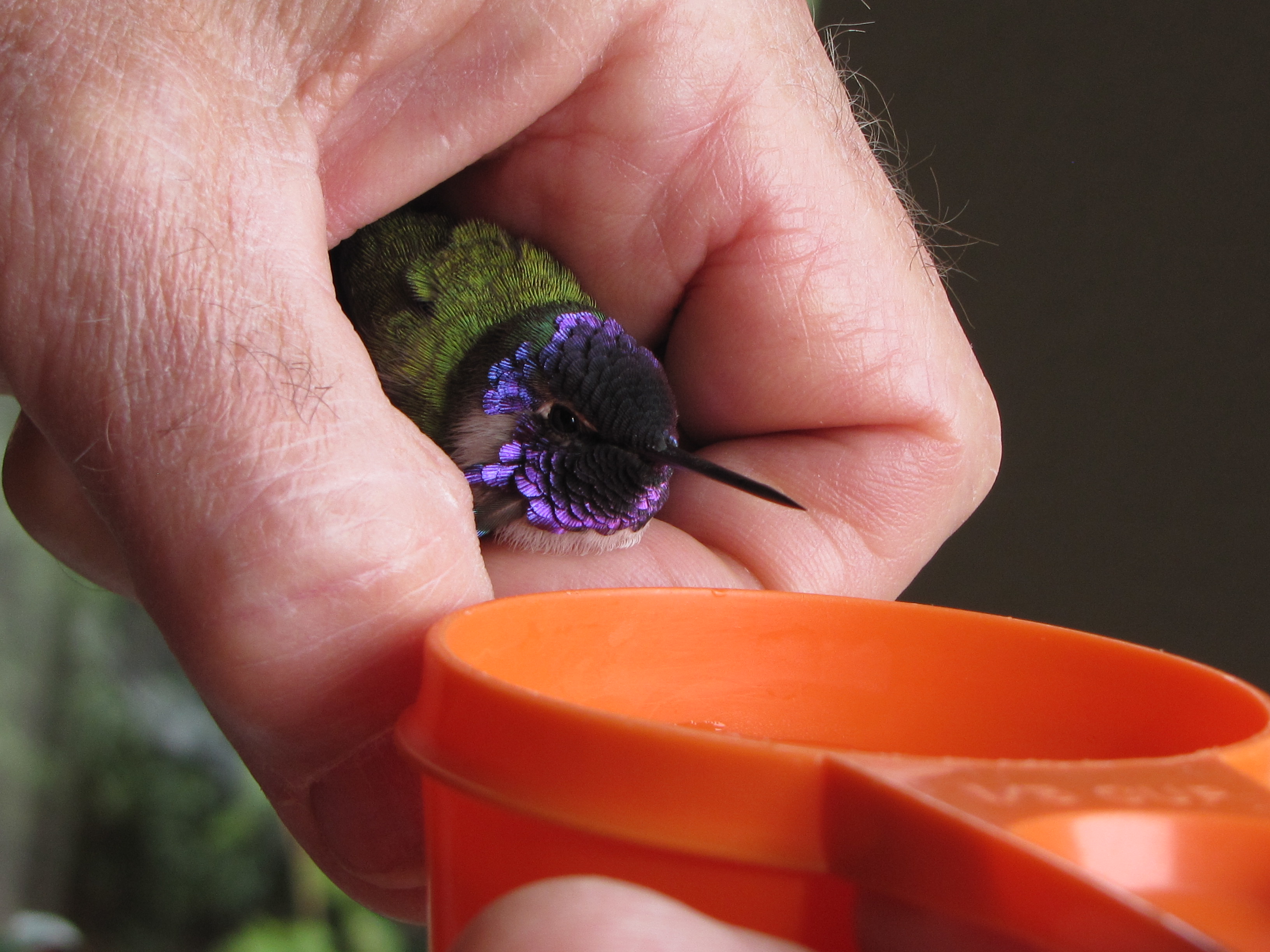
Offering sugar water to Lazarus (photo Prudy Bowers)

Offering sugar water to Lazarus (photo Prudy Bowers)

Bummed out, I went outside, picked up the body and looked for a trash barrel.  The bird was lying on his back in my palm, when I noticed a slight, slow movement in one leg.  There was no apparent heartbeat or any other sign of life, but this one tiny movement gave me pause.  I brought him into the house and Prudy and I held him snugly in the warmth of our  hands for 30 minutes.  At that point, miracles started happening.  His heartbeat appeared, fluttering his feathers, and one eye opened half-way.  We named him Lazarus.  We lined a plastic box with a towel, placed it on an insulated heating pad and set him inside.  He continued to show more signs of life, but also had difficulty staying upright, lolling to one side or the other.  There were no overt signs of injury, but we worried that he had broken a leg or suffered internal injuries in a territorial-related collision.

Lazarus takes his first drink (photo Prudy Bowers)

Lazarus takes his first drink (photo Prudy Bowers)

After a half hour, we filled a measuring cup with sugar water and held him next to the lip.  We dipped his bill into the liquid five or six times without reaction, when, suddenly, his tongue laced out of the tip of his bill into the nectar.  During the rest of the day, we would hold him next to the cup every half hour, where he eventually began feeding with enthusiasm, and without prompting.  By afternoon, when the day had warmed to 60 degrees, I took him outside and opened my palm, offering him a shot at freedom.  He closed his eyes and hunkered down into my hand.

Lazarus rejects the idea of leaving a warm hand (photo Prudy Bowers)

Lazarus rejects the idea of leaving a warm hand (photo Prudy Bowers)

Monday night we kept him in his warm box, but half expected to find a corpse in the morning.  Tuesday, we found him as we had left him:  still eager to feed, but otherwise listless.  We set up a regular feeder reservoir in his box, placed him next to it, and went to a movie.  When we returned mid-afternoon, he seemed a bit better, and must have fed while we were gone, since he wasn’t hungry.  Since hummingbirds need insect protein to supplement the nectar, we decided to offer him freedom once again.  He lay in my hand outdoors, unmoving except for turning his head each time another hummer streaked by.  After fifteen minutes in the sun, he looked me in the eye, fired up his afterburners and buzzed to an Oleander 40 feet away.

That evening, we sipped our wine from the upper deck and watched the setting sun turn the eastern mountains pink, as quotidian as the morning news and coffee.  Quail chortled in the yard below, and hummingbirds took their evening tipple.  One of them, a male Costa’s with an off-kilter purple gorget, stopped by and hung in the air not three feet from us.  It was Lazarus.

(This article originally appeared in the February, 2011 issue of the Saddlebag Notes newspaper, Tucson, Arizona.)

Posted in Birding Arizona | Tagged , , | 2 Comments

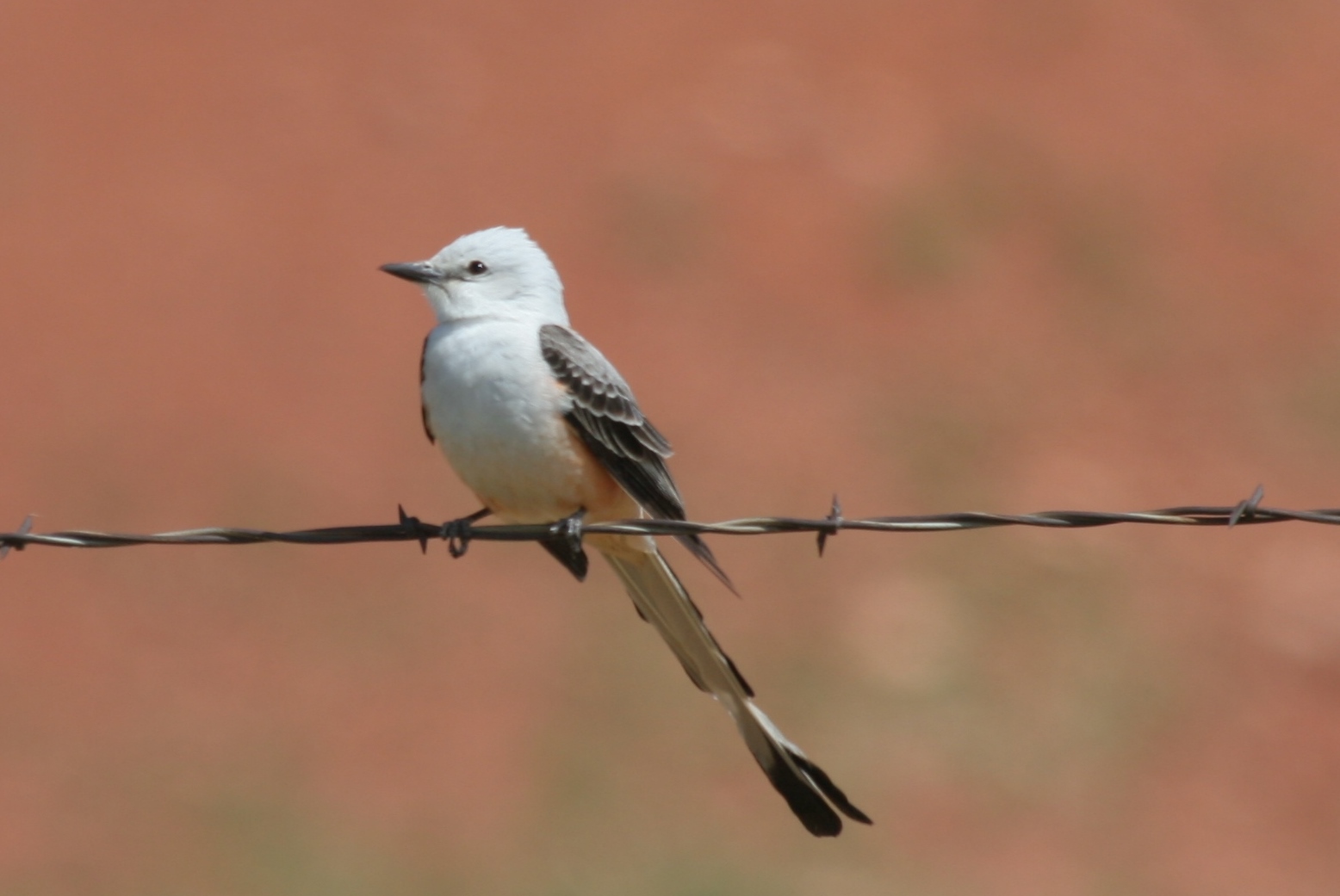
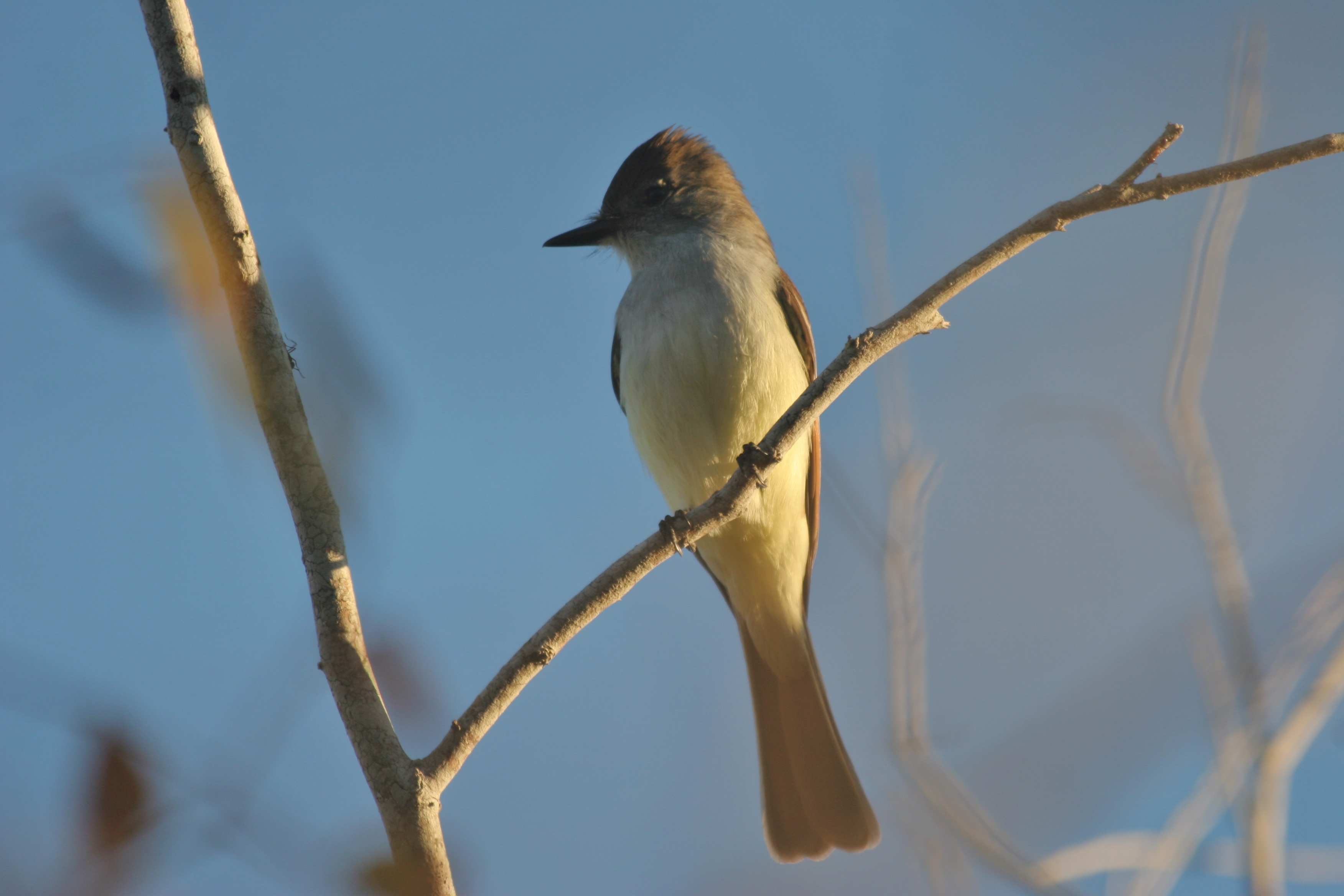
Finding Rare Birds in Arizona

Scissor-tailed Flycatcher, Oklahoma (photo Bob Bowers)

Scissor-tailed Flycatcher, Oklahoma (photo Bob Bowers)

Because Storm Chasers get lots of publicity on television, most of us are familiar with these daredevils that grab their video recorders, hop in their cars and head for the center of weather-related calamities like tornadoes and hurricanes.  One of the foremost of these crazy people is Warren Faidley, who has chased, filmed and survived 25 years of storms, fires, floods, lightning, grapefruit-sized hail and other disasters.  His website even reports he has survived ‘pitchfork-yielding farmers’.  They probably mean ‘pitchfork-wielding farmers’, but we get it.  Less well-known, but undoubtedly more common is a group that could be called Rare Bird Chasers.  Farmers with pitchforks is a conceivable hazard for bird chasers, but overall this is a much safer hobby than chasing tornadoes, and, besides, it’s hard to find birds in a hurricane.

Nutting's Flycatcher, Estero del Yugo, Mexico (photo Bob Bowers)

Nutting’s Flycatcher, Estero del Yugo, Mexico (photo Bob Bowers)

The most significant publicity for bird chasing probably was the 2011 movie, ‘The Big Year’.  The movie is a fictionalized version of the 1998 ‘Big Year’ described by Mark Obmascik in a book with the same name, about three obsessed birders and their attempts to record the most species of birds north of Mexico in a single year.  The book (and the movie) opens on January 1, 1998, with Sandy Komito having a pre-dawn cup of coffee in a restaurant in Nogales, Arizona.  As dedicated as any storm chaser, he has just flown 2,400 miles from his home in New Jersey to find birds, and he launched his year in Arizona because in the prior week Arizona had reported more rare birds than anywhere else on the continent.  One bird in particular drew him to Lake Patagonia, a bird that had last appeared in the U.S. during Truman’s presidency, the Nutting’s Flycatcher.  A decade passed before this bird was seen again in Arizona, but it is now reported fairly regularly at Bill Williams River National Wildlife Refuge near Lake Havasu, and spring nesting birds have been confirmed.

Immature Male Calliope Hummingbird, SaddleBrooke, Arizona, November 2013 (photo Bob Bowers)

Immature Male Calliope Hummingbird, SaddleBrooke, Arizona, November 2013 (photo Bob Bowers)

On November 6 of this year, Prudy and I were surprised (and shocked) to find a young male Calliope Hummingbird at one of our feeders.  Although we have seen many Calliope Hummingbirds in Colorado in July, as they pass through on their migration back to Mexico, and have spotted similarly migrating Calliopes in Greer in August, we had never seen one anywhere close to SaddleBrooke.  The Tucson Audubon Society’s ‘Finding Birds in Southeast Arizona’ shows the Calliope as an uncommon migrant in late summer in Arizona, but only as a rare or accidental bird in November, making this addition to our yard list and SaddleBrooke’s bird list particularly special.

Rufous-backed Robin, Alamos, Mexico (photo  Bob Bowers)

Rufous-backed Robin, Alamos, Mexico (photo
Bob Bowers)

The Arizona-New Mexico List Serve regularly summarizes rare bird reports for the two states, and confirming photographs are often posted on the web site for AZFO, the Arizona Field Ornithologists.  Some of these postings reflect birds that are rare for a particular location or time of the year, while others are remarkable for being noted anywhere or anytime in Arizona.  Rufous-backed Robins used to be quite rare in Arizona, but now are routinely reported.  On New Year’s Day, 2008, we joined about 100 other birders to look at one in Catalina State Park, but they have now been reported in nearly every month of the year.  Other rarities that are currently being reported on the List Serve include Eastern Phoebe, Sinaloa Wren, Black-capped Gnatcatcher, Rufous-capped Warbler, Painted Bunting and Plain-capped Starthroat.  Other rare birds that have been seen not long ago include Blue Jay and Scissor-tailed Flycatcher.  Most of our rare birds wander north from Mexico or from distant states, but in December, 2012, a birder with a sharp eye at Gilbert Water Ranch discovered a bird that was a LONG way from home.  This bird, which drew hundreds of bird chasers from all over the country, was a Baikal Teal from Siberia, and he stayed around until December 11.  Who knows what might be reported this month?  Keep your eyes open and your camera handy.  You might get lucky and experience the same rush Sandy Komito felt when he saw that Nutting’s Flycatcher at Patagonia Lake.  And you don’t have to risk grapefruit-sized hail in the process.

(This article originally appeared in the December, 2013 issue of the Saddlebag Notes newspaper, Tucson, Arizona.)
Posted in Birding Arizona | Tagged , , , , , | Leave a comment

Arizona’s Acrobatic Bird, the Verdin

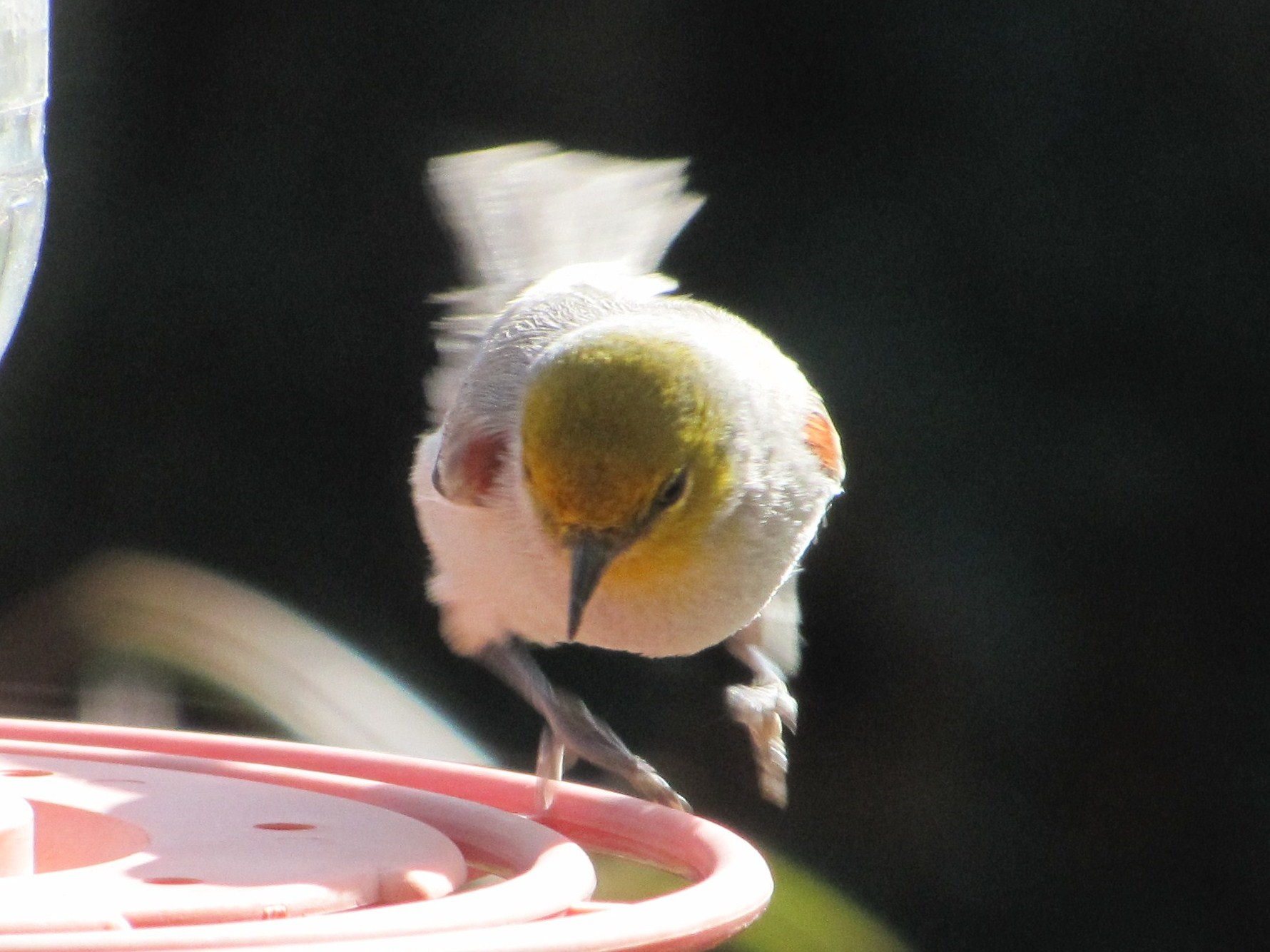
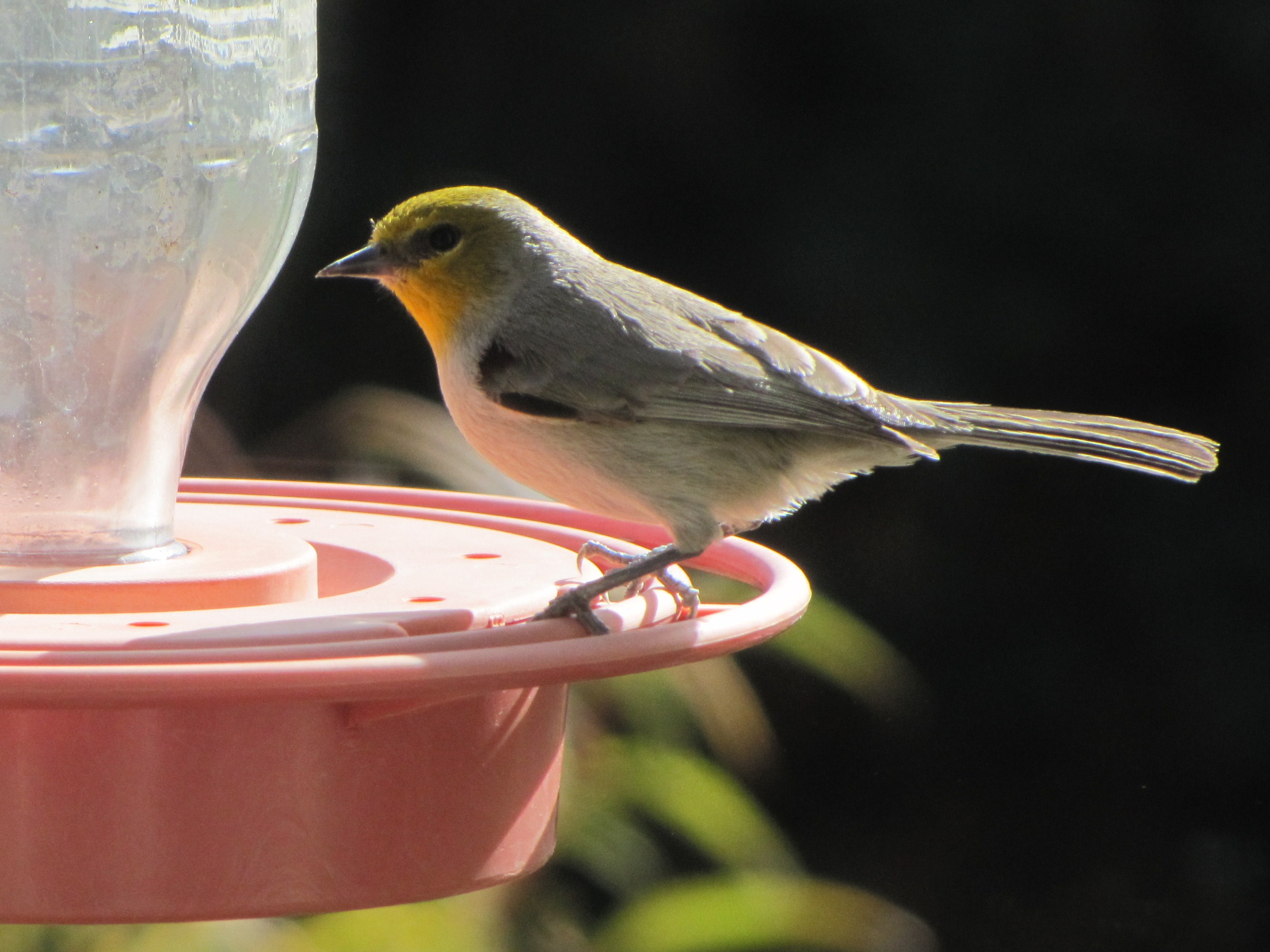
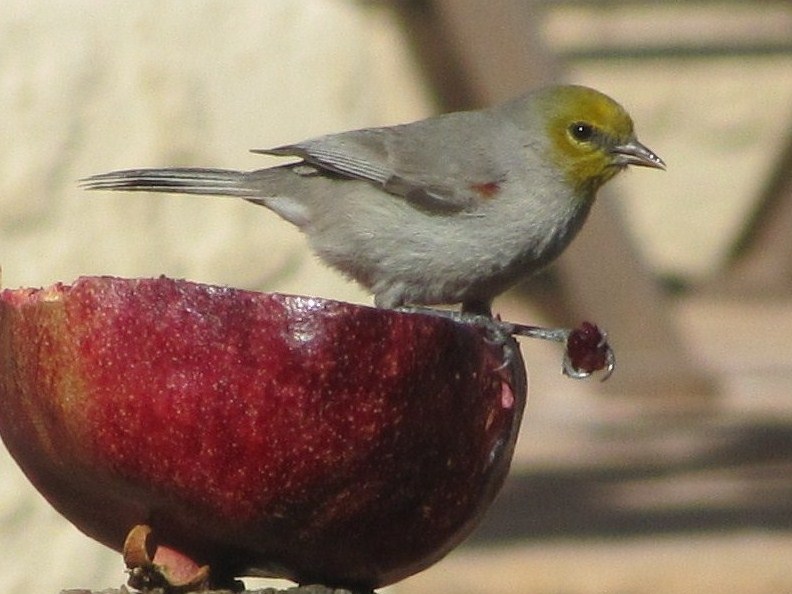
A yellow-green head and red shoulder patches identify the diminutive Verdin (photo Bob Bowers)

A yellow-green head and red shoulder patches identify the diminutive Verdin (photo Bob Bowers)

One of my favorite SaddleBrooke birds is the Verdin.  This tiny 4-inch bird is inquisitive and friendly, and will brighten anyone’s day.  Unless you get a good look at a Verdin in the sunlight, you might easily mistake him for a small sparrow, finch or just another unidentifiable little gray bird.  Once you get a good look, however, there is no mistaking the beautiful yellow face and rufous-red shoulder patches.

As with a number of special birds, we are especially lucky to have Verdins, since their U.S. range is quite limited.  Found throughout Mexico, where it is known as the Baloncillo, Verdins are only found in the southern sections of five states:  Texas, New Mexico, Nevada, California and Arizona.  Verdins are permanent year-round residents wherever they live, preferring warm deserts, and refusing to migrate, just like hardy SaddleBrooke homeowners.

Verdins pick dried sugar from hummingbird feeders (photo Bob Bowers)

Verdins pick dried sugar from hummingbird feeders (photo Bob Bowers)

The Verdin (Auriparus flaviceps) is a member of the Remizidae family and the genus Auriparus.  It is the only species in the genus, and the only species in the family found in the New World.  It is also one of the smallest passerines (perching songbirds) in North America.  It is gray overall, and the adult birds have a bright yellow head and throat, as well as those sometimes hard-to-see rufous-red shoulder epaulets (lesser coverts).  Its size and movements remind one of Bushtits and Chickadees, although it isn’t found in flocks like Bushtits, and, unlike Bushtits, its bill is sharply pointed.  Male and female Verdins are similar in appearance, and often travel and feed together.

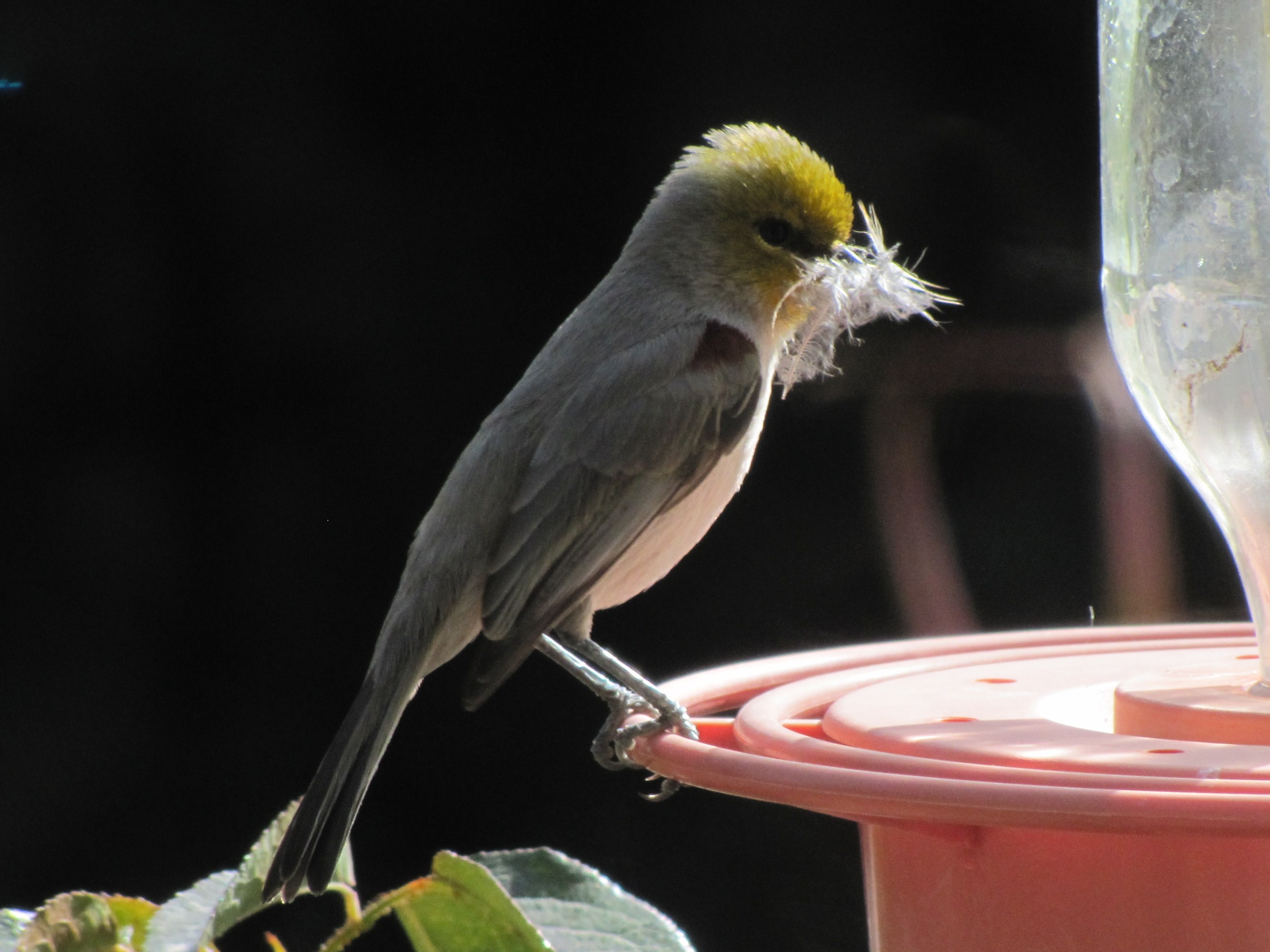
It's a female Verdin if she's carrying nest-lining material (photo Bob Bowers)

It’s a female Verdin if she’s carrying nest-lining material (photo Bob Bowers)

Like Cactus Wrens, Verdins will build several nests each year, including smaller ones for winter roosting.  The male builds more than one nest of twigs, and the female selects her favorite.  Females line the nests with feathers and down.  Verdin nests are unique baskets with a small opening near the bottom.  Nests are often built in mesquites and cholla, although a resident pair built their nest in our fig tree this past year.  The female lays 3-6 eggs, which incubate in 10 days, and the young fledge in 3 weeks.  Juveniles have none of the adult color, but can be identified by a pinkish-yellow lower bill.

Pomegranates are a sure way to attract Verdins and many other birds (photo Bob Bowers)

Pomegranates are a sure way to attract Verdins and many other birds (photo Bob Bowers)

Although Verdins are insectivorous, they also eat seeds and fruit, and are nectar-robbers, as well.  They flit acrobatically through branches gleaning insects, but seem equally attracted to nectar-rich hummingbird plants like Fairy duster, Salvia, and honeysuckle.  Verdins also frequent hummingbird feeders, picking dried sugar water from the feeders’ nooks and crannies.  A sure-fire way to attract Verdins is to plant a Pomegranate tree.  Verdins will clean a split Pomegranate, leaving nothing but the shell.  If you don’t want to plant a tree, buy a Pomegranate at the grocery store, cut it in half and impale the halves on a finishing nail driven into a tree stake.  Pomegranates can cost three bucks apiece, but once Verdins start visiting, you’ll be glad you shelled it out.  They’ll even perch on your windowsill to say thanks.

(This article originally appeared in the February, 2010 issue of the Saddlebag Notes newspaper, Tucson, Arizona.)
Posted in Birding Arizona | Tagged , , | Leave a comment

Our Most Common ‘Snowbird’, the White-crowned Sparrow

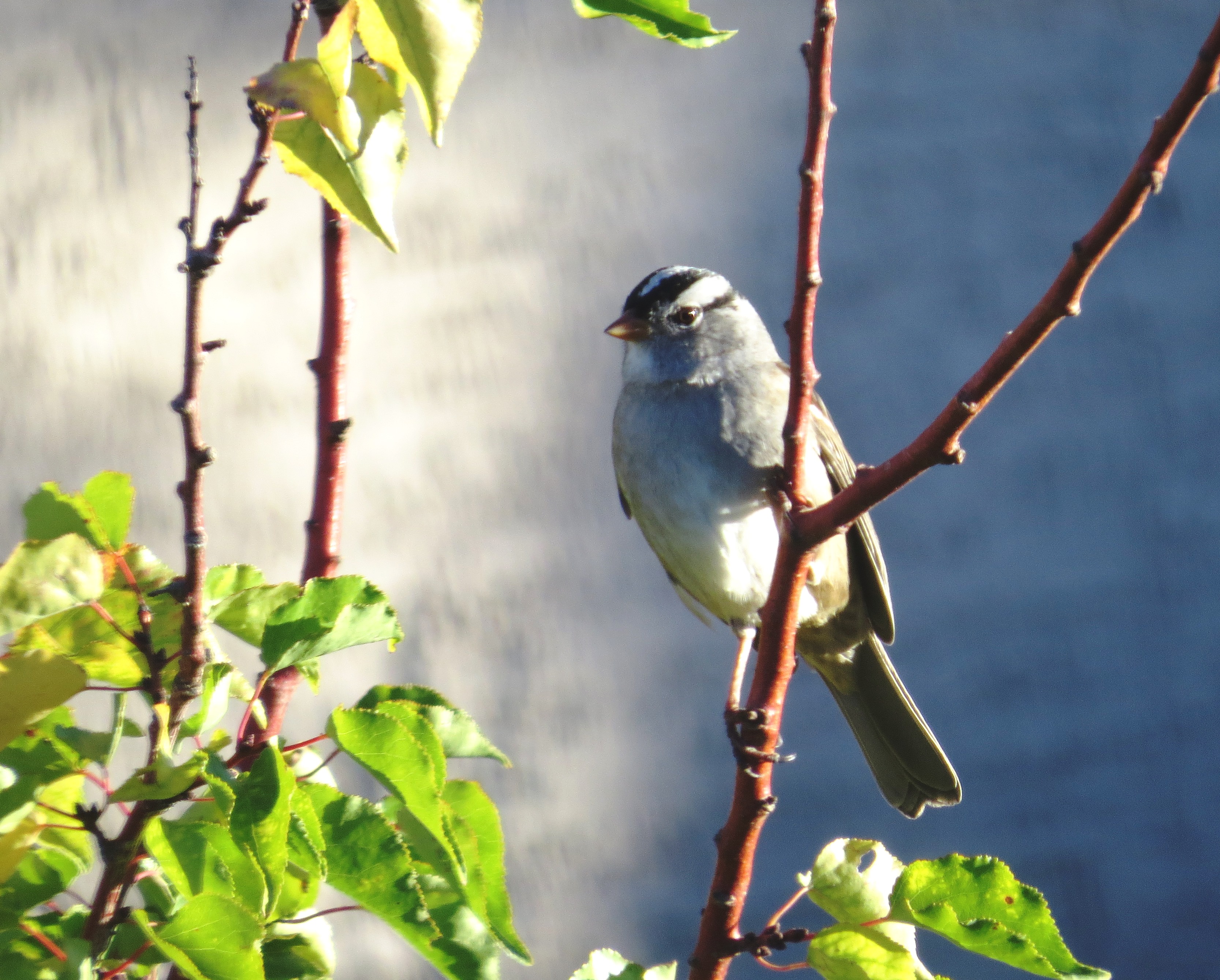
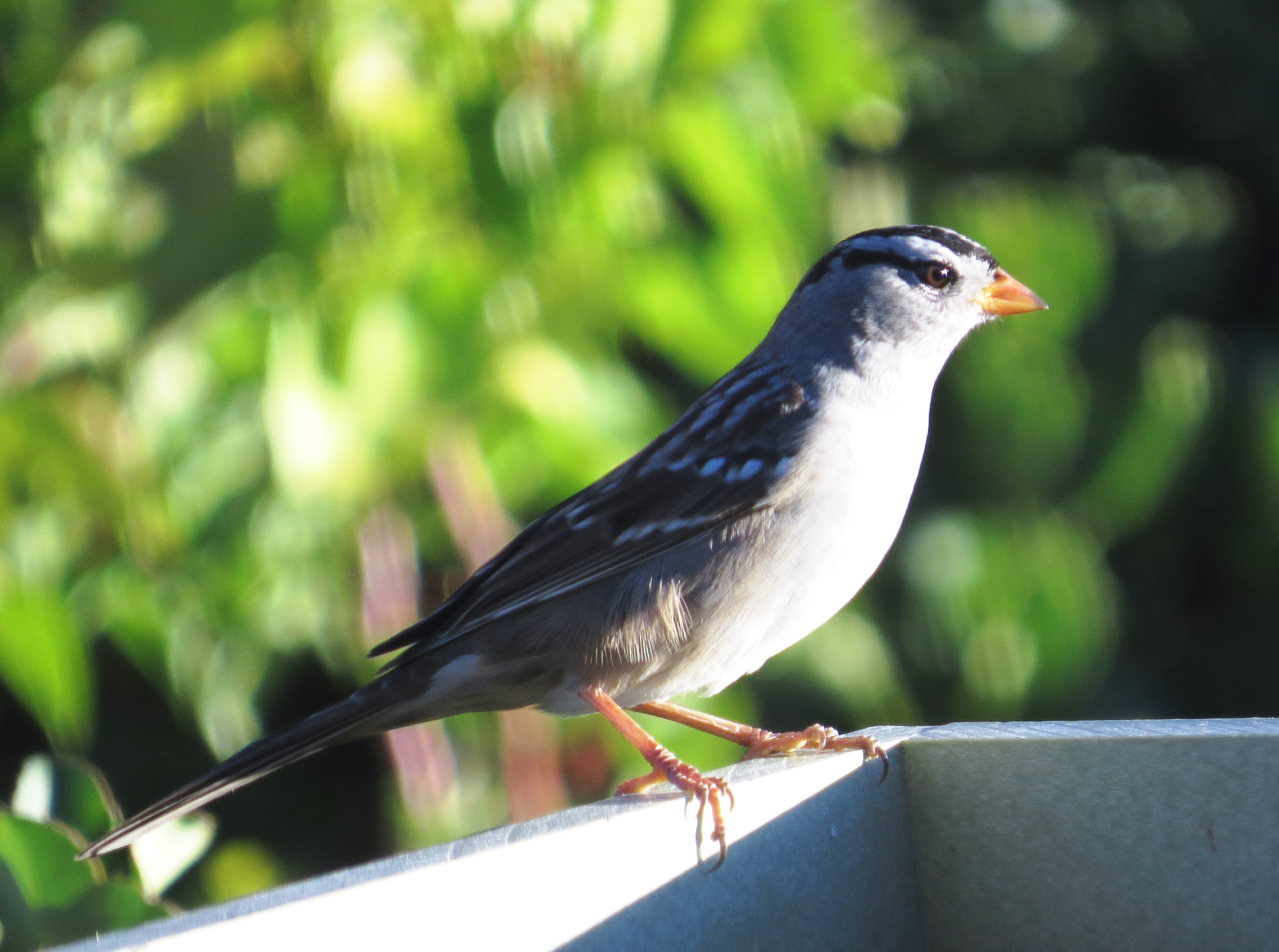
The White-crowned Sparrow signals the arrival of fall in SaddleBrooke, Arizona (photo Bob Bowers)

The White-crowned Sparrow signals the arrival of fall in SaddleBrooke, Arizona (photo Bob Bowers)

We commonly think of migrating birds as those who leave their winter homes in Mexico and other warmer climates to fly north each spring to nest, either summering in our neighborhood (Hooded Orioles and Black-chinned Hummingbirds, for example), or passing through on their way to more distant summer grounds (like Rufous Hummingbirds).  What we sometimes forget is that our climate is just as acceptable a winter home as Mexico to some migrating birds.  Like our neighbors who leave SaddleBrooke each spring for their northern summer home and stay there till fall, these winter residents truly are ‘snowbirds.’

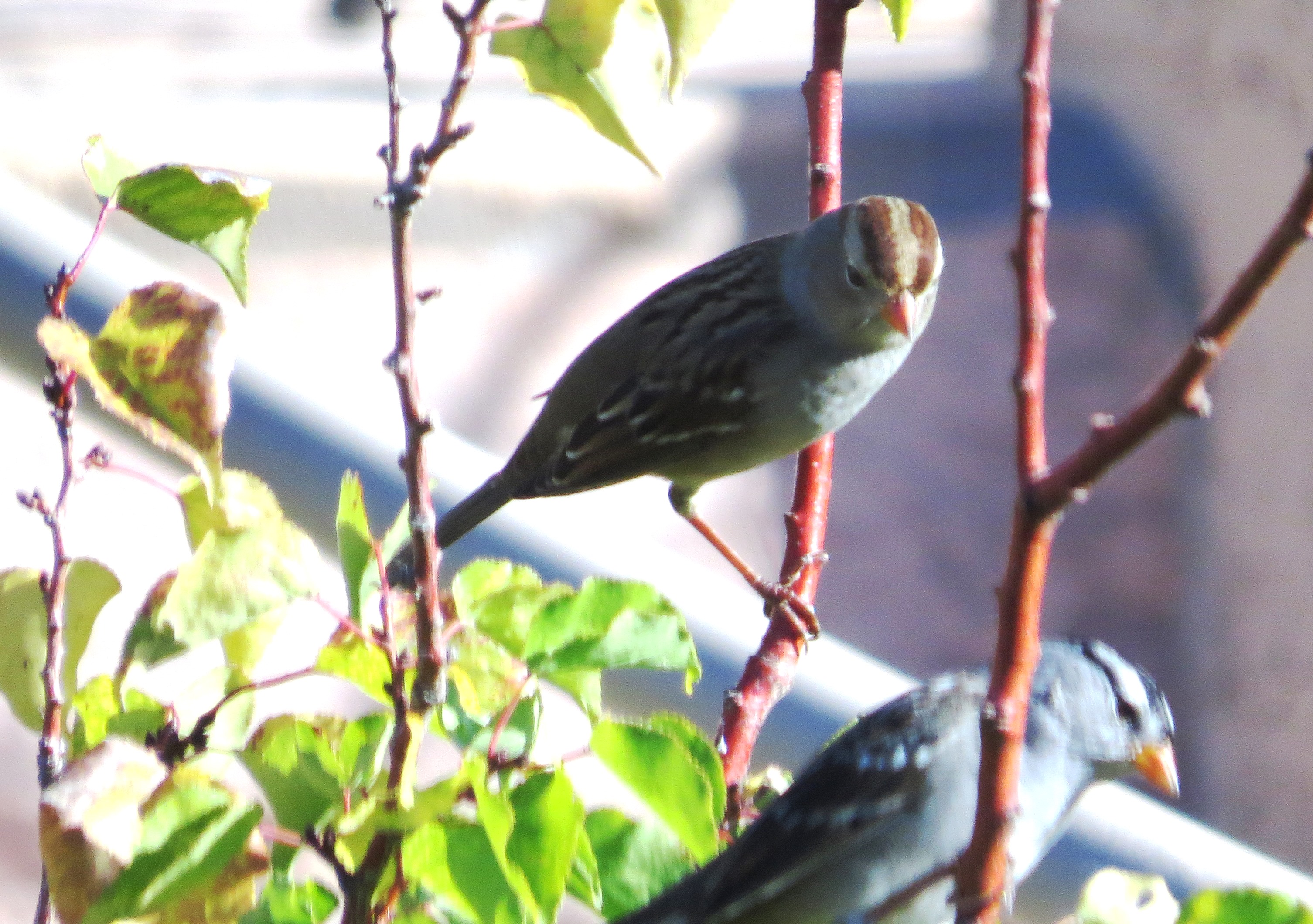
Brown-striped crowns are juveniles, while adults show black and white, both male and female (photo Bob Bowers)

Brown-striped crowns are juveniles, while adults show black and white, both male and female (photo Bob Bowers)

Most of the water birds we see at our golf course ponds fall into this group, which explains their absence during the summer.  Among the most common of these are Mallards, teals, Northern Shovelers, Northern Pintails, Gadwalls and American Wigeons.  More elusive winter migrants include Red-naped Sapsuckers, Gray Flycatchers and Ruby-crowned Kinglets.  And although House Sparrows and Black-throated Sparrows live here year-round, most of our sparrow population prefer to summer in the north.  The sparrows that arrive in fall to spend the winter here include Brewer’s, Chipping, Vesper, Lark, Lincoln’s and the most noticeable and common of all, the White-crowned.

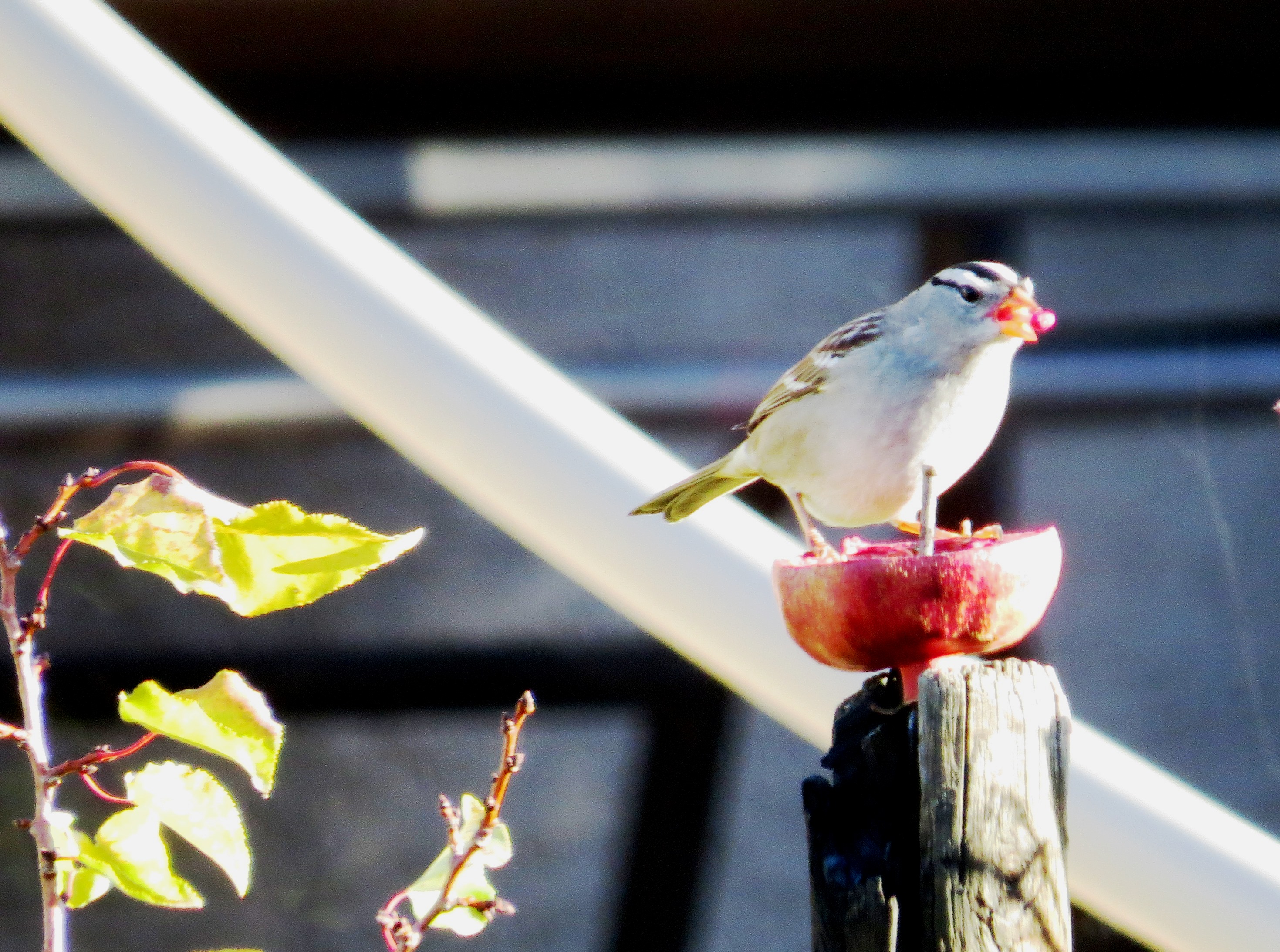
A pomegranate half attracts White-crowned Sparrows and many others (photo Bob Bowers)

A pomegranate half attracts White-crowned Sparrows and many others (photo Bob Bowers)

At our house, the arrival of fall is marked by the arrival of our first White-crowned Sparrow.  Last year it was September 26 and this year it was a week later, October 3.  With a diversified diet that includes seeds, buds, grass, fruits and insects, you’ll probably see them in your yard, but if you want to guarantee it, put sunflower seeds in a tray feeder or hammer a finishing nail into a post and impale half of a pomegranate on it.  They commonly feed together, foraging on the ground, and if you walk the trails around SaddleBrooke or in Catalina State Park, flocks of a dozen or more (often mixed with other sparrows) will fly from the ground to low hanging branches as you approach.

The lore (between eye and bill) is white for the Gambelii subspecies (photo Bob Bowers)

The lore (between eye and bill) is white for the Gambelii subspecies (photo Bob Bowers)

Unlike many of our birds, the females are just as beautiful and striking as the males.  In fact, they look identical.  Both adults have a bright white crown stripe, bordered by ink-black stripes next to white ‘eyebrows’, a gray breast and an orange bill.  Many people mistake the birds with bright black and white striped crowns as males, and the similarly marked birds with brown and buff striped crowns as females, but this is not the case.  Those orange-billed birds with the brown and buff stripes are first-year juveniles whose crown stripes will soon change to white and black.

Subspecies Oriantha have a black lore (photo in Colorado, Bob Bowers)

Subspecies Oriantha have a black lore (photo in Colorado, Bob Bowers)

This is probably the best studied songbird due to its wide distribution across the U.S., Alaska, Canada and Mexico, as well as its conspicuousness and abundance.  Fossil evidence shows the bird has been around since the Pleistocene, and the four subspecies likely arose from glaciation-caused population isolation. At one time, I thought the White-crowned Sparrows we see in summer in the mountains of Colorado were the same birds that show up here in the fall, but I was wrong.  The Colorado birds are the subspecies oriantha, and either remain in Colorado year-round or winter mostly in the eastern part of the southern U.S.  Almost all the White-crowned Sparrows we see here are the subspecies gambelii, which, amazingly, nest thousands of kilometers north, from Alaska across the northern tier of Canadian provinces.  Although the birds we see in SaddleBrooke are nearly always gambelii, occasionally an oriantha shows up (I saw one at my feeder the morning I wrote this).  If you’re getting bored with bridge, golf or basket-weaving, you could try to find an oriantha among the gambelii.  Make a pot of tea, put some bird seed in a feeder near the window and keep your binoculars handy.  Look for a White-crowned Sparrow with a black lore, that space between its eye and bill.  Orianthas have a black lore, while the lores on gambelii  are white.  Or you could go to Colorado, where they’re all oriantha.  On the other hand, maybe basket-weaving isn’t that boring after all.

(This article originally appeared in the November, 2013 issue of the Saddlebag Notes newspaper, Tucson, Arizona.)
Posted in Birding Arizona, Uncategorized | Tagged , , , , | 1 Comment

Gray Head, the Hooded Oriole Who Wouldn’t Go Home


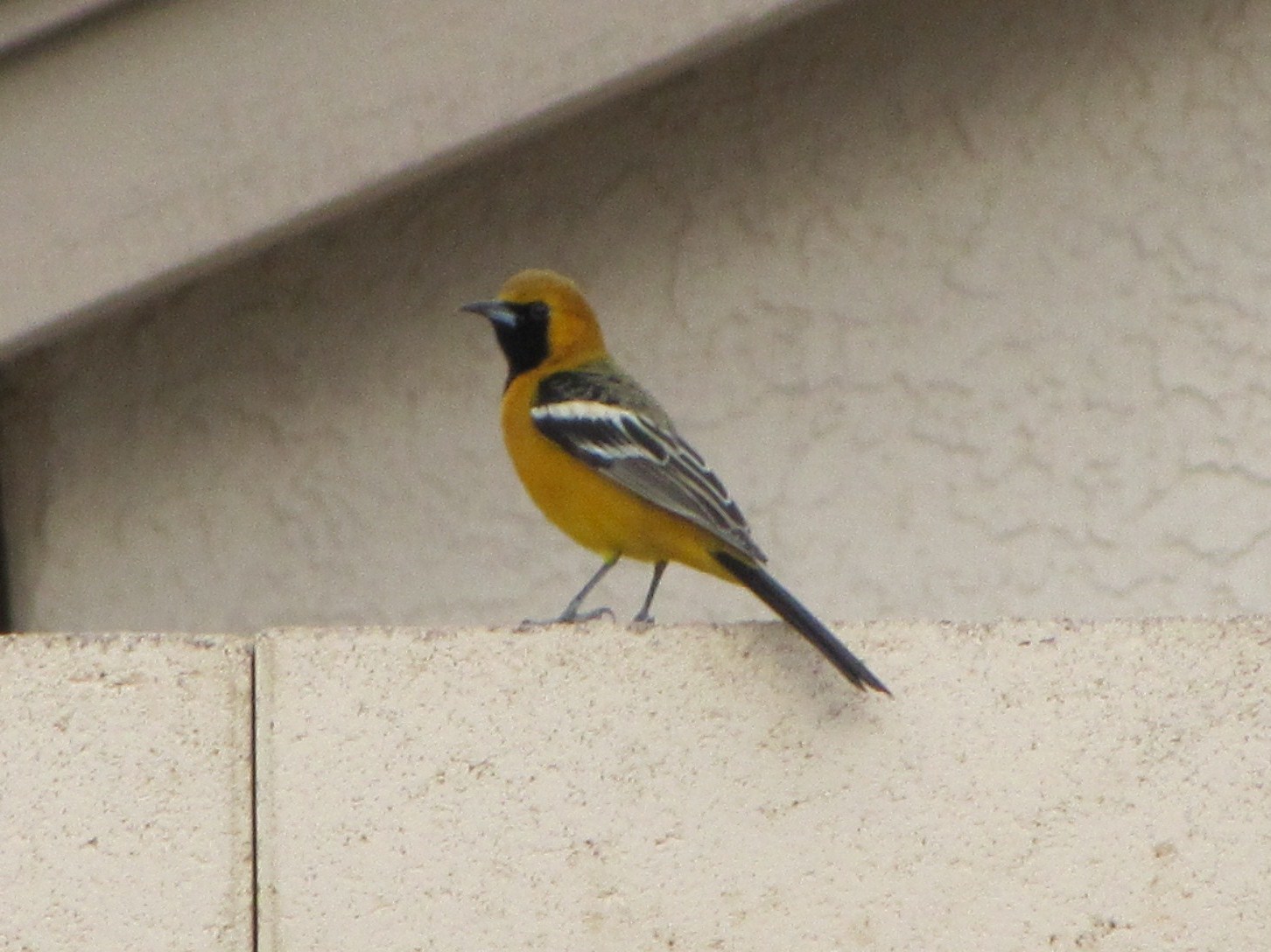
Gray Head, the male Hooded Oriole on September 22, 2010 (photo Bob Bowers)

Gray Head, the male Hooded Oriole on September 22, 2010 (photo Bob Bowers)

With the exception of the Baltimore Oriole, some of whom winter in Florida and coastal areas of the southeast, orioles are a spring and summer phenomenon in the U.S.  Of the five oriole species that regularly nest and breed in the U.S., three of them are commonly seen in Arizona, the Hooded, Bullock’s and Scott’s.  All have been seen in SaddleBrooke, but the most common and the only one that nests here is the Hooded Oriole.

Female Hooded Orioles, as is the case with most birds, are less colorful than the males, but still eye-catching and beautiful.  Their backs and wings are light gray, but from their face down they are a soft lemon yellow.  They bear some color resemblance to our Lesser Goldfinches, but are easily distinguished from the goldfinches.  Including a long tail, the oriole is eight inches in length, nearly twice as long as the Lesser, and their bill is long and slender, unlike the short, seed-eating bill of finches.  Adult male Hooded Orioles are quite striking, with a black face and neck and bright yellow belly, crown and nape, giving the appearance of a yellow hood (hence, the name).

Gray Head on November 16, 2010 (photo Bob Bowers)

Gray Head on November 16, 2010 (photo Bob Bowers)

Our Hooded Orioles typically arrive in March, build a nest (they love palm trees), raise a family and head back to Mexico, usually by the end of September.  Orioles eat insects, fruit and nectar, and are common visitors to hummingbird feeders.  Although we don’t have a palm tree in our yard, our neighbor does, and for the past few years we have been fortunate enough to have a pair of Hooded Orioles nest there.  These orioles frequent our hummingbird feeders and trumpet vines, so we get lots of opportunities to enjoy and photograph them.  As usual, they disappeared in September 2010, heading back to their winter home in Mexico together with the rest of Arizona’s orioles.  Well, most of them, anyway.

Gray Head, the overwintering Hooded Oriole on December 22, 2010 (photo Bob Bowers)

Gray Head, the overwintering Hooded Oriole on December 22, 2010 (photo Bob Bowers)

One day late that September, we were surprised to see a solitary male Hooded Oriole at one of our hummingbird feeders.  We assumed he was just a slow packer, and that he would soon join his buddies.  Wrong.  October came, and he still showed up daily.  Thanksgiving came, and so did he.  Before long, we became familiar with the bird’s appearance, and realized that it was the same bird we were seeing each day.  His distinguishing mark was a slightly graying crown, not unlike a lot of other folks here in the Brooke.  We named him Gray Head, and looked forward to his daily visits, though we expected his departure to Mexico momentarily.  Wrong again.  Winter arrived and Gray Head still hung out.  When we had our first hard freeze, we felt certain he would leave, but no.  Then the really cold weather hit and our early morning temperature dropped to 17.  We thawed our hummingbird feeders hourly during the big freeze, and Gray Head was right there with our shivering hummers.  His favorite hangout was an oleander bush close to his feeder of choice.  When the coldest weather struck, the oleander shed its leaves but Gray Head still perched there between feedings, as conspicuous as a bright Christmas ornament.  He continued to entertain us until March, when his cousins returned from Mexico to rebuild their palm tree nest.  As they moved in, he finally moved on, probably to some northern territory more suitable to his penchant for cool weather.

Bird ranges are dynamic, and many changes have been recorded over the past few years.  Rufous Hummingbirds, for example, increasingly are wintering in the southeast U.S. as well as Mexico, and Hooded Orioles have expanded their summer breeding range into northern California.  It’s possible that Gray Head is more adventurer than procrastinator, maybe the first of future year-round Arizona orioles.  We’re considering re-naming him Columbus.

(This article, edited to update it, originally appeared in the March, 2011 issue of the Saddlebag Notes newspaper, Tucson, Arizona.)
Posted in Birding Arizona | Tagged , , | Leave a comment

Using eBird for a Checklist of Birds in Your Yard


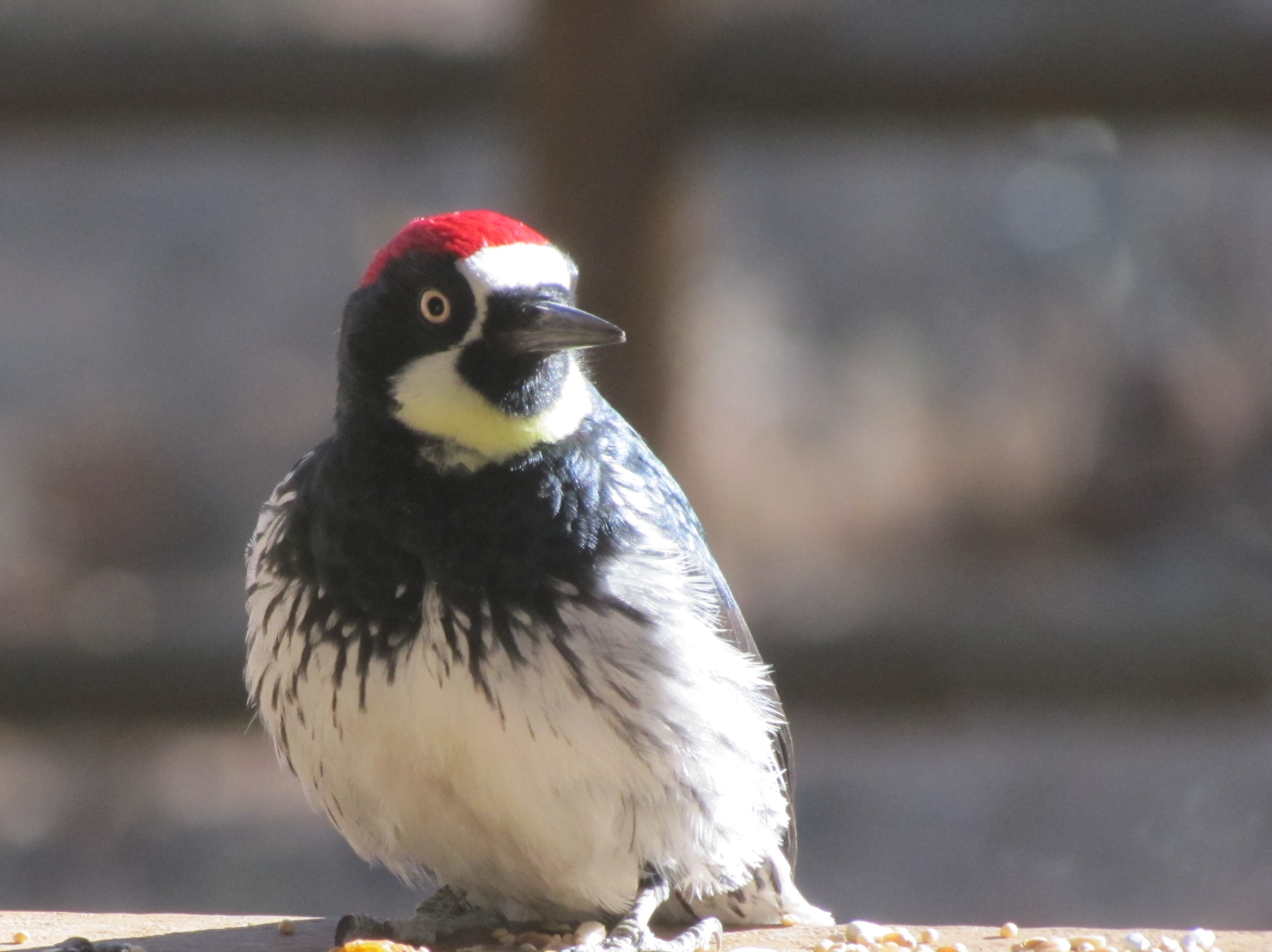
The Acorn Woodpecker, usually seen at higher elevations, appeared in SaddleBrooke this spring (photo Bob Bowers)

The Acorn Woodpecker, usually seen at higher elevations, appeared in SaddleBrooke this spring (photo Bob Bowers)

If you’re like me, you keep track of birds you’ve seen in or from your yard.  Some people write bird sightings on their calendar, some check off birds in a field guide and some keep a formal list in a journal or computer.  And some of us use eBird, an online tool that makes it easy to keep track of birds you’ve seen at home, as well as anywhere else in the world.

Launched in 2002 by Cornell University’s Lab of Ornithology and the National Audubon Society, eBird started with the Western Hemisphere only, but expanded to include the entire world in June, 2010.  As of July, 2013, there are more than 100,000 users worldwide who have submitted tens of thousands of checklists including over 100 million observations.  Data are recorded for more than 10,000 species, virtually every known bird, and are available free of charge to anyone.

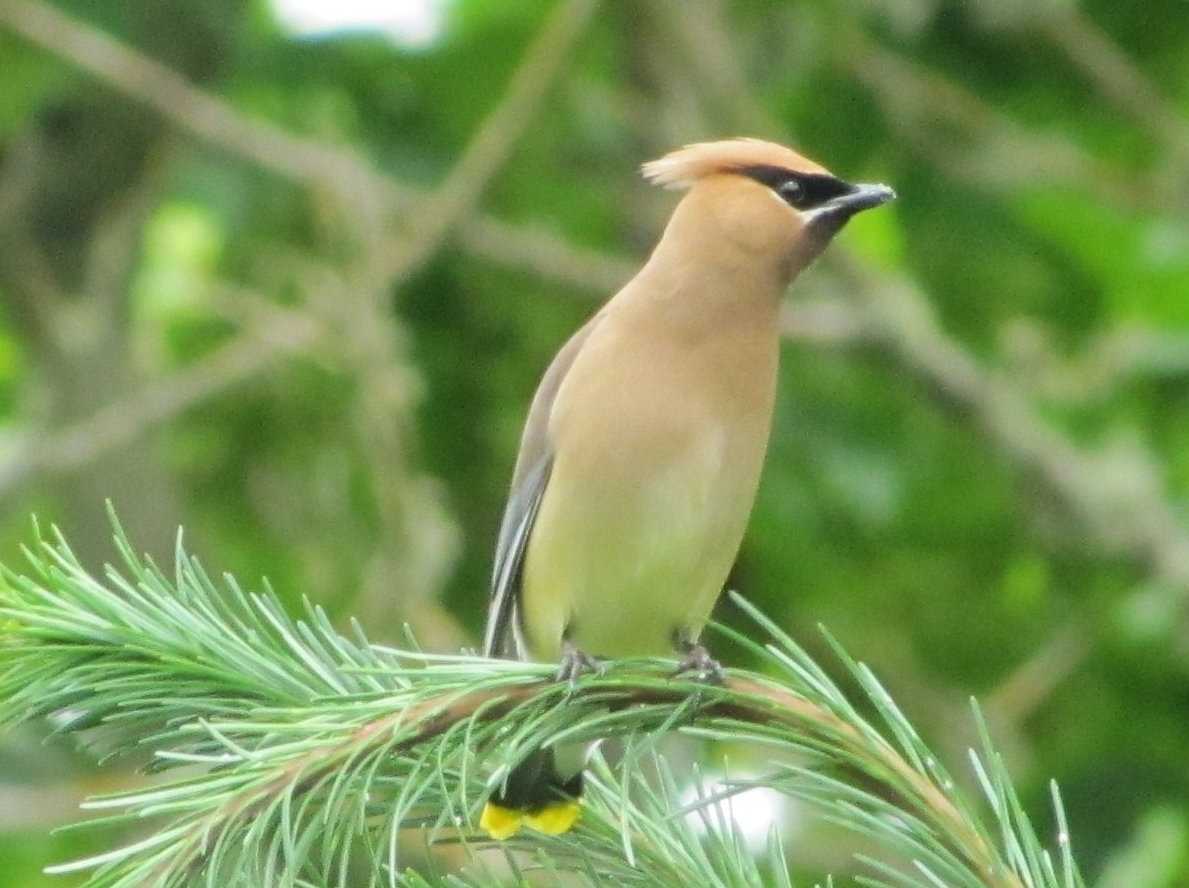
Cedar Waxwings became a yard bird for us this year (photo Bob Bowers)

Cedar Waxwings became a yard bird for us this year (photo Bob Bowers)

Employing user-friendly, intuitive software, eBird is easy to use and allows observers to quickly enter checklists of sightings, whether for an all-day outing or a casual single-bird backyard observation.  eBird tracks your records, allowing you to maintain a ‘life list’, as well as document your sightings by date and location.  Similarly, you can examine eBird checklists submitted by others to see which birds have been reported (and when) for any area in the world.  For example, you can enter eBird, click on ‘Explore Data’, go to ‘Range and Point Maps’ and enter any bird name for any period of time and any location, such as ‘Pinal, Arizona’.  A Google map appears for the requested area, which you can scroll beyond to adjacent areas/counties, and small blue and red icons appear wherever submitted checklists include the requested bird.  Red markers indicate recent sightings and blue for older checklists.  You can zoom closer to get street-level locations, and when you click on an individual marker, you will see checklist detail, including observer’s name and a count of each species reported.

A daily visitor to our SaddleBrooke yard, the Lesser Goldfinch (photo Bob Bowers)

A daily visitor to our SaddleBrooke yard, the Lesser Goldfinch (photo Bob Bowers)

To set up an account, use your Internet browser to find www.ebird.org and then select ‘Register as a new user.’  Enter your first name, last name and email address.  Choose a ‘User Name’ of at least 6 characters and create a password of at least 8 characters.  Click on ‘Create Account.’  It’s that simple.  Generate a simple checklist for your own home address by writing down the number of birds for each species you find in your yard over a short period of time, say 15 minutes.  You might find six House Sparrows, four House Finches, two Lesser Goldfinches, a Curve-billed Thrasher, a Northern Cardinal, two Cactus Wrens and a Costa’s Hummingbird.  Maybe a dozen Gambel’s Quail chased by a Greater Roadrunner.  If you see a bird you don’t recognize, skip it or use a field guide to help identify it.  Once you have an initial list, sign on to eBird and click on ‘Submit Observations.’  Under ‘Where did you bird?’ click on ‘Find it on a Map.’  Once you have established your yard (and any other spots) as a site, they become part of your birding spots and will appear automatically, but use ‘Find it on a Map’ to set up any site the first time.

Not yet a yard bird, the Great Blue Heron is often found at SaddleBrooke golf course ponds (photo Bob Bowers)

Not yet a yard bird, the Great Blue Heron is often found at SaddleBrooke golf course ponds (photo Bob Bowers)

Enter the county and state, click ‘Continue’ and then enter your street address in the box following ‘Zoom To.’  A Google map will appear and you can zoom the screen larger until you easily see where your home would be.  Click this spot and a small icon will appear, representing your house.  Give this spot a name (‘My SaddleBrooke Home’), but don’t suggest it as a ‘birding hot spot.’  Continue with your data entry by entering the observation date, type (‘stationary’ if you were watching your yard), start time, duration, party size (2 if your spouse helped) and comments (e.g., ‘my first checklist’.)  You will then scroll through an eBird intuitive list of all the bird species you could find at this location for this time of the year.  As you encounter the names of birds you actually saw, enter the number and continue until finished.  Note that the birds are listed in taxonomic order, like birding field guides, rather than alphabetically.

Add to this data base by entering new lists over time, and you will build a significant yard list.  If you happen to look out the window and see a new bird, you can create a single-bird list (‘casual’ 30-second birding) without taking the time to note all the birds you might see over a half-hour.  If you see a bird you don’t recognize even with a field guide, try to get a picture of it, send it to me and I will try to help identify it.

Since we began our yard list a few years ago, it has grown to 74 different species.  If you live on the golf course or your yard connects to open space, your list no doubt will be larger.  We also maintain a list of birds found in the whole community, east to the Canada del Oro Wash.  At present, this list consists of 136 species.  Both our yard list and the complete SaddleBrooke list can be found at my blog, www.birdingthebrooke.com.

(This article originally appeared in the October, 2013 issue of the Saddlebag Notes newspaper, Tucson, Arizona.)
Posted in Birding the Americas | Tagged , | 2 Comments

SaddleBrooke’s Magical Jewel, the Broad-billed Hummingbird

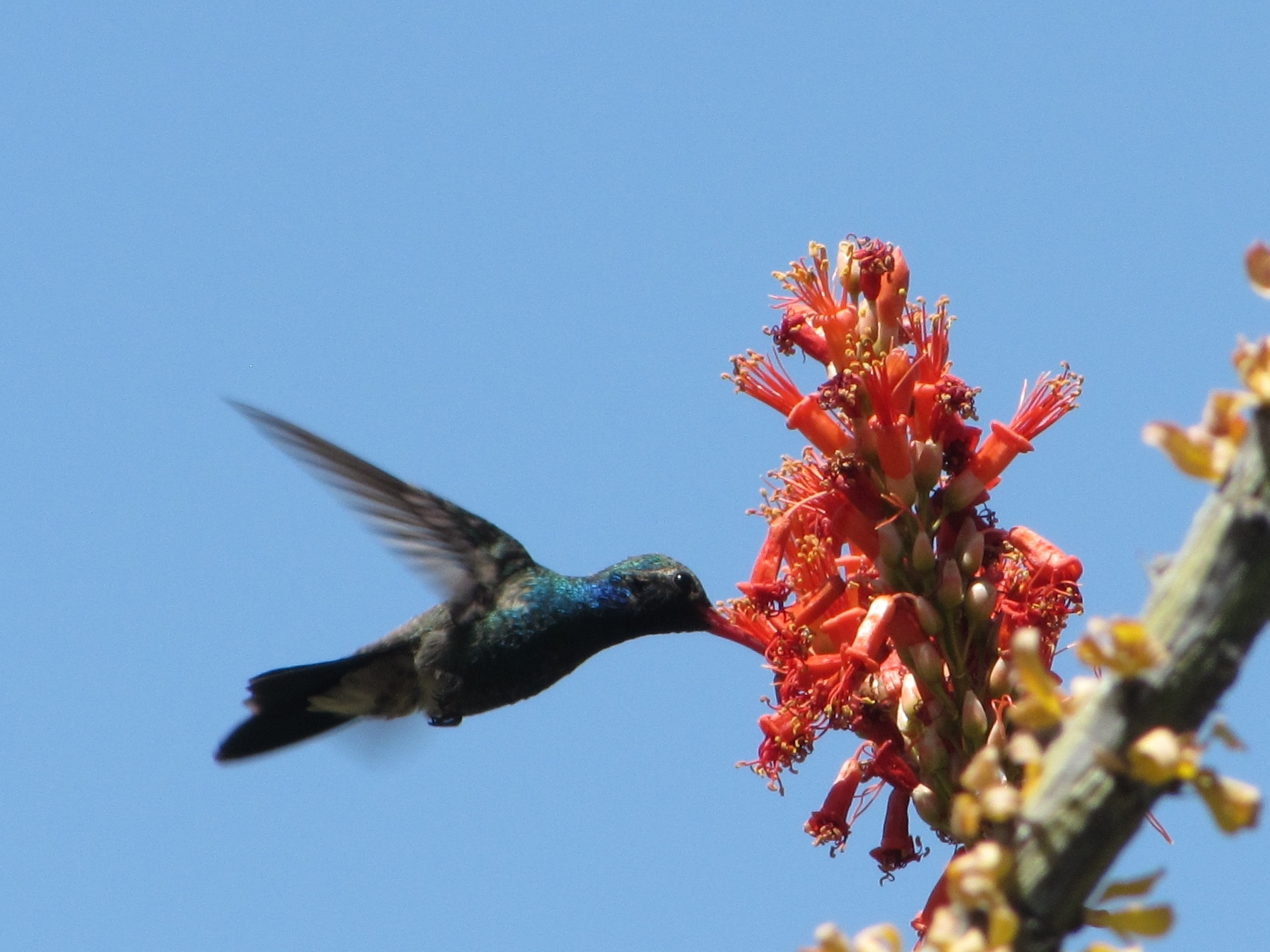
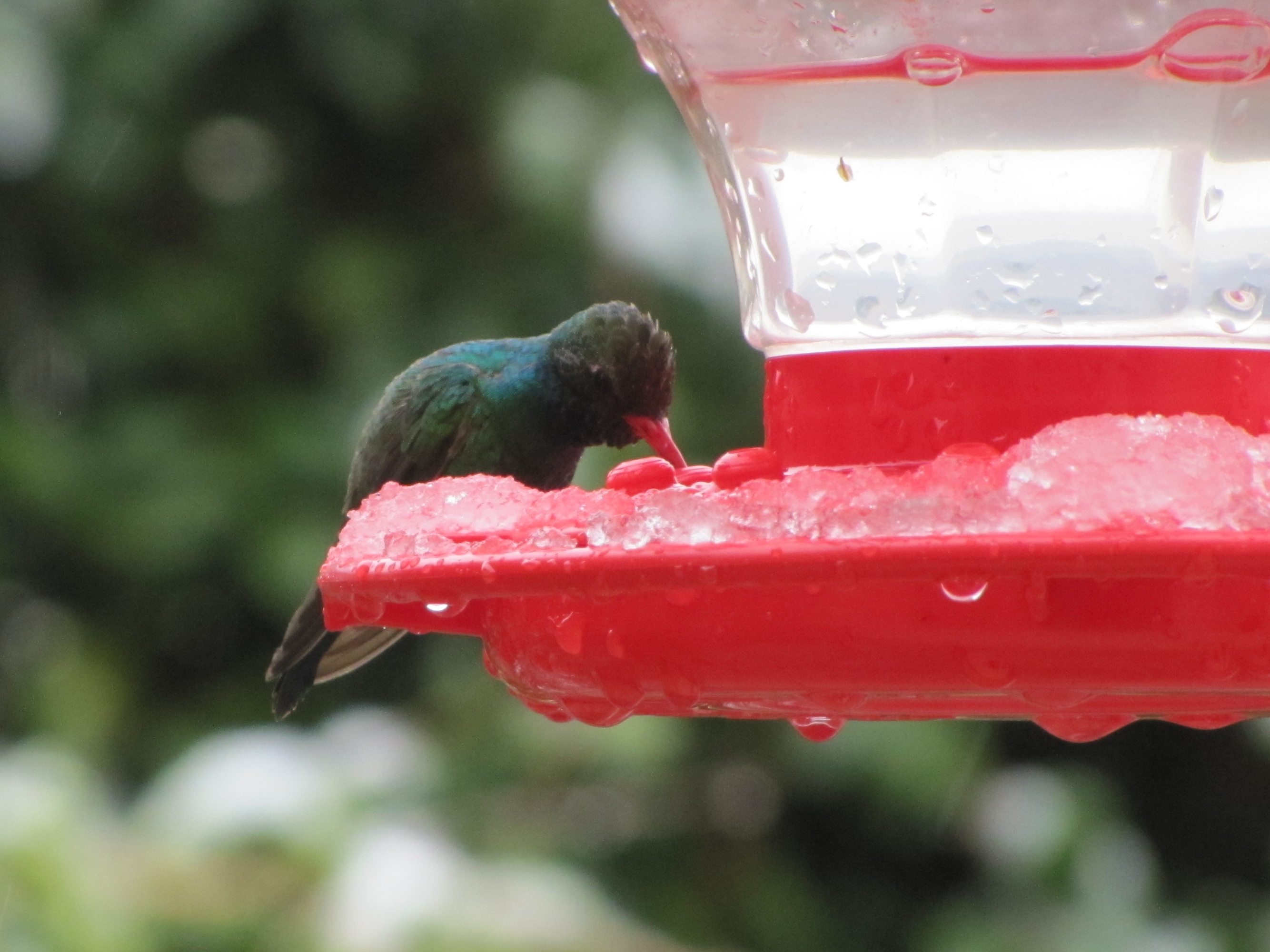
Male Broad-billed Hummingbird at Ocotillo in April (photo Bob Bowers)

Male Broad-billed Hummingbird at Ocotillo in April (photo Bob Bowers)

I’ll never forget the first time I saw a male Broad-billed Hummingbird.  It was ten years ago, and we were sitting in the back yard watching the mountains put on their daily light show as the summer sun sank in the west.  Suddenly, a jewel with wings came between us and the view, hovering just 30 inches in front of us and reflecting a dozen shades of blue as his iridescent feathers caught the last rays of sunlight.  Adding to this brilliant burst of color was a black-tipped red-orange bill unlike any other SaddleBrooke hummingbird.  I thought a magic carpet had somehow whisked me to Ecuador.

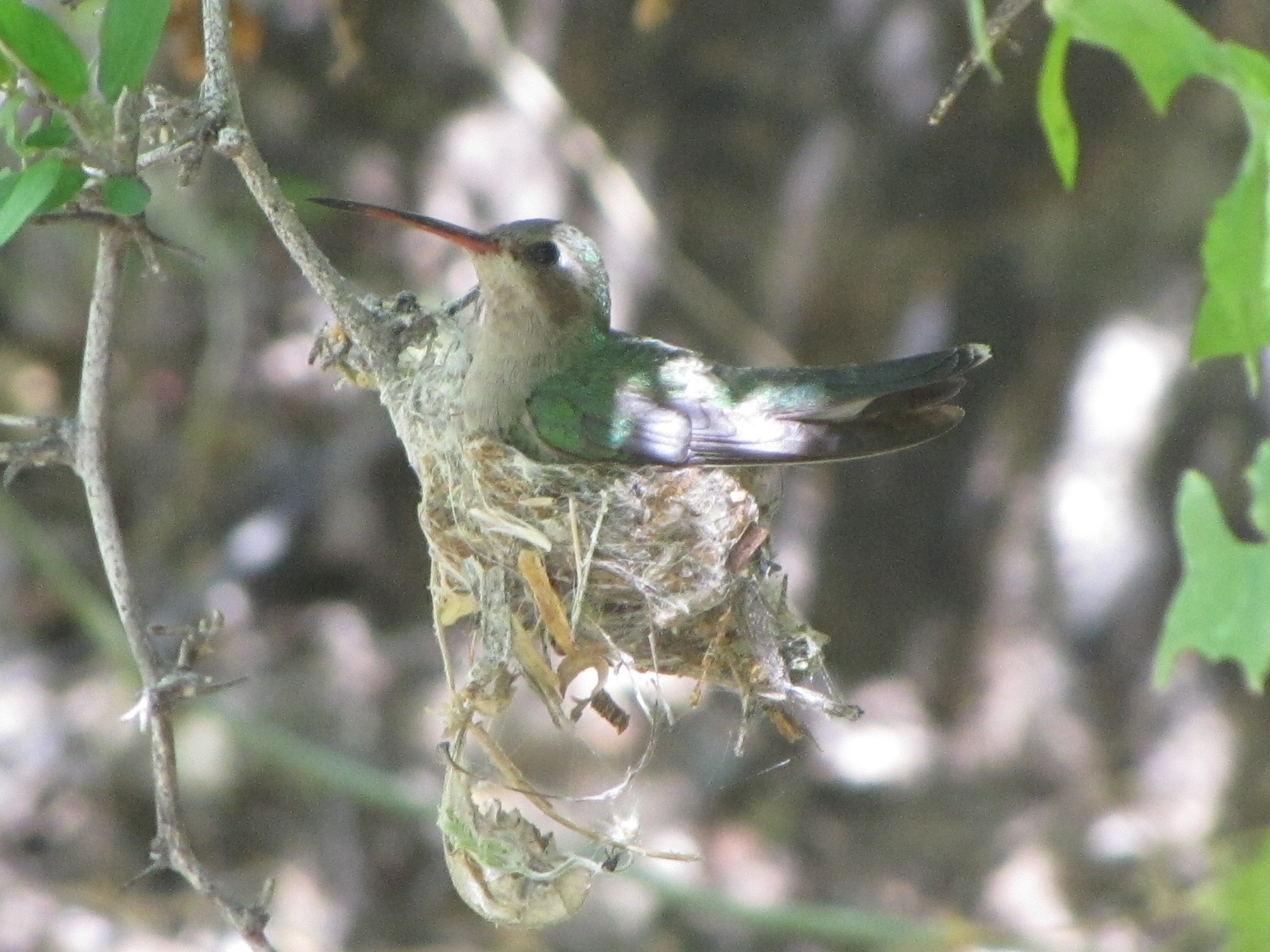
Nesting Broad-billed Hummingbird in Catalina State Park (photo Bob Bowers)

Nesting Broad-billed Hummingbird in Catalina State Park (photo Bob Bowers)

Although several of Mexico’s more exotic hummingbirds regularly visit the mountain canyons near Madera and Sierra Vista, to date the most colorful and exotic hummingbird we’ve found in SaddleBrooke is the Broad-billed.  This is a Mexican bird that continues to broaden its range and presence deeper into Arizona.  When we moved here in 2003, Broad-billed Hummingbirds were coming into Arizona to nest in the summer, but winter visitors were rare, and mostly limited to canyon areas like Ventana in the Tucson foothills.  Now, both Anna’s and Broad-billed Hummingbirds are regularly seen in and around SaddleBrooke twelve months of the year, joining the Costa’s Hummingbird as one of our three resident hummers.


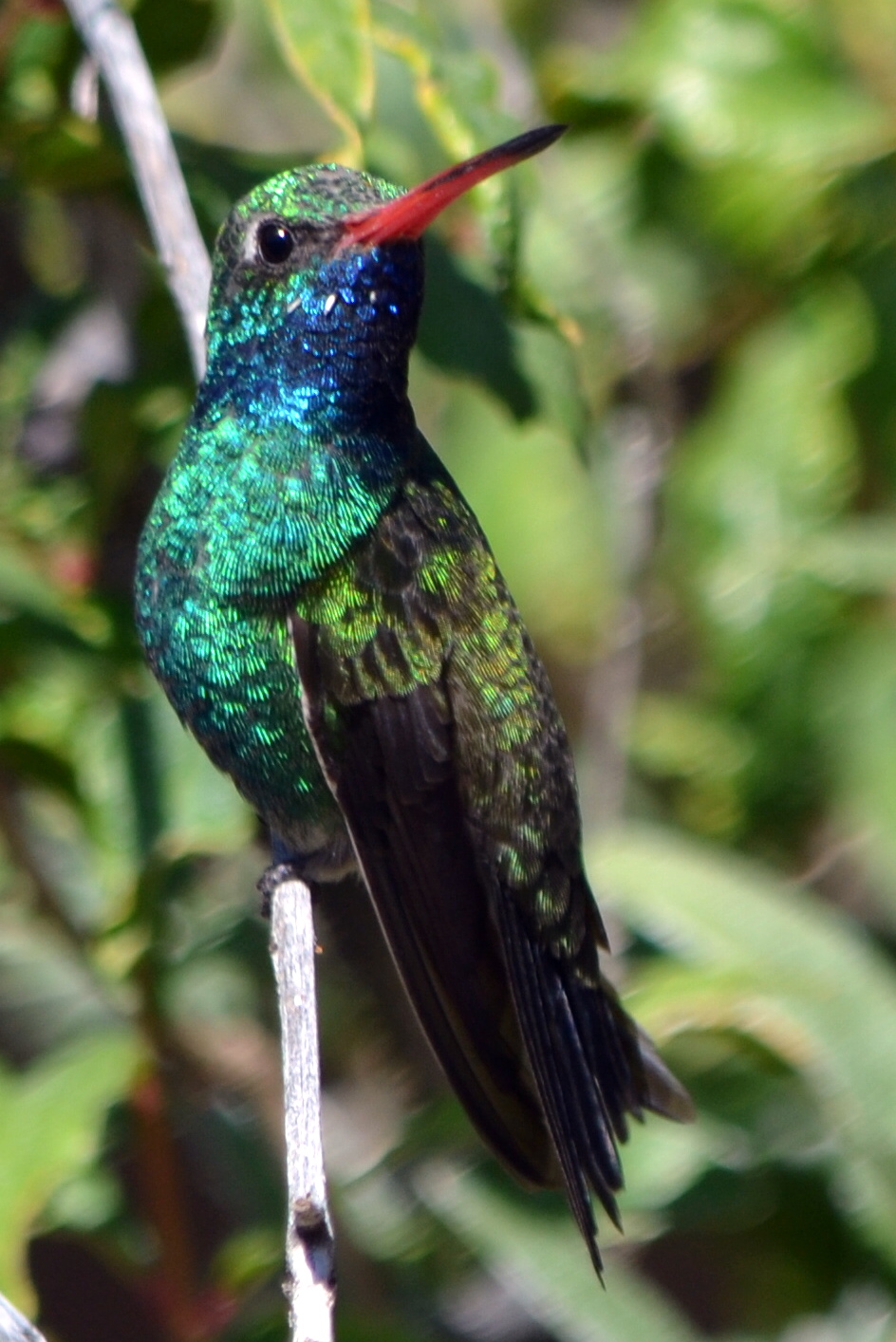
Male Broad-billed Hummingbird, stunning in morning sun at WOW, Catalina, Arizona (photo Sue Bush)

Male Broad-billed Hummingbird, stunning in morning sun at WOW, Catalina, Arizona (photo Sue Bush)

The most recent edition of the Arizona Breeding Bird Atlas (2005) found only one confirmed nesting site in Pinal County, at Boyce Thompson Arboretum near Superior.  However, we have seen indications of nesting birds along the Canada del Oro Wash and its tributaries from the foot of Desert Sky in unit 21 to the northern reaches below the Preserve.  We have also seen numerous juvenile Broad-billed Hummingbirds, both female and male, at our feeders from late summer into fall, and we documented a nest this spring on the Hidden Falls trail in Catalina State Park.

SaddleBrooke Broad-billed during March Snowfall (photo Bob Bowers)

SaddleBrooke Broad-billed during March Snowfall (photo Bob Bowers)

You will see far fewer of these birds in your yard than our other two residents, and during late summer migration, fewer even than two of our three migratory birds, Rufous and Black-chinned.  However, they are so stunning, they are worth waiting for.  Even the female will catch your eye, with a dark auricular mask, bronze green to bluish golden green crown, nape and upper parts and blue-black tail.  The male, though, will leave you breathless, especially if you get a full frontal view in bright sunlight.  His crown, nape, upper and lower parts range from bronze to blue to emerald, and his throat defies description with its iridescent shades of blue.  And don’t forget that red-orange bill tipped with black.

The scientific name is Cyanthus latirostris, which translates ‘Dark blue, Broad-bill’.  This is a bird found only in central to northern Mexico and the southwestern U.S., and all of the birds found in Arizona are of the northern sub-species, magicus.  Not surprisingly, this translates as ‘magical.’

(This article originally appeared in the September, 2013 issue of the Saddlebag Notes newspaper, Tucson, Arizona.)
Posted in Birding Arizona | Tagged , , | Leave a comment

Summer’s Bumper Baby Bird Crop

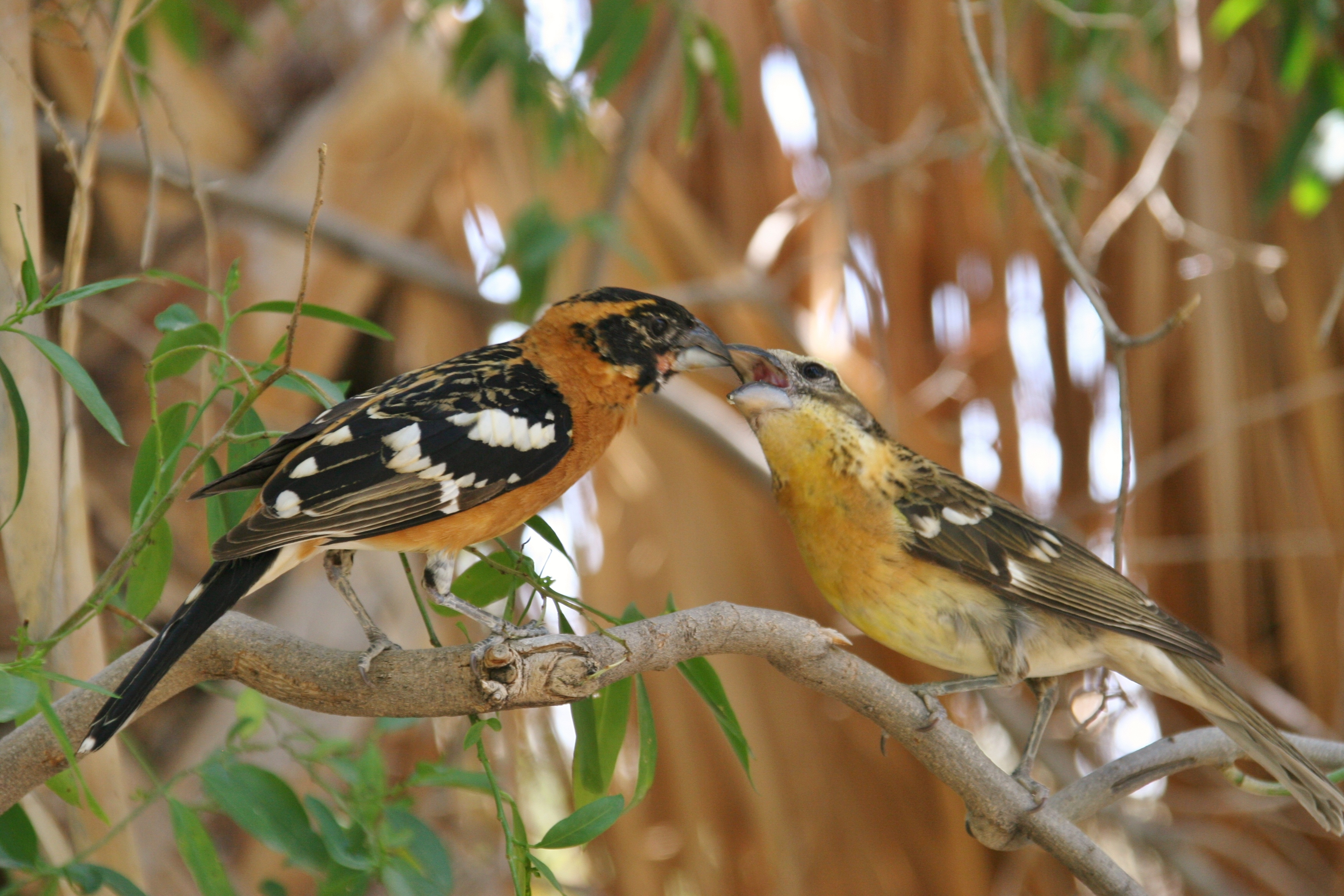
Baby Black-headed Grosbeak gets a treat (photo Bob Bowers)

Baby Black-headed Grosbeak gets a treat (photo Bob Bowers)

If I were to pick one month to get out of Arizona, it would be June. The lower desert elevations of Yuma and Phoenix are furnace hot, and even Tucson, at 2,000 feet, and SaddleBrooke, at 3,400 feet, are often triple-digit hot. The promise of cooling July monsoons offer little solace to those of us who watch the snowbirds leave town in May. On the other hand, one punishingly hot month is a small price to pay for the other eleven. Besides, 30 days of (dry) heat seems inconsequential compared with hurricanes, tornados, floods and earthquakes. June’s lining is silver, as well: the crowds are gone, traffic is light, swimming pools, restaurants and theaters are empty. For birders, there is another bonus: bird babies appear in abundance.

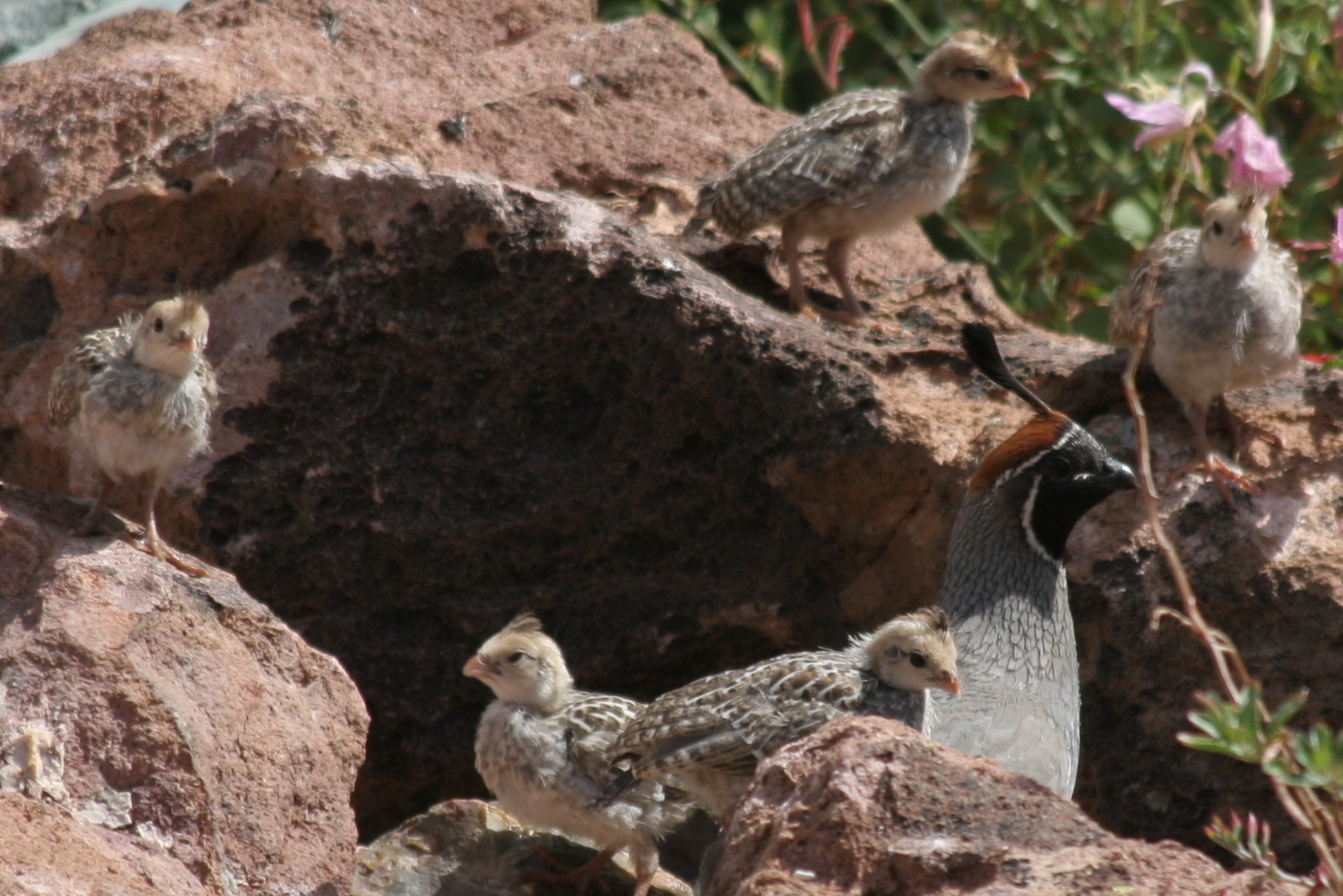
Precocial Gambel's Quail babies with dad (photo Bob Bowers)

Precocial Gambel’s Quail babies with dad (photo Bob Bowers)

Even non-birders get excited about baby quail, who start showing up in May and continue hatching throughout the summer. Gambel’s Quail babies are more obvious than most of our other birds because, unlike most of our other birds, they are precocial. Most birds, like humans, are altricial at birth: naked and helpless. Naked and helpless birds are kept out of sight and well-protected, so we rarely see them until they fledge. Quail babies, on the other hand, come out of their eggs feathered, clear-eyed and ready to roll. And a good thing, too, since roadrunners tolerate lizard lunches but salivate over baby quail. This explains why that string of a dozen quail babies, motoring after their parents like a column of wind-up toys on Tuesday, shrinks to ten on Wednesday and a handful by the weekend. Fortunately, some survive and by the end of June we usually find a wide range of quail ‘babies’, from tiny newborns to teenagers.

Young Cactus Wren, dazed and confused (photo Bob Bowers)

Young Cactus Wren, dazed and confused (photo Bob Bowers)

Altricial birds, keeping their young under lock and key, don’t have to lay as many eggs to get sufficient survivors. If you’re lucky, you’ll discover an altricial bird nest with young, cheeping incessantly as a mom or dad stuffs bugs and other delicacies into their gaping mouths. If you’re thoughtful, you’ll also watch from a distance, taking care not to unsettle this fragile launching of life. Eventually, after a couple of weeks or so, these helpless birds have eaten enough bugs, grown enough feathers and gained enough strength to test their wings and venture out where we can enjoy their comic struggles to mature. Even though some don’t look much like their parents, they’re still easy to recognize as juveniles. Look for fluff balls on unsteady legs, quivering, shaking and cheeping, while a parent faithfully brings them food, shows them where to eat and probably wonders when the heck they’ll fend for themselves.

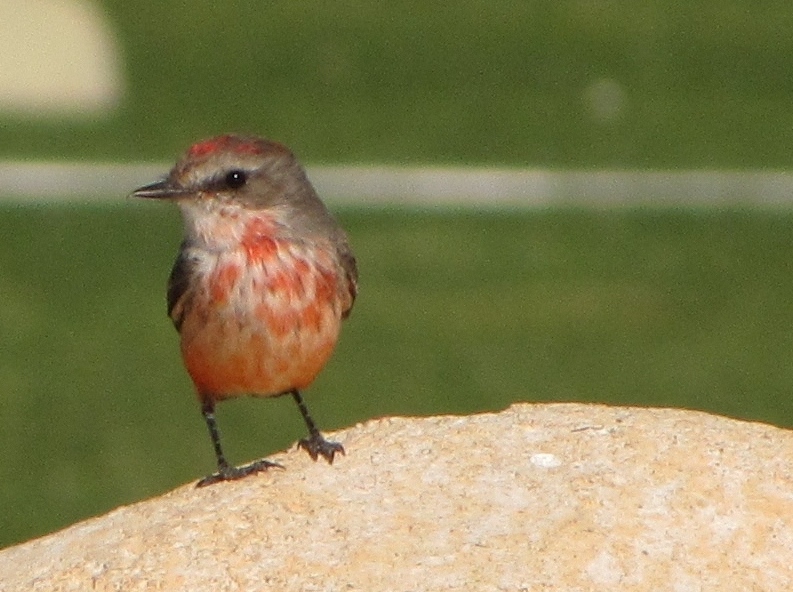
Young mottled male Vermilion Flycatcher (photo Bob Bowers)

Young mottled male Vermilion Flycatcher (photo Bob Bowers)

You can find many examples of this behavior in your yard, with House Sparrows and finches, Curve-billed Thrashers, Cactus Wrens, Northern Cardinals, Verdins and Black-throated Sparrows. Hummingbirds are more quickly independent, perhaps because their deadbeat dads parted ways at conception. By the time hummers leave the nest, mom is no doubt exhausted and ready to call it quits. Besides, it’s hard to feed a youngster doing aerial acrobatics at 90 miles per hour. Young birds can be recognized in other ways, as well. Not yet as wary as adults, newly-fledged birds will approach you more closely and are less quickly frightened away. They are often clumsy, bumping into obstacles and making flawed landings. They look shaggy, have bad hairdos and sometimes immature coloring. Young male Vermilion Flycatchers are mottled and young cardinals have black bills instead of red-orange. Invariably, they make you laugh. That alone will make you forget the heat.

(This article originally appeared in the August, 2013 issue of the Saddlebag Notes newspaper, Tucson, Arizona.)

Posted in Birding Arizona | Tagged , , , , | 1 Comment