Summit County’s Summer Hummers

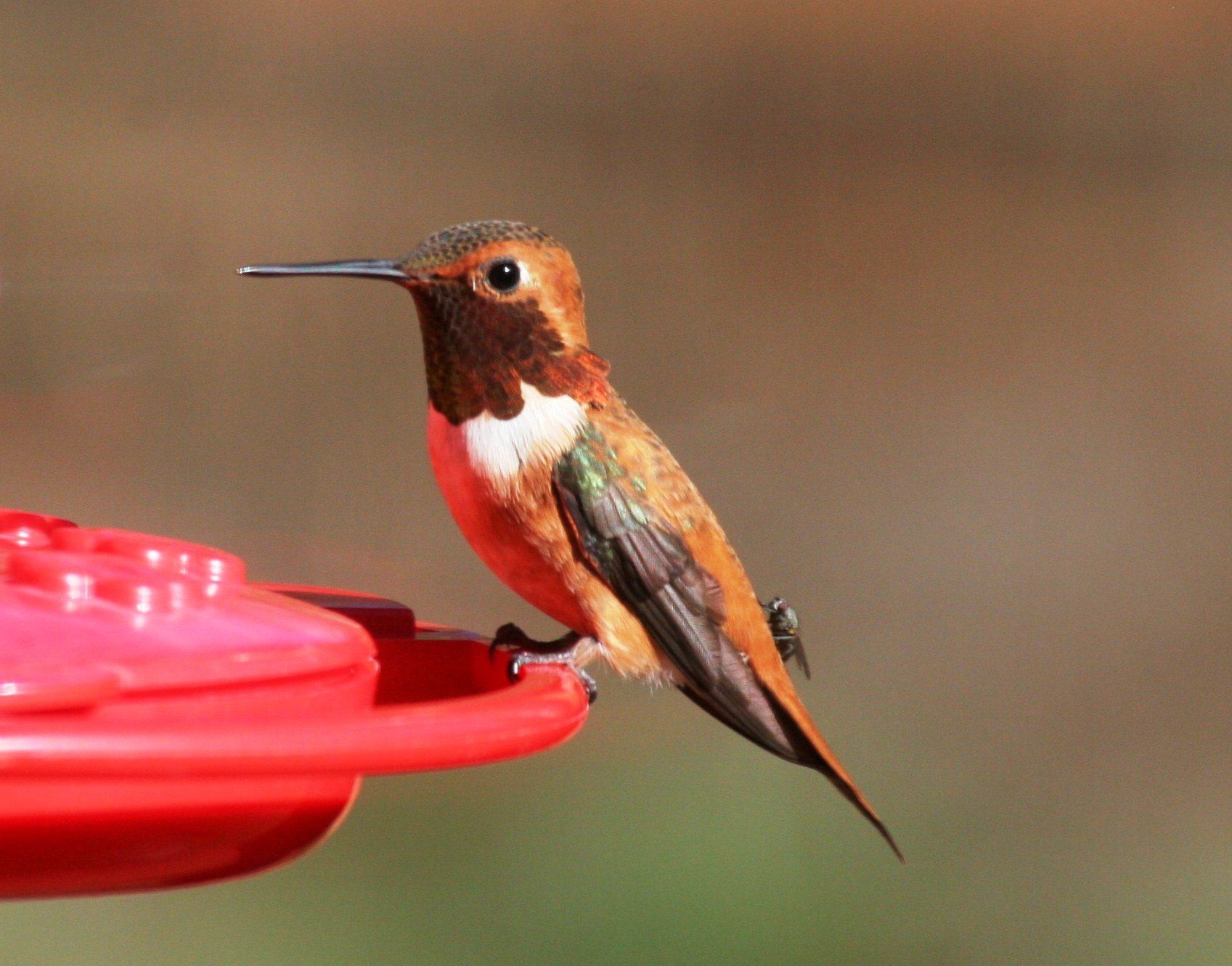
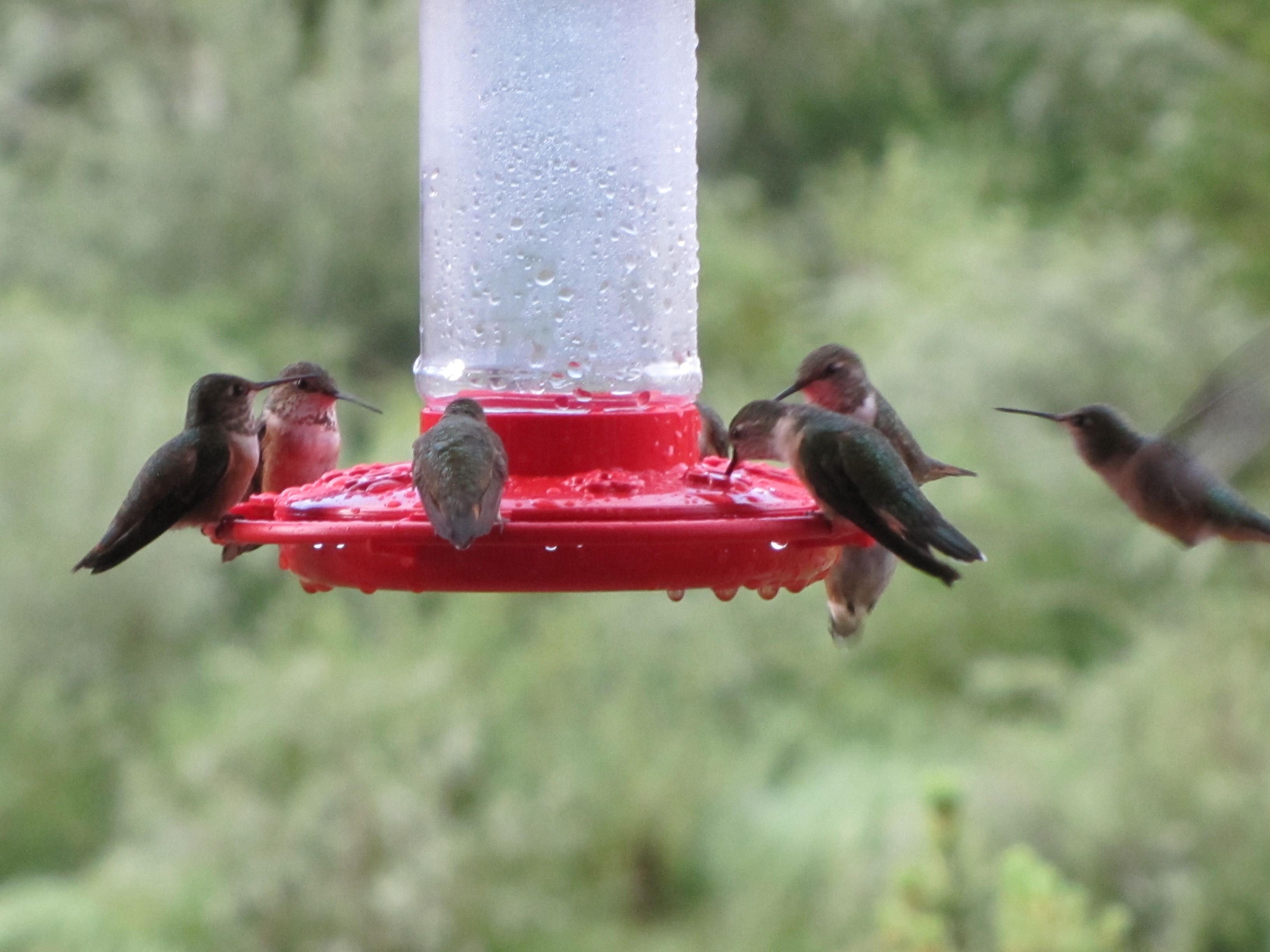
Migrating Female Rufous Hummingbird in Keystone, Colorado (photo Bob Bowers)

The eastern half of the U.S. rarely sees but a single hummingbird, the Ruby-throated.  This Mexican resident comes north to nest, braving the Gulf of Mexico during both its spring arrival and fall return.  Similarly, Summit County is home to just one nesting hummer, the Broad-tailed Hummingbird.  Unlike eastern states, however, Summit County also enjoys two other migrating hummingbirds.

Why are Hummingbirds so Fascinating?

Hummingbirds are so unique that even those with no interest in bird watching are drawn to them.  Not only are they the smallest birds in the world, their long bills, iridescent colors and high-speed acrobatics are unlike any other.  Weighing little more than a penny, hummers move their wings in a figure-eight pattern that allows them to hover, fly sideways, vertically and even upside down.  Wing beats up to 90 per second create the humming associated with their name, and their heart rate soars over 1,200 beats per minute at flight speeds of 60 mph.  Talk about leaping buildings in a single bound, this is truly ‘Superbird’.  And, lucky for us, hummingbirds are found only in the Western Hemisphere.

Summit County’s Three Hummers

In addition to the Broad-tailed Hummingbird, two other species pass through our high country in summer, typically beginning in July.  The more common one, and a direct relative of the Broad-tailed, is the Rufous Hummingbird, a pugnacious lightweight.  The second summer migrant is the seldom-seen Calliope Hummingbird, the smallest bird north of Mexico.

The Calliope Hummingbird


Penny-weight Male Calliope Hummingbird, Colorado (Bob Bowers)

Calliope seems a strange name for a tiny, quiet bird, since the musical instrument of the same name is a big noisy machine.  This beautiful little bird, however, was named for the Greek muse of epic poetry.  And poetic it is, an unassuming and elusive gem.  The Calliope is listed in Colorado as rare to uncommon, and during some summers it may be unseen.  This year, though, hummingbird numbers appear high and already a few Calliopes have been documented.  As is the case with most hummingbirds, adult males are the more distinctive, and the male Calliope is easily differentiated from our two other hummingbirds by its brilliant, streaked magenta gorget.  Females are less obvious, but perched on a feeder their tails are shorter than their wings, contrasting with both Rufous and Broad-tailed.  Calliopes nest in the high country of the Pacific Northwest, and visit Summit County to fuel their return to Mexico.

The Rufous Hummingbird


Male Rufous Hummingbird with Hitch-hiking Fly (Bob Bowers)

Almost as small as the Calliope, the Rufous bears little other resemblance.  This is the schoolyard bully of hummingbirds, and its aggression belies its size.  Rufous nest from Oregon to Alaska, and migrate through Colorado on their way south, wintering for the most part in west central Mexico.  This is the champion of migrating hummers, with one recently banded bird found to have traveled 2,800 miles from Alaska to Florida.  Look for copper-colored birds with an attitude.

The Broad-tailed Hummingbird


Summit County, Colorado’s Sole Nesting Hummingbird, the Broad-tailed (Bob Bowers)

This high-elevation bird arrives in spring as glacier lilies flower, raises two fledglings and returns to Mexico with our two migrants.  The male is distinctive with a green crown, rose red gorget and white collar, and the tails of both sexes are clearly longer than our other hummers.  Males produce a loud unique ringing with their outer wing feathers, sounding like a vintage telephone.  Like all hummingbirds, females build the nests, incubate the eggs and raise the young.  Males hang out at nectar bars, form no lasting relationships and have nothing to do with families.  Selfish and irresponsible, but they do have a good time.

Feeding Hummingbirds

Set out hummingbird feeders for a chance to see all three species, sometimes feeding together.  Use easily-cleaned 16-ounce feeders with multiple feeding holes and perching rings.  Avoid commercially-prepared food.  They contain preservatives, and it’s cheaper and safer to make your own.  Boil four cups of water, add one cup granulated sugar, bring back to a boil and let cool.  Don’t add food coloring, it’s unnecessary and potentially harmful.  Refrigerate unused sugar water, and clean feeders weekly.  Hang feeders at least three feet from windows, and use more than one to level the playing field.  Those Rufous schoolyard bullies can’t own every feeder.

(This article originally appeared in the Summit Daily News, Frisco, Colorado, on July 14, 2012.  Text and Photographs copyright Bob Bowers)

Posted in Hummingbirds | Tagged , , , | Leave a comment

How to Get Rid of Pack Rats in Arizona

White-throated Wood Rat, aka ‘Pack Rat’ (photo by Jim Cloer)

A lot of folks live in Arizona for a lot of reasons.  Many people who retire here, like most of us in SaddleBrooke, came from somewhere else, often somewhere dramatically different.  Like, almost everywhere else.  We move here to escape crowds, clouds and cold.  We leave beautiful places, family and friends.  Sunshine brings us here, like moths to a flame.  Year-round outdoor living:  walking, hiking, biking, swimming, pickle ball, tennis, golfing and more.  To enjoy all this, we tolerate hot summers, spiny stick-yous and scary stuff like snakes and scorpions.  But we draw the line at pack rats.

What is a ‘Pack Rat’ and Why do they Bring out our Killer Instinct?

To be accurate, what we call ‘pack rats’ are White-throated Wood Rats (Neotoma albigula), but let’s call ‘em pack rats;  it will keep the article shorter.  Pack rats are as cute as pet rats, important native desert mammals, not venomous and won’t bite.  What’s not to like?  Well, from a people perspective, quite a few things.  Pack rats crank out a lot of urine and fecal pellets, and spend more time chewing than a baseball player.  They chew cholla and mesquite pods for food and water, and just about anything else to keep their teeth honed.  Unfortunately for homeowners this includes wiring, cables and irrigation tubing in your yard, air-conditioning unit, hot tub, swimming pool equipment, car, attic and garage.  They also multiply like rabbits.  One female can produce two babies every two months, and a newborn female can start the same production line in just two more months, blessing us with a ten-fold population jump each year.

Having lived a perilous life in the open desert for millennia, pack rats view a desert community like SaddleBrooke like a nine-year old looks at Disneyland.  Well-watered landscaped yards offer shelter from the storm.  Here they find fatter cactus, fewer predators and lots of stuff to chew.  We prefer the comforts of home, and so do they.

How do You Keep Pat Racks from Choosing Your House?

Wherever you live, pros come with cons.  The forests of Oregon come with the gray skies and rain that keep them lush, and sunny Arizona deserts come with pack rats.  As much as we might hate them, rats are a necessary part of the food chain, a key element in the diet of owls, hawks, bobcats, coyotes, ringtails and other wildlife.  They also got here before we did, though that’s never cut much ice.  Nevertheless, we can still make our place less attractive to these little buggers.

Rats are nocturnal feeders and hide out during the day.  They like dark hideaways, clutter and cactus and hate sunshine.  Think Dracula.  To stay off their ‘A’ list, keep your property open and light and your attics screened.  Clear stacks of boxes, debris and junk.  Eliminate accessible hideaways.  Clear seed pods and leaves.  Don’t leave pillows and cushions outside.  Don’t put a loose cover over your grill.  And don’t even think about using poisoned rat bait.  By necessity, rat poison is rat food, and if bird food attracts birds, guess what rat food attracts.  There are many reasons not to use poison, but this is reason enough.  Poisoned bait will bring many more rats to your house than it will kill.  This is like putting mosquito repellent on your naked body and going outdoors in Minnesota.  Adding insult to injury, poisoned bait boxes are one of the pack rat’s favorite nesting spots.

How do You Eliminate Pack Rats?

Follow the above advice and your house won’t be a rat’s first choice.  Even so, you may experience a pack rat.  If you find fecal rat pellets, chewed pillows or hear the patter of tiny feet in your ceiling at night, you’ve got one.  That creepy ceiling scurrying means you need to rescreen your eaves, but rats aren’t playing house there.  They nest outside near their food, and only come inside to gather nest material and chew stuff up.  You need to do two things:  get rid of the rats and get rid of their nest.   If you have a nest, you can kill rats till the cows come home, while new arrivals continue to use the nest. 

First, get rid of the rats you have by killing them in a disposable trap or catching them in a live trap.  Give those caught in a live trap to our local, licensed naturalist, Jim Cloer.  He euthanizes and freezes them for rehabilitating raptors.  You can also feed them to predators indirectly by releasing them in the desert.  For the squeamish, Jim provides baited traps and retrieves the captured rats.  All traps should be set only at night to prevent killing inquisitive birds like Cactus Wrens. 

Second, get rid of nests, which often are easy to find—look for them in dark outdoor hiding places, like under cactus.  Look for accumulated seed pods, cholla or other unnatural conglomerations.  Clear them completely, seal them off or open them to sunlight.

Poisoning Rats Actually Increases the Rat Population

As illogical as it sounds, poisoning rats doesn’t reduce the number of rats, it increases it, and by a lot.  If your pest control company uses poison to control rats, you need a new pest control company.  Regardless of what they might say about the ‘safety’ or environmental soundness of any product they use, you don’t want any part of it.  There is nothing on the U.S. market today that is designed to kill pack rats, and the chemicals so used by pest control companies cause significant harm, without decreasing the number of rats.
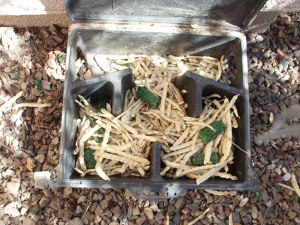
Pack Rats will even Nest in Poisoned Bait Boxes (photo courtesy Mr. Pack Rat, Tucson, Arizona)

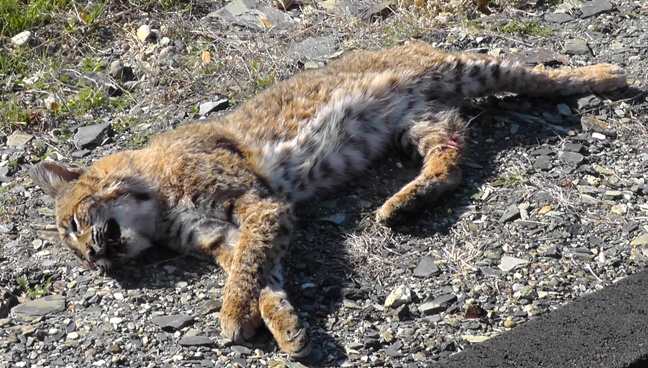
Poisoned rat bait attracts rats.  It will kill some, but there will be more in your yard after using poison than before.  Poisoned bait is slow-acting, and rats that die take a week or more to expire.  In the meantime, they get confused and sick, and are more vulnerable to predation.  Opportunistic predators like bobcats, Cooper’s, Red-tailed and Harris’s Hawks, Barn and Great Horned Owls, find these rats easily, suffering secondary poisoning in the process.  Many share this slow-acting time bomb with their families, causing a chain-reaction of destruction.  Not long ago, beautiful Great Horned Owls nested on a ledge outside the SaddleBrooke Clubhouse dining room.  The male brought a poisoned pack rat to the female who was incubating three eggs, killing her.  The three eggs were retrieved and incubated, but unsuccessfully.  No one knows what happened to the father, but if this happened to one of us, we’d commit suicide.
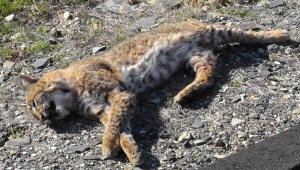
SaddleBrooke Bobcat, Victim of Secondary Rat Poisoning (photo by Jim Cloer)

This one example shows the population impact of a single poisoned rat.  In Arizona, rodents account for as much as 80% of the diet of owls and hawks, and a Great Horned Owl can eat a pack rat daily.  These owls live 28 years or more in the wild.  Assume that, on average, one owl consumes 300 pack rats annually for 25 years.  By killing four owls, this one poisoned pack rat prevented the natural depletion of pack rats by 1,200 each year for the next 25 years.  That includes 600 females a year that can bear 20 more each by Christmas, so add another 12,000 rats each year that were saved from natural extinction.  In other words, this single poisoned rat increased the population by saving thousands of other rats from death-by-owl.  Talk about martyrs.  They probably built a statue to this guy in rat town. 

Incidentally, poisoned rats that die in your ceiling space disintegrate and smell really awful.  And like the signs in the pit toilets say, removing stuff that doesn’t belong there is not easy.

Are there Alternatives to Commercial Poisoning of Rats?

For those of us who don’t want to mess with rats personally, there are non-poison commercial alternatives.  Local companies that promote poison sometimes offer options such as kill or live trapping, but a rat control service that offers a poisoned bait option is as moronic as it is oxymoronic.  Companies that poison rats haven’t done their homework, and should stick with termite and pre-emergent weed control or whatever else they do well.  If enough of us refuse services that use rat poison, maybe they’ll learn to do rat control properly or drop it.  In the meantime, there are companies that do understand rat control.  Some of them specialize in rats and some control nothing but pack rats.  None of these firms use poison, and some back their work with a guarantee.  Senior and retired military discounts are available.  If you can’t find one of these poison-free firms on your own, contact us and we’ll give you some help.

Why did We Collaborate on this Article?
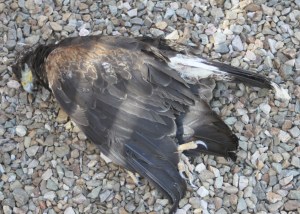
Juvenile Harris’s Hawk Killed by a Bait-poisoned Pack Rat (photo by Jim Cloer)

Both Jim Cloer and I have our own columns, and have addressed this same subject before, though separately.  A couple of weeks ago, together we captured a sluggish juvenile Harris’s Hawk that was wandering on the golf course, apparently too weak to fly.  If you’ve seen the Raptor Flight show at the Arizona Sonoran Desert Museum, you know how incredibly beautiful this bird is.  Unfortunately, he died that night, and the bird’s black vomit unmistakably implicated poisoned rat bait, most likely brought to him by his mother.  If this makes you sick, think how she feels.  Collaboration was an easy decision.  With knowledge, we can all control our pack rats, and prevent the unnecessary, unintended destruction of other wildlife.  We hope you’ll join us.

(Jim Cloer, who provided information and photographs for this article, is a retired naturalist, is active with the SaddleBrooke Nature Club, manages the Nature and Wildlife program at Catalina State Park, and provides rescue and rehabilitation for injured wildlife.)

The above article was originally published in the July, 2012 Saddlebag Notes Newspaper, SaddleBrooke, Arizona.  Copyright June 12, 2012, Bob Bowers.

Posted in Wildlife Arizona | Tagged , , , | 5 Comments

The Under-birded Mountains of Cochise County, Arizona

Migrating Scott’s Oriole near Arizona’s Cochise Stronghold (photo by the author)

Southeastern Arizona is a magnet for birders, drawing them from every state in the Union, as well as from just about everywhere else in the world.  And more than a few residents, myself included, moved here at least in part for the birding.  There are good reasons for this interest—the mixed habitat, ranging from Sonoran Desert to conifer-forested mountain sky islands, temperate year-round weather and proximity to Mexico’s exotic birds are three of the most important.  Within this national birding hotspot lies the hottest of all hotspots, Cochise County.

Cochise County, Arizona: the Hottest Birding Hotspot?

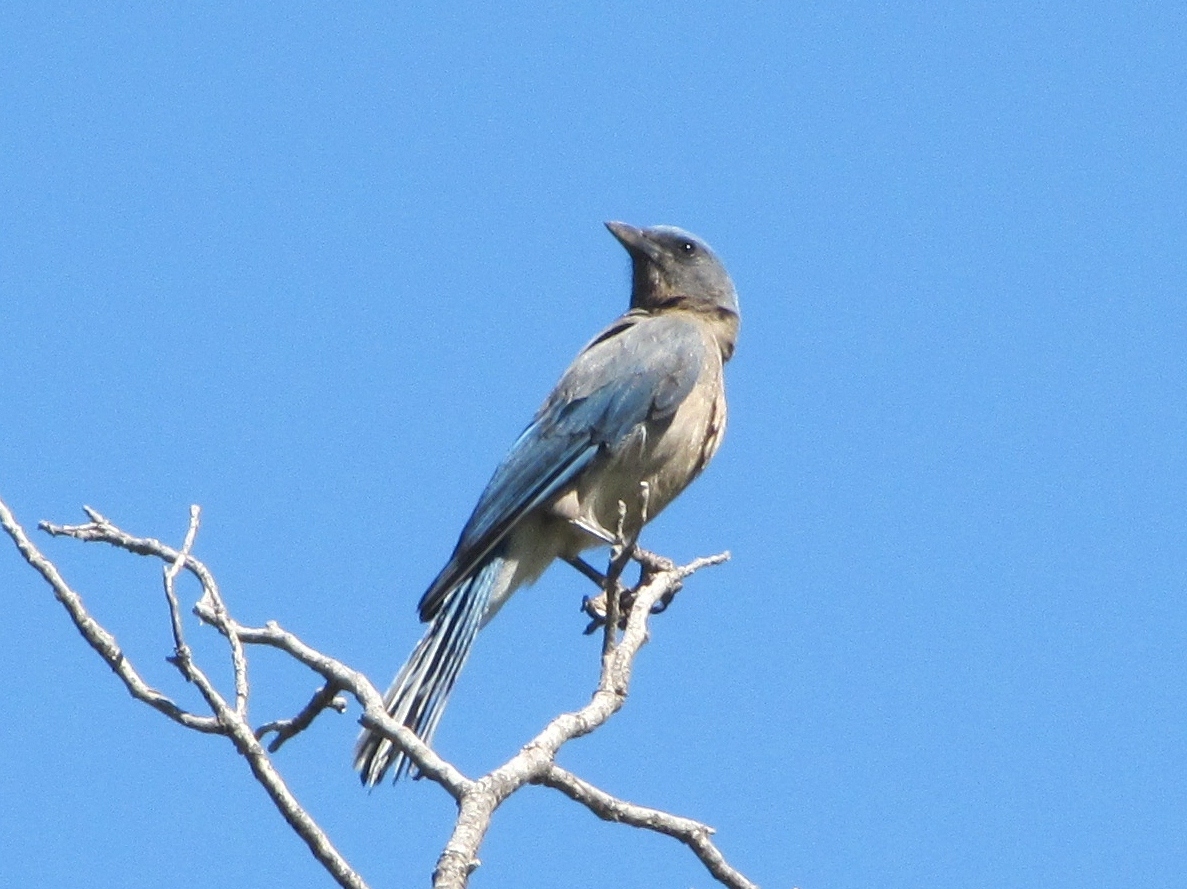
Mexican Jays are Common to the Dragoon Mountains (photo by the author)

Cochise County is as southeastern as you can get in southeastern Arizona, occupying some 6,200 square miles in the lower right-hand corner of the state, bordering New Mexico to the east and old Mexico to the south.  If this space were back east, it might have four of our fifty senators—it’s nearly as big as Connecticut and Rhode Island combined.  The county is probably better known for its western and military history than its birding, being home to Tombstone and Boot Hill, but it has plenty of recognizable natural attractions, as well.  This is where you find Kartchner Caverns and the Chiricahua National Monument.  Anyone with even marginal interest in birding will also recognize a number of other Cochise County attractions, such as Willcox and the Whitewater Draw, San Pedro House and the river of the same name, Patagonia, the Paton House, Sonoita Creek Preserve, Sierra Vista and its famous hummingbird canyons:  Ash, Brown, Carr, Miller and Ramsey.  You could bird this area all year long, and thousands of people do.  For the jaded or anyone  wanting to get away from the crowds, however, the county offers lesser-known and under-appreciated alternatives.  After all, if you’re a bird, it all looks a lot alike from the air.  One of my favorite under-birded pieces of Cochise County real estate is the Dragoon Mountains sky island, and its most accessible spot, the Cochise Stronghold Campground.

The Dragoon Mountains and Cochise Stronghold

One of Arizona’s many ‘sky islands’ (isolated mountain ranges that rise above a ‘sea’ of surrounding desert), the Dragoons (don’t you love that name!) cover a 25-mile stretch of habitat that ranges from grassland to oaks, pines and granite spires.  The highest point is Mt. Glenn, at 7,519 feet, and one of the most accessible features is the Cochise Stronghold Campground, a National Forest facility that is nestled into colorful rocky forest 5,000 feet above sea level and 90 miles from Tucson.

The area is so named because this is where the famous Apache leader, Cochise, evaded capture for nearly 10 years while continuing retaliatory raids against settlements that had driven his warriors into the mountains.  Eventually, Cochise made peace and died of natural causes on a reservation in 1874.  Jeff Chandler did a fairly good job of playing Cochise in the movie, Broken Arrow (1950), but it’s probably best that Cochise missed it.  Cochise is actually buried somewhere in the Dragoons, but no one alive today knows where.

Birding and Accommodations near the Stronghold

Birding is worthwhile anytime of the year in this area, and there are rarely any crowds.  I can’t recall ever seeing any guided field trips.  There are some nice trails leading out of the campground, wandering through some beautiful country under spectacular spires and granite cliffs, and the treed campground itself is a haven for birds.  Spring and summer examples include Scott’s Oriole, Painted Redstart, Black-throated Gray Warbler, Bridled Titmouse, Cordilleron Flycatcher and Plumbeous Vireo.

Unoccupied Stronghold campground, March 2012 (photo by the author)

You can stay in the campground, naturally, but it is more limited than might be expected.  There are only 10 individual sites and 2 group areas, though I have never seen it full.  This might be because there is no water.  The forest service rents a couple of historic houses close to the campground, including the 100-year old Shaw House.  These are pretty rustic and you have to bring your own bedding, but you get electricity, a fireplace, a refrigerator and water.  You also get outdoor seating with stunning views of the Dragoons.  Cochise was no dummy.  When it came to picking a stronghold, he lived by that wise real estate maxim:  location, location, location.

(Originally published in the July, 2012 issue of the Saddlebag Notes Newspaper, copyright June, 2012, Bob Bowers)

Posted in Birding Arizona | Tagged , , , | Leave a comment

Bird Nests 101

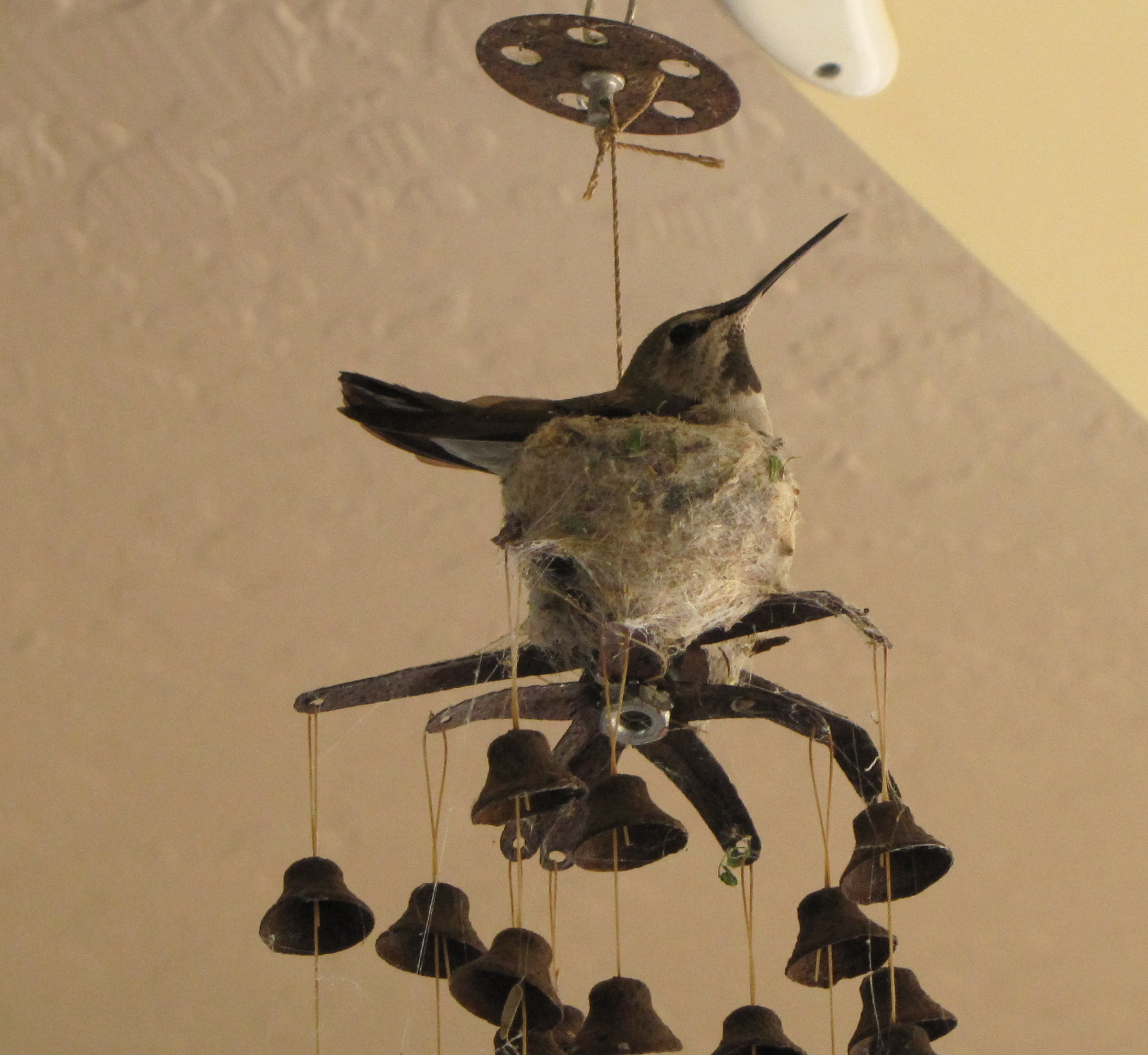
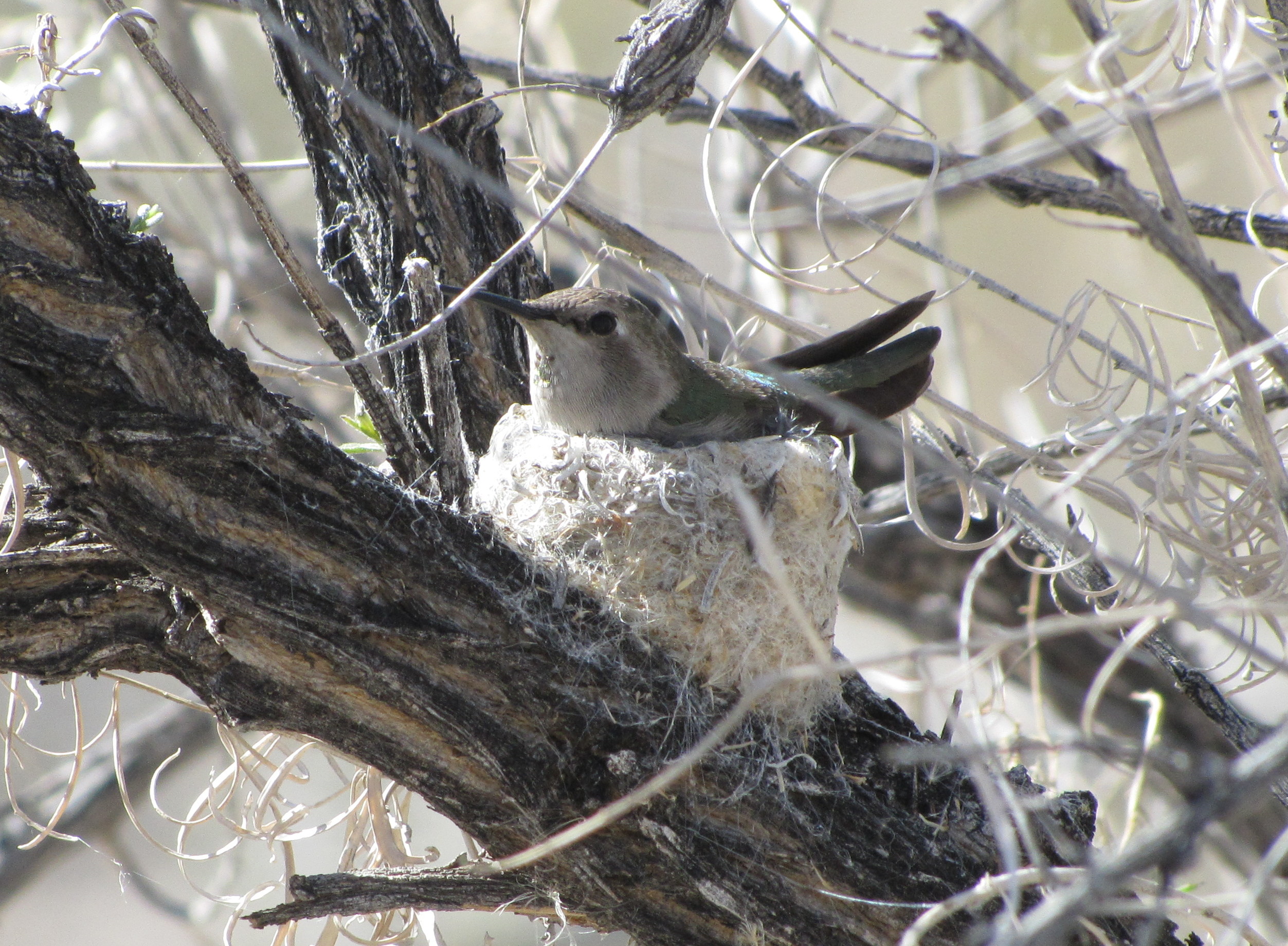
Anna’s Hummingbird Nesting on a Patio Windchime

When most people think of bird nests, they picture a tea-cup-sized structure built of grass and twigs.  Many nests, in fact, do resemble grassy cups, but the full range of bird nests embraces everything from casita-sized palaces built out of firewood-sized twigs (raptors like Cooper’s Hawks and Osprey) to the bare essentials ‘nest’ of our Gambel’s Quail, usually nothing more than a patch of turf in a flower pot.  In between lie dozens of other structures, from swinging oriole baskets to woodpecker-carved cavities to the tiny nest of a Lucy’s Warbler nestled behind a fragment of mesquite bark.

As might be expected in nature, there are rational reasons for all this nesting variety.

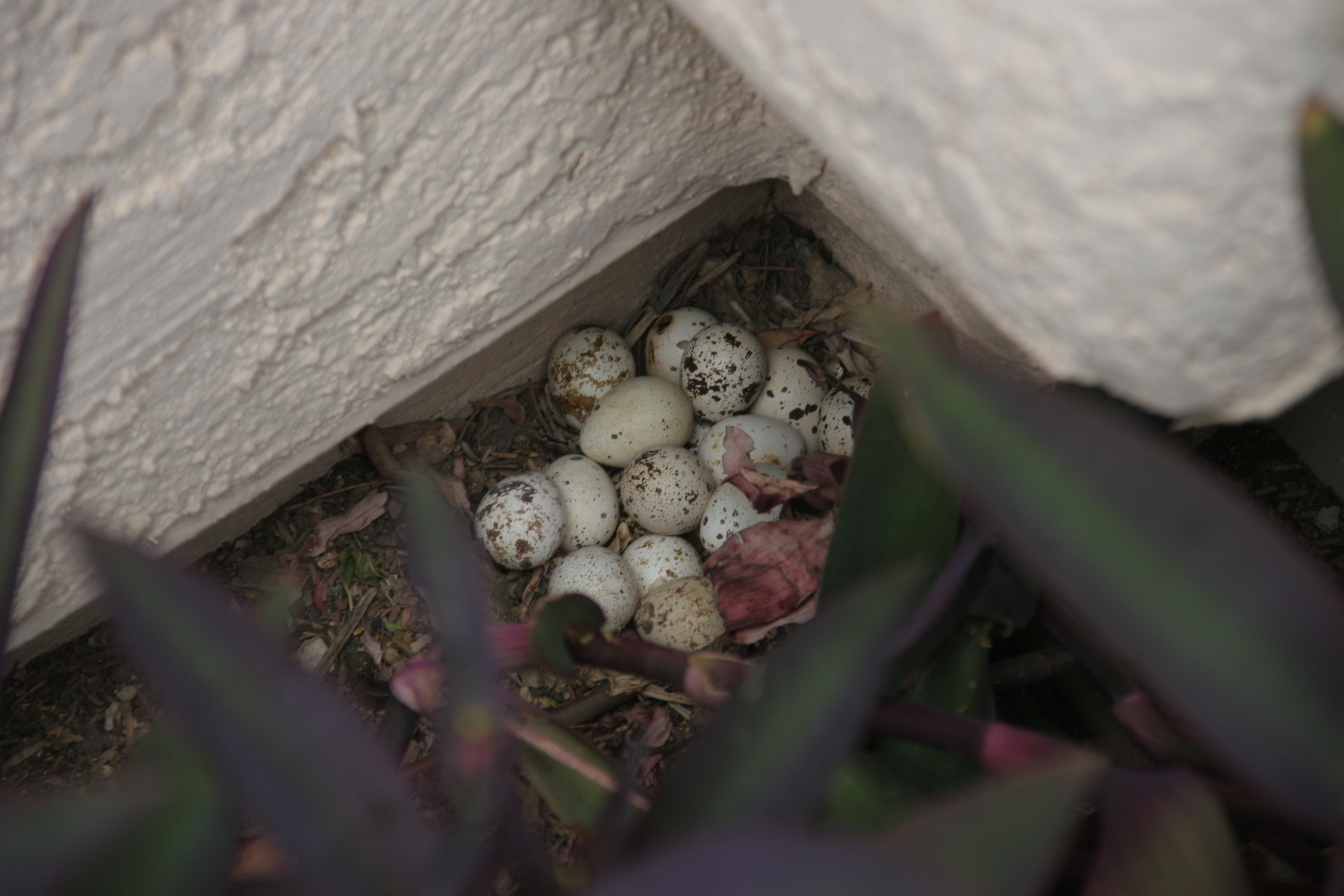
For example, Gambel’s Quail aren’t just being lazy when they lay a clutch of eggs in your

Gambel’s Quail ‘nest’ Next to Arizona House Wall

flower pot or on your chaise lounge.  Necessarily, the chicks of ground-nesting birds are precocial, meaning they come out of their eggs wide-eyed and ready to hit the road.  And a good thing, too.  A bunch of blind, naked and helpless bird babies on the ground would not likely further the species.  As those quail babies break out of their shell, they’re on their feet following mom and dad into the world like a column of wind-up toys, and they never go back to the ‘nest’, where predators are drawn to the smell of fresh eggshells.  Building a complex nest that’s going to be abandoned on hatch day makes no sense to a quail, and rightly so.

Anna’s Hummingbird Nest Insulated with Spider Web

The timing of nesting plays a role in this process, as well.  Our Anna’s Hummingbirds, which have just finished nesting, build their nests during our coldest winter and spring weather.  As tiny as these nests are, they are tightly insulated with spider web, providing a temperature differential between the inside of the nest and the outside air of as much as 40 degrees.  This both protects the fragile eggs and allows the mother to conserve energy at night while incubating.  In contrast, our late spring and summer Costa’s Hummingbirds are more concerned with finding shade and cooling breezes.  Unlike our quail, most birds are altricial, meaning they are completely helpless when hatched, and must be cared for and protected, typically for two weeks or more.  Consequently, altricial bird nests usually are well-camouflaged and hidden, and as difficult for us to find as the predators that are looking for fast food.  Mourning Dove nests, on the other hand, sometimes are so poorly hidden that one wonders how so many survive.  It must be that Cooper’s Hawks prefer plump, juicy adults.

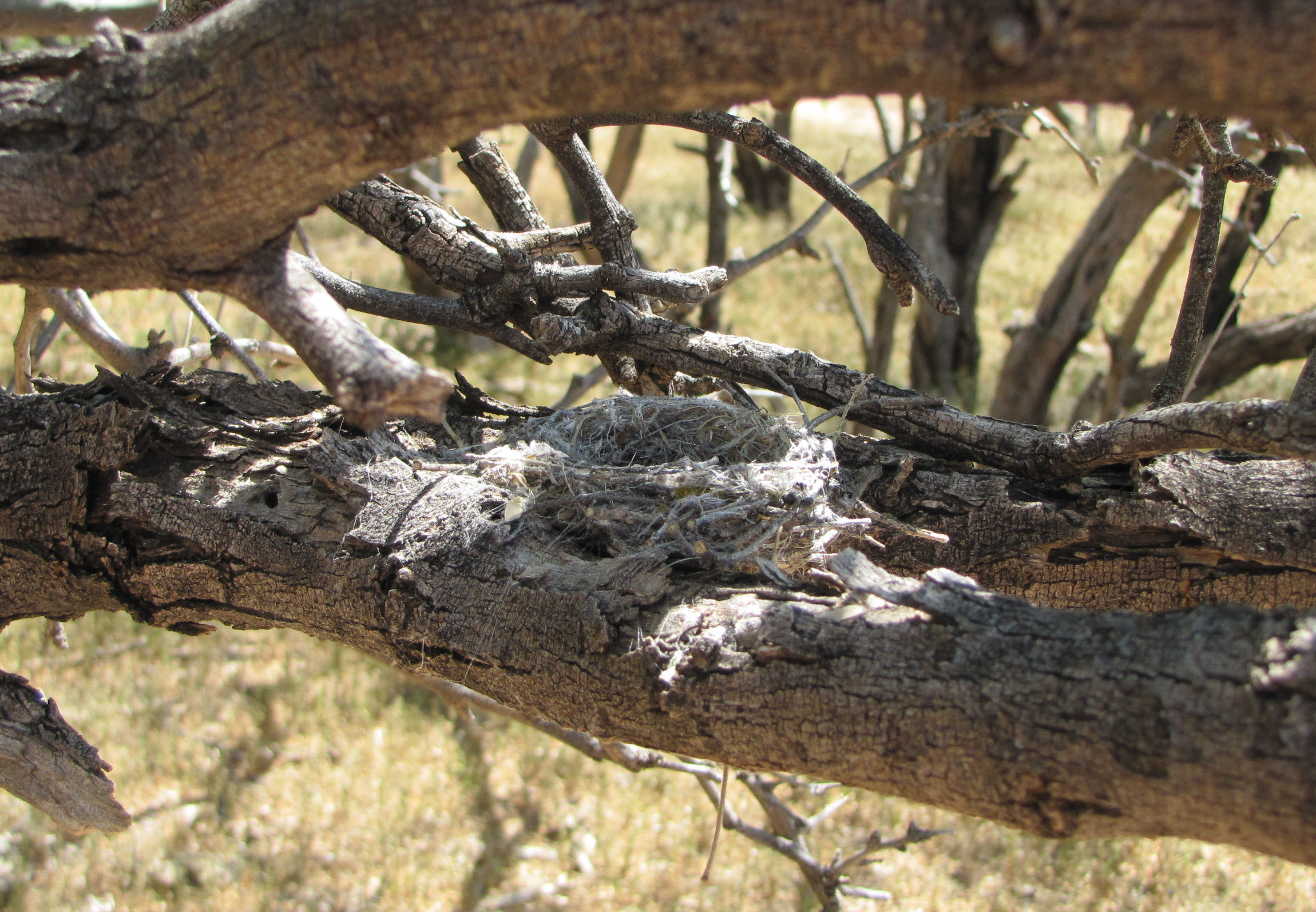
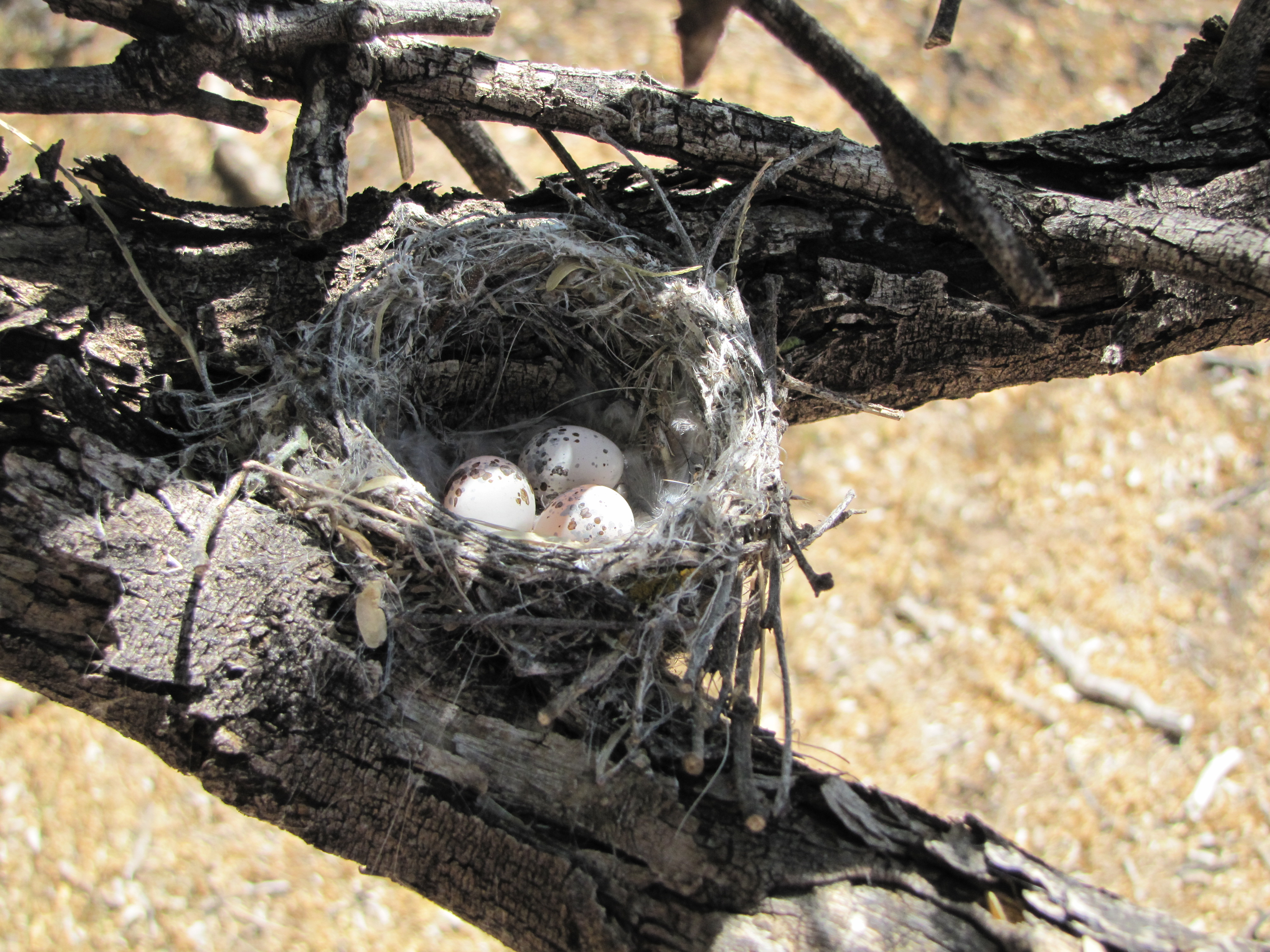
Camouflaged Vermilion Flycatcher Nest

Unexpectedly, many small, vulnerable birds will nest close to and/or hang out around bird-eating raptor’s nests.   For anyone who has watched their backyard birds scatter for cover when a hawk flies by, or noticed the absence of birds near a perched hawk, this behavior seems shockingly stupid.  However, as fond of bird fare as some hawks are, normally they will not kill prey in their immediate nest area.  Cactus Wrens have even been observed nesting in the base of Red-tailed Hawk nests, pushing this leniency to the limit.  We recently found an active Cooper’s Hawk nest near SaddleBrooke that proves the point.  Within a few yards of this massive nest in a cottonwood tree, we found two nesting Anna’s Hummingbirds, a nesting Broad-billed Hummingbird, a nesting Bell’s Vireo and numerous other avian morsels, including Yellow, Yellow-rumped and Wilson’s Warblers.  What at first seemed like a collection of suicidal birds, more likely is a set of higher IQ birds.  The bravest of these might be one of the nesting Anna’s Hummingbirds.  While I was watching a baby hawk peer over the edge of the Cooper’s nest, this hummingbird mom came into my binocular view.  She hovered over the nest for a long time, checked out the newly-hatched future threat and then buzzed back to feed her own young.

The Vermilion Flycatcher Nest from Above

Originally published in the Saddlebag Notes Newspaper, June, 2012.  Copyright Bob Bowers)

Posted in Birding Arizona | Leave a comment

Desert Beauty, the Black-throated Sparrow

Black-throated Sparrow in Arizona's Sonoran Desert

Black-throated Sparrow in Arizona’s Sonoran Desert

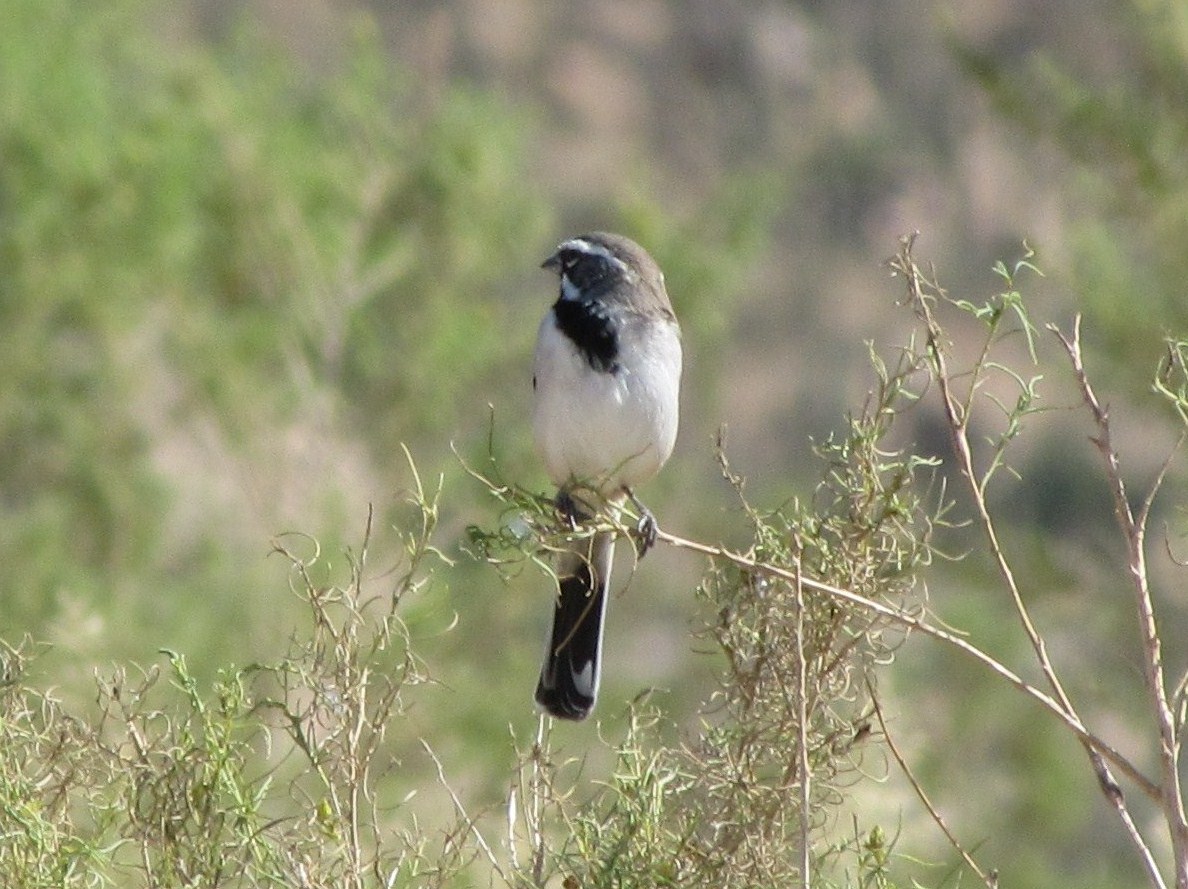
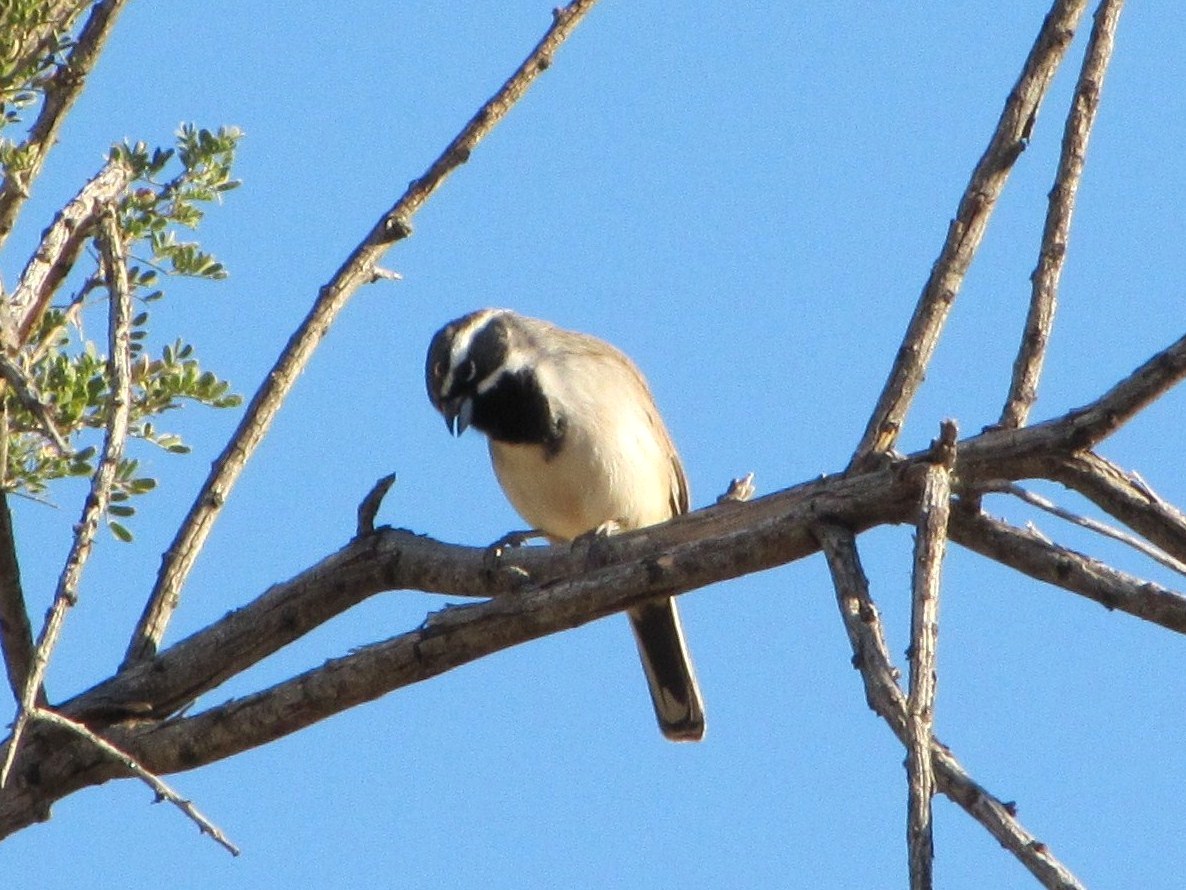
Living in the Arizona Upland part of the Sonoran Desert has advantages for bird lovers. We regularly see birds that people across the U.S. travel great distances to find. One of these, and my favorite sparrow, is the beautiful Black-throated Sparrow. If your lot borders open desert scrub, you no doubt see this striking bird often. Even if you live, like I do, on a hemmed-in lot with no direct access to open area, you will still sometimes see Black-throated Sparrows. They clearly have moved deeper into SaddleBrooke in the ten years we’ve lived here. We saw none in our yard for the first six years, but now increasingly spot them, and having seen juvenile birds as well as adults, I suspect they have even nested in some corner of our yard.

Black-throated Sparrow

Black-throated Sparrow, Once Known as the Desert Sparrow

Once fittingly known as the Desert Sparrow, the Black-throated Sparrow was first collected in 1850 by John Woodhouse Audubon, the son of the famous bird artist, John James Audubon, and named that same year. Whatever your source for information about the bird, it invariably includes comments such as handsome, beautiful and striking. Its voice is similarly described as tinkling and bell-like. And, indeed, striking is quite descriptive, since the bird’s coloration is limited to shades of black and white. It’s impressive that a bird can be so eye-catching without a single red or yellow feather.

Black-throated Sparrows on Cholla

Black-throats are currently breeding, nesting and fledging their young, their first of at least two annual broods. They nest close to the ground, often in cholla, bursage and palo verde, and frequently just a foot or less above the ground. Females incubate the three to four eggs about twelve days and the young continue to get care and attention from both parents for another three weeks or so. They do eat seeds, but prefer insects, the exclusive diet for those still in the nest.

Besides being beautiful and singing melodiously, Black-throated Sparrows are considered Arizona’s most numerous and widespread sparrow, and rank seventh on the list of most frequently reported breeding birds in Arizona. Obviously, this is a bird that would offer some competition to the Cactus Wren, if we were to reconsider our official state bird.

This also is a bird that socializes with other birds, especially other sparrows, and can often be found in the midst of a flock of White-crowned or Chipping Sparrows. The next time you shrug your shoulders at a bunch of common House Sparrows, take a closer look. You might be lucky enough to spot one of my favorite birds.

(Originally published in the Saddlebag Notes Newspaper, May, 2012.  Copyright Bob Bowers)

Posted in Birding Arizona | Tagged , | Leave a comment

Arizona’s Towhees

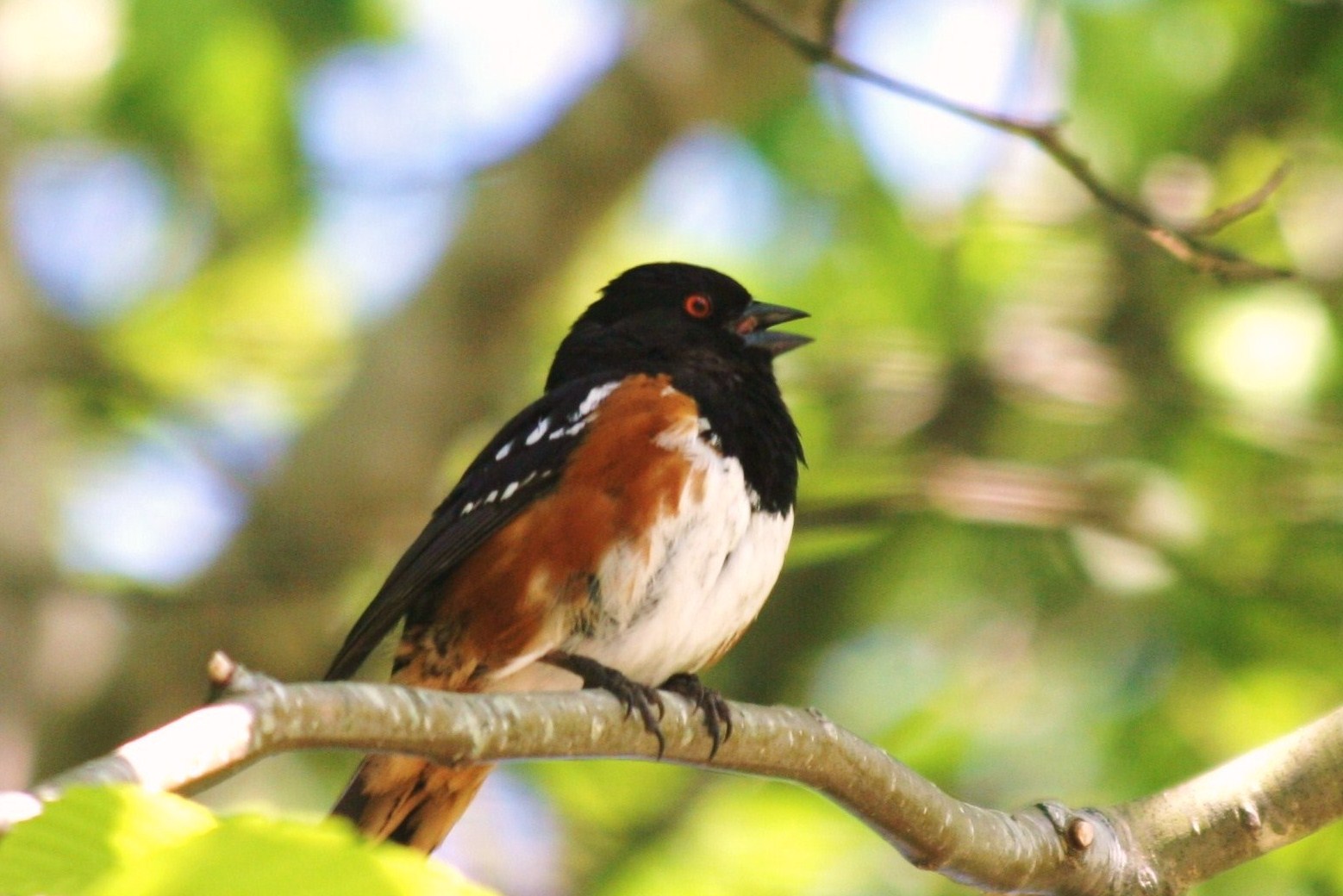
Spotted Towhee (photo by Bob Bowers)

Try as you might, you won’t find all of Arizona’s warblers, woodpeckers or sparrows in your SaddleBrooke yard, but it is possible to spot all four of Arizona’s towhees.  I know this is true, because I’ve seen them in my own yard, and if you are a backyard birder, you should keep an eye out for these semi-secretive birds.  Two of them are difficult to find in SaddleBrooke, but bird walks in nearby Catalina State Park often record all four.

What exactly is a towhee?

Towhees behave a lot like sparrows, and for good reason.  American sparrows, juncos, buntings and towhees are all members of the family Emberizidae (which excludes the ubiquitous introduced House Sparrow).  Towhees are relatively shy birds that mostly forage on the ground under bushes and thick vegetation.  They are larger than sparrows and have longer tails.  Of the eight species of towhees, six are found in the U.S. (two are endemic to Mexico).  Two of the six U.S. towhees are not seen in Arizona, the California Towhee (which resembles our Canyon Towhee) and the Eastern Towhee (which looks much like our Spotted Towhee).  Actually, an Eastern Towhee did wander into Arizona twelve years ago and hung out near Patagonia for ten weeks that winter.  That is the only documented visit by an Eastern Towhee, though.  You just can’t please every snowbird.

The four towhees that do hang out here are the Canyon, Abert’s, Spotted and Green-tailed.

The Green-tailed Towhee

This is my favorite towhee, mostly because of its unique coloration.  Adult birds have a distinct rufous crown, bright white throat with a dark moustache bar and yellow-green wings and tail.  Not a full-time resident, this towhee is relatively common to our area in the winter, but nests at much higher elevations, ranging from 6,000-10,000 feet.

The Spotted Towhee

You may know this bird as the ‘Rufous-sided Towhee’, its name until split into two species, the Spotted Towhee of the west and the Eastern Towhee of, no surprise, the east.  This bird varies in voice and marking by location, and is commonly differentiated geographically.  Our southwestern variant lies between the lighter Great Plains and the darker Pacific Northwest birds, but all three are the same species.  The Oracle foothills and the canyon washes of Catalina State Park are the best nearby places to find the Spotted Towhee.

Abert’s Towhee

Most southwestern birds were classified and named at the Smithsonian from specimens collected during the nineteenth century.  This early ornithology was the work of soldiers, not academics, and medical or other naturalist-oriented officers usually were involved.  Field collecting was secondary to active military campaigns and often dangerous.  These volunteers often worked alone in areas known for enemy combatants, and ‘collected’ their specimens with a rifle or shotgun.  Knowing that, it’s a wonder that classification or identification was even possible.  One of these collectors was Lt. James Abert, a West Point graduate and a topographical engineer.  It’s unlikely that Abert personally collected the towhee that was named after him, since he was working well east of the bird’s range.  Nevertheless, he got the honor after the specimen was found in one of his collections.  Incidentally, the funny-looking Abert’s squirrel we see in the White Mountains is named after the Lieutenant’s father, Colonel John Abert, not Jim.  Lieutenant Abert’s bird is drab and brown, like the Canyon Towhee, but is distinguished from the latter by a dark face mask.

The Canyon Towhee

This is the most likely towhee you will find in SaddleBrooke, and the least colorful.    Canyon Towhees are found in lots of places other than canyons, sometimes just walking along golf cart paths like the rest of us.  This is a full-time, non-migratory resident common to most of Arizona.  Like his relatives, the Canyon Towhee is known for his signature dance step, the double-scratch hop.  This tricky maneuver involves a series of hops and simultaneous scratch-backs with both feet.  Towhees do this to uncover bugs or seeds and don’t need music.  Don’t try this at home, but rumor has it the Maras will be adding this step to one of their Latin dance classes.

(Originally published in the Saddlebag Notes Newspaper, April, 2012.  Copyright Bob Bowers)


Posted in Birding Arizona | Tagged | Leave a comment

Birds and Other Reasons to Visit San Carlos, Mexico


Diving Brown Pelican, San Carlos, Mexico

SaddleBrooke residents who haven’t discovered San Carlos yet are in for a treat.  This destination in the Mexican state of Sonora offers sunny skies, sandy beaches and lots of ocean.  Not to mention authentic Margaritas and delicious shrimp.  It’s a great place to hike, kayak, look for dolphins, sea lions and whales or go deep-sea fishing.  It’s also a great destination for birding, especially in the winter and spring.  The oceanfront hotels are just 350 miles south of SaddleBrooke, closer than Albuquerque.  The highway, essentially an extension of I-19, is a safe, divided toll road, costing less than ten dollars to get to San Carlos.  At the current exchange rate ($13 pesos per dollar), regular gasoline is a bargain at $2.28 per gallon (author’s note:  this was written in February, 2010).  You do need a tourist permit, which costs about $20 at a one-hour stop 12 miles into Mexico, and you need your passport in order to get it.  It’s good for 6 months, however, giving you reason to return.  You also need Mexican car insurance, which can be obtained easily by phone in Tucson, but you don’t need an auto permit, as long as you don’t go further than Guaymas, 12 miles beyond San Carlos 

Birding San Carlos

 For birders, San Carlos comes close to idyllic.  There are miles of crooked coastline on the Sea of Cortez, as well as bays, harbors, estuaries, islands and beaches.  The marine life is rich, which attracts thousands of sea and shorebirds, including Brown and White Pelicans, White Ibis, Magnificent Frigatebirds, American Oystercatchers, and multiple species of terns, herons, egrets and gulls.  You can also find Blue-footed and Brown Boobies.  A rough, rocky mountain range lies directly on the coast, showcasing flowering trees, giant cactus, and tropical deciduous forest.  This combination of desert, oases, rugged hills and canyons is ideal habitat for dozens of additional species.  Most of the desert birds we see in SaddleBrooke can be found here, including Gila Woodpeckers, Cactus Wrens, Pyrrhuloxia and Verdin.  Birds that leave SaddleBrooke in the winter can also be found here, in case you’ve been missing White-winged Doves or Turkey Vultures.  In addition, there are many other birds that are seldom, if ever, seen around SaddleBrooke.  These include Crested Caracaras, Dark-eyed Juncos, Groove-billed Ani, Black Vultures, Lazuli Buntings and Black-chinned Sparrows.  On a short trip in January, we even spotted a Brown Thrasher, a bird rarely seen west of Texas.  In two or three days, dedicated birders can identify 100 species or more.

 My wife and I have visited San Carlos 16 times in the past 5 years, and have never felt any reason to worry about our safety, drug wars or police harassment.  Quite to the contrary, the people are friendly and helpful to those of us with limited Spanish.  Signs in English even reassure drivers that they are in a “no hassle zone” while touring Sonora.  However, driving in Mexico, like in any foreign country, is a lot easier if you are well-prepared.  I’ve written a number of articles about driving, kayaking, touring and birding in Mexico, and you can find those through the sidebar link to my other blogs.  If you get those winter blues, or fear a forecast of snow at 3,000 feet, consider San Carlos.  It’s only a six-hour drive, and a little adventure might spice up your retirement.

Text and photographs copyright Bob Bowers, all rights reserved.  This article was written February 10, 2010, and originally published in the Saddlebag Notes, March, 2010.

Posted in Birding Mexico | Leave a comment

Birding in Costa Rica


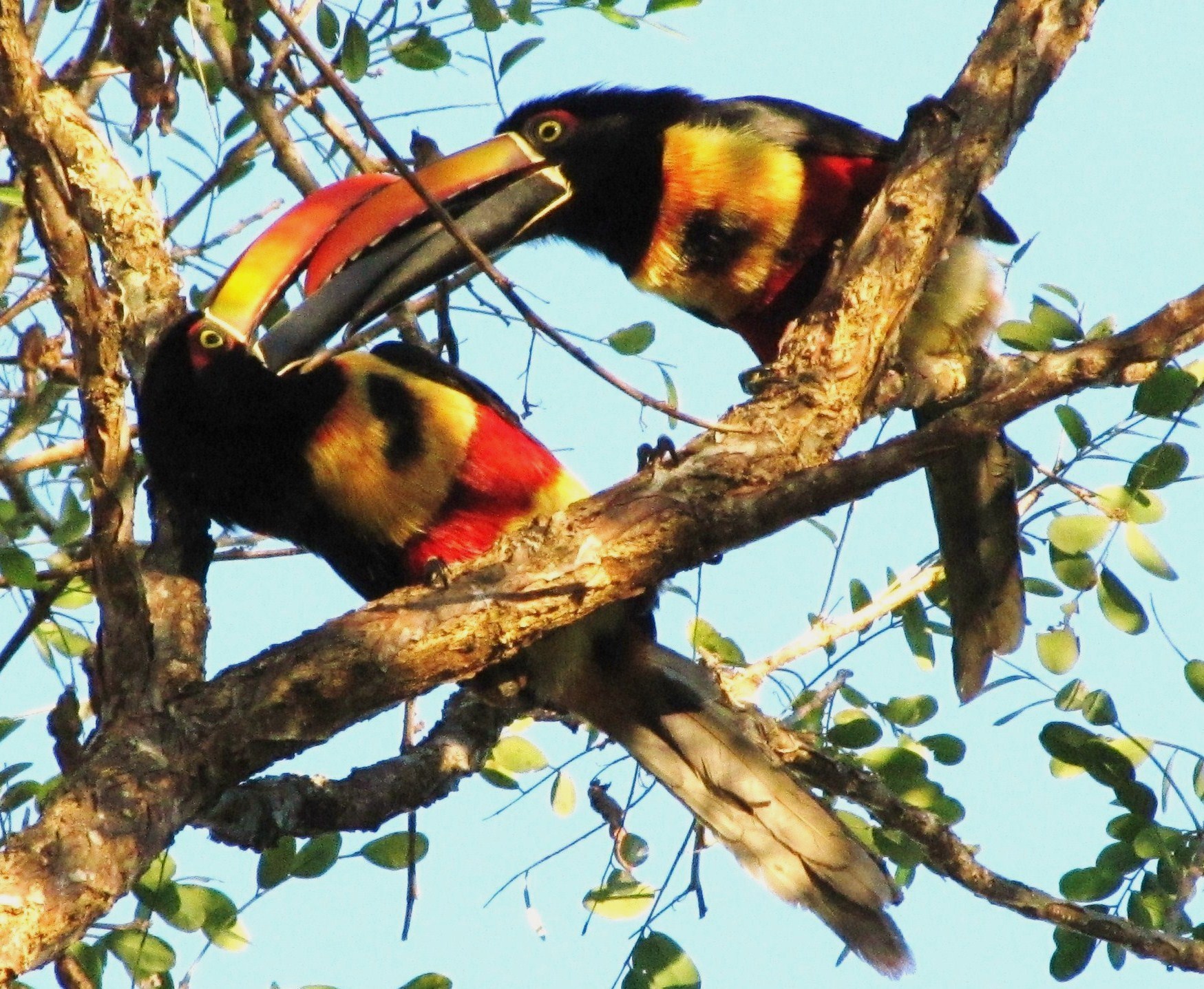
Fiery-billed Aracari at Cerro Lodge, Costa Rica

Costa Rica has always been a desirable destination for travelers, as well as vacation and permanent home buyers.  There are good reasons for this popularity:  the scenery is beautiful, the people are friendly and the climate near-ideal.  More money is spent on education than on the military.  In fact, no money is spent on the military, because they don’t have one.  This might seem risky, but it’s hard to have a military coup d’état with no generals, or a guerilla uprising with no one to fight.  Consequently, Costa Rica has avoided the bloodshed common to her neighbors over the past decades, enjoying instead booming tourism and investment.

If you’re a birder, you know 900 other good reasons to visit.  Nearly that many species of birds have been documented in Costa Rica, more than the entire United States and Canada combined.  This is particularly remarkable when you consider that the country is smaller than West Virginia.  This many birds packed into such a small country gives Costa Rica the distinction of having more species per square mile than any other country in North, Central or South America.  Some 600 of these are year-round residents, with the balance migrating in from North America each winter.

Not surprisingly, winter brings birders as well as migratory birds to Costa Rica.  It’s rewarding to discover familiar warblers, orioles and vireos so far from home, but it’s the local birds that grab your attention.  Costa Rica is home to aracaris, toucans, leaftossers, foliage-gleaners, flowerpiercers and dozens of other birds as colorful as their names.  Scarlet Macaws in flight bear an uncanny resemblance to Superman, and when you see the size of a toucan’s bill, you wonder that it can fly at all.  In fact, heavy-billed toucans and aracaris  fly ‘downhill’, climbing up one tree in order to glide down to the next.

Hummingbirds are plentiful, with 52 species.  Some of these are familiar, like our migrating Ruby-throated and Magnificent Hummingbirds.  Most, however, are night and day unfamiliar, and many of their names are imaginatively descriptive.  Wouldn’t our hummers be more exciting with names like Purple-crowned Fairy, White-tipped Sicklebill, Violet Sabrewing, Garden Emerald, or Purple-throated Mountain-gem?  Maybe we should start a petition.

With the densest avian population in the Americas, you would think finding birds in Costa Rica an easy task.  You would be right.  Macaws perched and posed over our cabin at Cerros Lodge, and Fiery-billed Aracaris came to the banana feeders every morning.  Blue-throated Goldentails visited the heliconias that grew in our open air bathroom.  Wherever you venture in Costa Rica, you will find birds.  Even in the streets and parks of the capital, San Jose, where parrots chatter in the treetops.  One of the most interesting revelations for a visiting birder is that a short drive from one location to another often creates a dramatic change in species.  This might sound unusual for such a small country, but Costa Rica’s geography bears little resemblance to West Virginia.  Ten degrees north of the equator and just one country from South America, Costa Rica lies along both the Caribbean and the Pacific Ocean.  Habitat ranges from sea level to mountains two miles higher.  Add volcanos and tropical rainforests, and you have the perfect environment for rich birdlife.  This dynamic melting pot of birds gives distribution mapmakers headaches, but is a paradise for birders.

If you have the opportunity to visit Costa Rica, don’t hesitate.  If you want to see the greatest variety of birds, spend some time in as many different locations as possible.  Consider the dry winter months, and avoid high-end, air-conditioned hotels.  Fresh-air eco lodges cater to birders, and are found throughout the country.  Air-conditioning would only mask the operatic arias of a Melodious Blackbird or the indescribable song of an oropendula.  Besides, you’ll never see a Cinnamon Hummingbird in an indoor bathroom.

(Note:  Text and photographs copyright Bob Bowers.  The original article was written February 13, 2012, and published in the March, 2012, issue of the Saddlebag Notes Newspaper, SaddleBrooke, Arizona.)

Posted in Birding Costa Rica | Tagged | Leave a comment

Choosing the Right Binoculars for Birding

So Many Choices!


When I first realized how much I enjoyed birding, I knew I needed some new binoculars.  I owned a pair of Bushnell porro prism binoculars at the time.  Porro prisms are the ones that have a ‘z-shaped’ optical path, where the objective lenses are offset from the eyepieces.  These are the kind of binoculars favored by Navy admirals, or at least by the actors playing them, when they scan the sea for U-boats.  They usually have a lot of magnification and weigh almost as much as an anvil.  And they’re completely useless for birding.  So I knew I wanted the other kind, called roof prism binoculars, where the objective lenses are in line with the eyepieces, giving you a lighter-weight streamlined shape.  Unfortunately, I still thought I needed a lot of magnification, so I bought a pair of 12 X 50s.  The first number is the magnification, and the second number is the diameter (in millimeters) of the objective (front) lens.  The magnification number basically tells you how much closer an object appears than without magnification, so 12 X 50 binoculars ‘bring’ an object 12 times closer.  Another way to put this is that a 12 magnification will make an object 120 feet distant appear to be only 10 feet away.

The second number, objective lens diameter, relates to light-gathering capability.  The larger the number, the more light is gathered, and the more light that is gathered, the brighter the object becomes.  One would think, then, that you should look for the biggest numbers available, both in magnification and in objective lens size.  However, big numbers are not the whole story, and lots of magnification and big lenses have their shortcomings, especially when it comes to birding.

For one thing, bigger numbers generally mean bigger binoculars, and a 12 X 50 pair, as I quickly learned, weighed enough to take a lot of fun out of birding.  There are other disadvantages, too.  Higher magnification gives you a smaller field of view, something you definitely do not want when birding.  When your friend spots a rare warbler in a mesquite tree 40 feet away, you want to be able to ‘get on’ the bird quickly, before it flits away.  With larger magnification binoculars, your field of view is smaller, and you might still be trying to find the bird long after it has flown the coop.  The larger field of view you enjoy with smaller magnification binoculars also lets you see more birds in a flock, and allows you to follow a moving bird more easily.

Larger magnification binoculars also take more time to focus, are less capable of focusing on close objects and they exaggerate any unsteady hold.  When you’re birding, you want to be able to bring a bird into focus quickly.  Some birds cooperate by sitting in one place, but the most exciting ones always seem to think the grass (or tree) is greener somewhere else.  If you’re lucky, a rare bird might even fly onto a nearby perch, but most high magnification binoculars will not focus on close objects.  Ideally, your binoculars should be able to focus on objects as close as ten feet or less.

For most of us on Social Security, a steady hand is a distant memory.  For this group, even a 10X pair of binoculars will exaggerate an unsteady hold and keep you from getting a clear look at that special bird.  After I traded my 12X binoculars for a pair of 10X, I still wasn’t happy.  The 10X were smaller and lighter, but I continued to have trouble finding a bird that others could see, and when I did find him, even a slight hand movement would interfere with a clean look.

Binoculars come in many flavors, at a wide range of prices.  If you have one of those pair that Sterling Hayden used to spot German submarines, or if you are trying to find birds with a compact pair of opera glasses, it’s probably time to trade up.  The good news is that it’s not necessary to buy the most expensive binoculars around.  There are some beauties at $2,000, but you can find excellent high-performance binoculars for $300 or less.  Generally speaking, if you are serious about birding, you should avoid binoculars under $100, since these are less likely to have good optics.  At the same time, there seems to be little advantage in the range above $350 until you get at least to $1,000.  In my opinion, you will be happiest with a 7X or 8X pair of binoculars, and more than one good pair are available in these sizes at $200-350.

One of my favorites is the Nikon Monarch ATB 8 X 42.  These binoculars are waterproof, provide an excellent field of view (about 300 feet at 1,000 yards) and will focus on objects as close as 8 feet.  The nature shop at Tucson Audubon will match online reseller prices such as Amazon (currently $259) for members, and they waive the sales tax.  This is just one of many reasons to consider joining Tucson Audubon.  In addition, these binoculars come with an incredible 25 year ‘no fault’ warranty.  Probably more than I need, but I’ve always been an optimist.

(Note:  The above article and photographs are copyrighted by Bob Bowers.  The original article was written on December 29, 2011, and published in the February, 2012, issue of the Saddlebag Notes Newspaper, SaddleBrooke, Arizona.)

Posted in Uncategorized | Leave a comment

Male Hummingbirds: Playboys of the Bird World

While the Female Raises the Kids, it's Guys Night Out

Many of our birds, like the Curve-billed Thrasher, are monogamous.  Happily mated for life, these birds work together.  They build their nests jointly, hang out together and share parental responsibilities, like incubating, feeding and fledging their young.  They don’t flirt, let alone mess around.

Well, not so for hummingbirds.  If men could be reincarnated as birds, most would likely vote for coming back as a hummer.  Female hummingbirds shoulder the entire burden of child-rearing.  They find a nesting site, search for lint, hair and spider web and build the nest alone.  They lay their eggs unattended, have to fend for their own food, incubate the eggs and feed the hungry young.  When it comes time to teach the new hummingbirds how to leave the nest, fly backwards and forage for food, it’s the mom’s job, all by her lonesome.

And where is dad throughout these trying times?  Well, he’s hanging out with the guys over at the local nectar bar.  When female hummingbirds are working their tails off looking for nesting sites, the males are bar-hopping, finding the best feeders or flowers in town and doing their best to keep them to themselves.  Males will stake out the biggest territory they think they can defend, and then spend more time fighting with other birds than drinking.  While the females shun makeup, slave over nest-building and deal with demanding kids, the males get gussied up (Costa’s dress up in purple, Anna’s in bright red and Broad-billed in iridescent blue), pick fights and hog the bar stools.

Although the males aggressively chase off any and all male intruders, they do make an exception for hungry females.  Female hummingbirds are welcomed to male feeding territories with open wings, and the more, the merrier.  Showing their one and only generous side, males make room at the bar for every lady hummer crazy enough to wander in, and graciously pick up the tab.  But, of course, there’s a price.  Sorry, ladies, no free lunch.  And no sweet talk or long term relationships, either.  A little nectar, a lot of sex, and then time to move on, an old flame just buzzed in.  Male hummingbirds are the high school jock, Casanova and smooth-talking frat boy, all rolled into one.  For these guys, two partners are better than one and four better yet.  The only things missing are football, Schwarzenegger movies and a round of golf.

So what leads to all this debauchery and fast-living?  Maybe it’s the high metabolism, a heart rate up to 80 beats a second, or having to flap your wings 2,200 times a minute.  Maybe it’s just all that sugar water.  In any case, the next time you see a male Curve-billed Thrasher feeding the kids and looking wistfully over at the guys hanging out around the hummingbird feeder, show a little sympathy.

(Originally published in the Saddlebag Notes, July, 2011.  Text and photographs copyright Bob Bowers, all rights reserved.)

Posted in Uncategorized | 1 Comment